 Business
Work Happiness Is a Hard Metric Driving Results, Says Scavarda
The direct correlation between management, cultural architecture, clear processes, and corporate purpose alignment.
The link between internal satisfaction and corporate productivity directly reflects a company's management system. In a discussion on Marketing - The Podcast, Luiz Scavarda explains why workplace happiness is a structural, strategic metric.
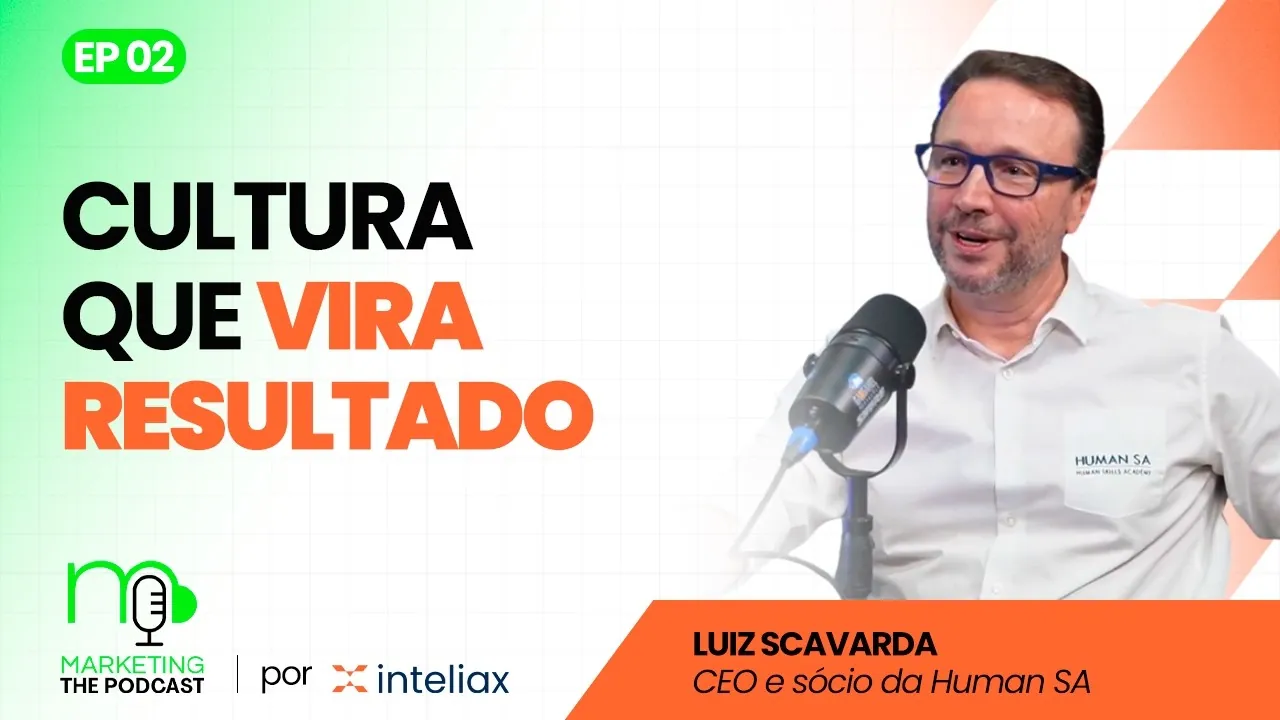
Luiz Scavarda, CEO and partner at Human SA, discussed the direct link between workplace happiness, corporate processes, and productivity in a conversation with Bruno Gimenes on Marketing - The Podcast. The discussion begins by demystifying corporate happiness, which the market often treats superficially or as mere motivational fluff.
In the video above, the discussion details how organizational structure directly impacts team performance and final business deliverables, featured in an excerpt from the episode.
PUBLICIDADE (GAM) — 1250x250
Happiness as a management system
For Scavarda, corporate perceptions of job satisfaction must mature. The topic should no longer be seen as a superficial perk, but rather integrated into a company's operational strategy.
"There is a very narrow, limited view regarding happiness, right? It is this idea that 'Oh, happiness is something very soft.' In reality, happiness is hard," Scavarda states. According to him, "when we look at the corporate world, happiness is the outcome of a management system. As I often say, it is the result of an architecture. So all of this involves, for example, culture."
Scavarda points out that the goal goes beyond keeping employees smiling; it is about building a functional ecosystem. "All studies show that happiness brings what? A more productive environment. It drives results. There is clear alignment, a correlation among happiness, the work environment, culture, and a company's bottom line," he emphasizes.
Processes, people, and technology
Addressing the foundation of any organization, Scavarda points to the integration of three pillars: people, processes, and technology. Managing these areas is no longer an isolated responsibility of human resources departments, but a cross-cutting duty across the entire corporate hierarchy.
"Who is responsible for the people agenda? Everyone, from the CEO to the intern," Scavarda stresses. He warns that even state-of-the-art procedures lose their value if the team is not involved in their creation: "You can have state-of-the-art processes. If people aren't keeping up, if they don't know what the processes are, if they don't believe in what has been designed, it's the same as having none at all."
Purpose alignment
Alignment between individual employee goals and institutional targets completes the performance equation. For Scavarda, professional purpose acts as a driver of engagement when it converges with the organization.
"That is what moves the professional, what moves the employee. What's more, when employee purpose is aligned with company purpose, things really take off," Scavarda concludes, noting that the worst scenario occurs when there is a misalignment between what the company seeks and what the employee values.
PUBLICIDADE (GAM) — 1250x250