 Business
Consulting, Education, and Tech in Corporate Transformation
Luiz Scavarda explains why isolated initiatives fail and details an integrated model for diagnosis and management.
Cultural and organizational transformation requires an integrated approach rather than isolated initiatives. On Marketing - The Podcast, Luiz Scavarda details how consulting diagnostics, targeted training, and tech monitoring sustain long-term corporate change.
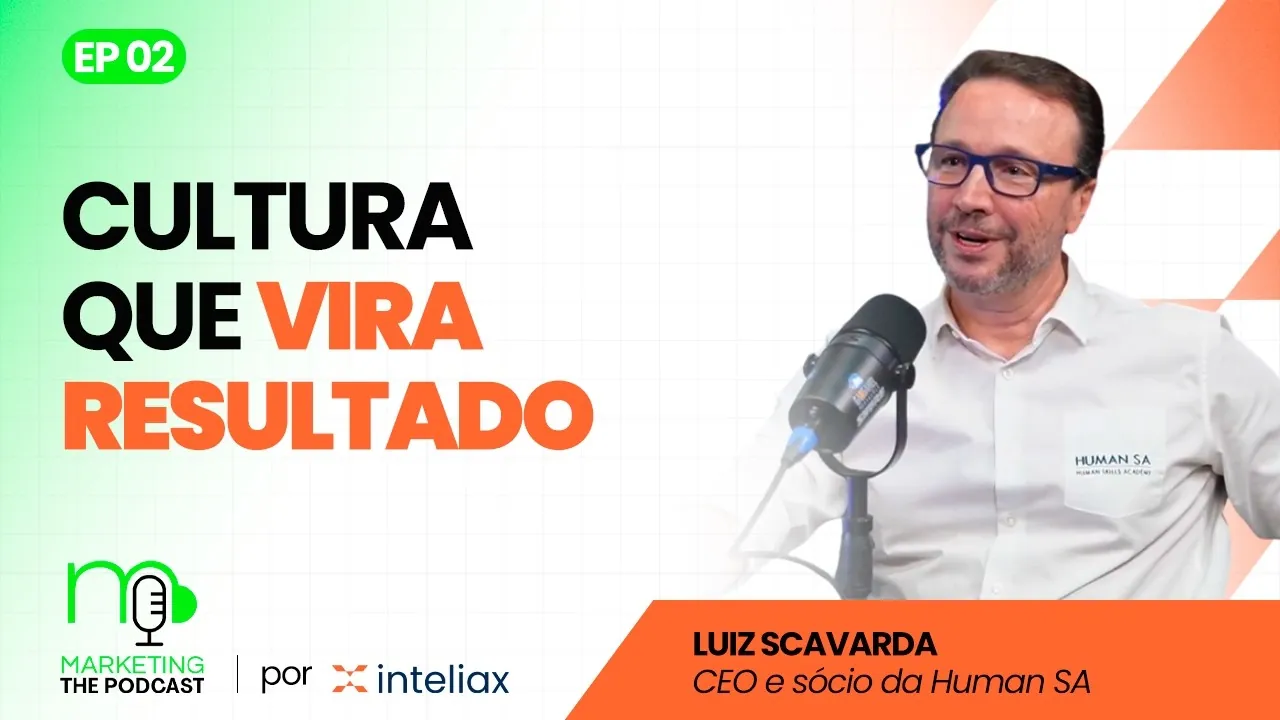
In a conversation with Bruno Gimenes on Marketing - The Podcast, Luiz Scavarda, CEO and partner at Human SA, detailed the need to structure corporate and cultural transformation processes around three integrated fronts: consulting, education, and technology. The discussion drew on McKinsey data showing that initiatives combining leadership development, process redesign, and tech tools are twice as likely to achieve sustainable impact.
For Scavarda, the most common mistake organizations make is treating transformation as an immediate or one-off event. The video above features the full episode discussion, which also addresses other aspects of leadership and management.
PUBLICIDADE (GAM) — 1250x250
Diagnosis and consulting to map the gap
According to Scavarda, cultural change processes take years to mature and do not happen overnight, requiring first and foremost an accurate diagnosis of the company's current state. "The first step is, what do you want? What is the problem? So, you need a diagnostic phase," Scavarda states, highlighting the role of consulting in identifying where the organization truly stands and what goal it aims to reach.
Without this prior clarity, executive training becomes ineffective for the business. Scavarda points out that many companies launch initiatives merely to check an internal box: "They simply check the box, saying 'I have an executive development program here.'" The result of this isolated approach is a lack of practical return on investment.
Focused education and demand prioritization
The second pillar of the framework is education, aimed at training leaders and teams in the skills identified during the diagnostic phase. Scavarda emphasizes that planning must be feasible, avoiding the trap of trying to fix every issue surfaced by climate surveys at the same time.
When companies receive engagement diagnostics and attempt overly broad plans, the process loses momentum. "People take those gaps and try to build a plan to fix everything overnight. They can't," Scavarda explains. The recommendation is to define clear priorities and focus effort on specific areas before expanding the scope.
Technology for real-time tracking
The third element of the model is technology, used as a tool to sustain and continuously monitor the implemented phases. Once the direction and training paths are set, systems make it possible to track team progress and measure alignment with established goals.
Scavarda notes that technology provides wide visibility across the organization for swift course corrections. "Technology allows you to have a holistic view of the entire organization in real time," Scavarda highlights, enabling companies to recalibrate educational and cultural programs as needed.
PUBLICIDADE (GAM) — 1250x250