 Business
"Culture Follows Strategy," Says Luiz Scavarda
The executive examines psychological safety, management processes, and leadership to turn workplace culture into business results.
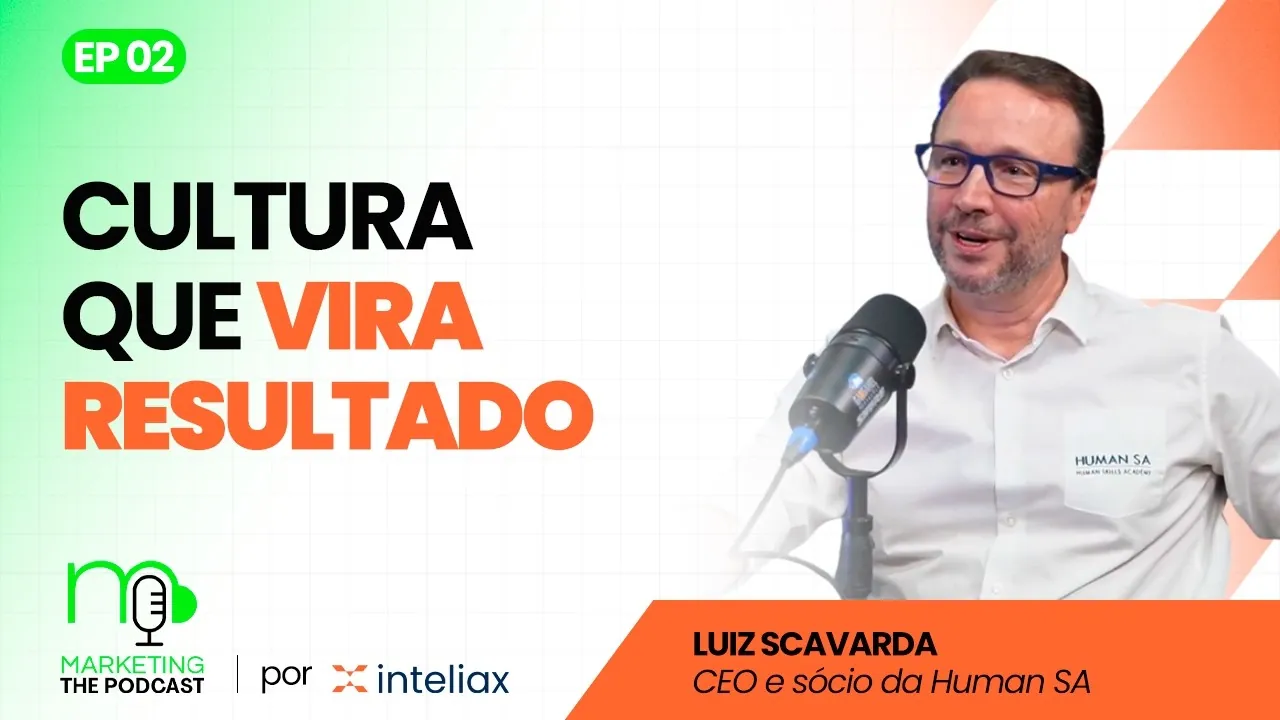
Luiz Scavarda, CEO of Human SA, discusses the link between organizational culture and productivity in business. In a conversation with Bruno Gimenes on Marketing - The Podcast, he examines psychological safety, mental health, governance, and the impact of artificial intelligence.
Luiz Scavarda, CEO and partner at Human SA, joined Marketing - The Podcast to discuss how organizational culture and people management drive financial and operational performance. In conversation with host Bruno Gimenes, Scavarda shared insights from his three decades leading companies across energy, consumer goods, and mining, as well as his recent work in restructuring and leadership development.
The video above features the complete conversation, covering everything from the practical impacts of workplace regulations on employee mental health to the strategic use of artificial intelligence in daily corporate operations. Below are the key takeaways organized across ten core themes.
PUBLICIDADE (GAM) — 1250x250
Happiness, productivity, and corporate processes
For Scavarda, workplace happiness should not be treated as a superficial topic, but rather as a direct outcome of management structure and operational clarity. Well-functioning environments reduce unnecessary friction, allowing teams to deliver consistently and efficiently.
"Happiness in the corporate world, for instance, is the result of a management system. As I often say, it's the outcome of an architecture. And that all stems from culture," explains Scavarda. According to him, companies with well-defined processes build the foundation for motivated employees to deliver real value.
What organizational culture is and how to implement it
The executive distinguishes the corporate culture written in manuals from the one actually practiced day-to-day. The gap between the two is often the primary cause of failed transformation initiatives.
"A strong culture belongs to an organization where the lived culture aligns with the desired culture," says Scavarda. He emphasizes that this consistency relies on leaders setting a daily example: "It always starts with top leadership. It's the CEO walking the talk—living the culture the organization aims to build."
Hierarchy versus a culture of fear and psychological safety
Scavarda highlights that hierarchical models are merely management frameworks, but the real threat to operations lies in a culture of fear. Lacking the psychological safety to point out mistakes or voice opinions undermines collective performance and increases the risk of severe errors.
"A culture of fear is one of the biggest challenges organizations face today. Fear leads to accidents, lost productivity, and burnout," he says. For Scavarda, fostering psychological safety is a prerequisite for operational sustainability.
Regulatory standards, mental health, and corporate co-responsibility
The evolution of regulatory standards, such as Brazil's NR-1, has broadened corporate accountability beyond physical safety to encompass mental health protection. Scavarda believes that professional burnout stems from multiple factors, but demands proactive measures from employers.
"Burnout typically stems from multiple factors—it's multifactorial, involving both personal and corporate dimensions," he notes. He adds that most organizations are still in the awareness phase of learning how to design less draining work environments.
Luiz Scavarda's career and human-centric shift
With a background in engineering and leadership roles at Shell, Whirlpool, Vale, and as president of Fundação Renova, Scavarda shares how his analytical mindset evolved to focus on human development. This pivot led him to pursue academic specializations in health and team management.
He recalls that while managing highly complex socio-environmental programs, he realized genuine employee engagement was what truly sustained technical delivery: "I learned firsthand that when people feel good about themselves and their workplace, productivity naturally follows."
Leadership, talent development, and continuous knowledge sharing
When building teams, Scavarda advocates that managers hire professionals who are more skilled than themselves in specific areas. This approach fosters continuous learning and mutual mentorship across all organizational tiers.
"Surround yourself with great people—people as good as or better than you. I've always aimed to build strong teams and bring in talent sharper than myself. You only stand to gain," Scavarda advises, highlighting that the humility to learn from peers and subordinates strengthens leadership.
Burnout, personal boundaries, and values alignment
Preventing burnout also requires self-awareness from employees to identify and communicate their operational limits. Scavarda notes that ethical misalignment between individuals and the organization accelerates emotional exhaustion.
"When your personal values align with company values, you establish a psychological contract that actually works," he states. He points out that discrepancies between corporate messaging and daily practice erode trust and harm employee retention.
Artificial intelligence: tools, productivity, and the future of work
Regarding the rise of AI, Scavarda emphasizes that technology serves to accelerate tasks but cannot replace critical thinking or domain expertise. Gains in speed must be managed carefully to avoid cognitive overload.
"AI is a means, a tool, not the end goal. People often confuse the two. It's just like innovation: your goal isn't simply to innovate, but to deliver a solution that better meets customer needs," he emphasizes. In his view, professionals with strong technical foundations stand to gain the most from generative tools.
The transformation triad: consulting, education, and technology
Cultural and organizational change programs often fail when implemented in silos. Scavarda outlines Human SA's approach, which combines initial diagnosis, leadership training, and technology-driven continuous tracking.
"The first step is identifying the organizational gap, which is where consulting comes in," he explains. Next, the educational pillar builds the necessary capabilities, while technological tools track team alignment in real time.
Organizational culture in SMBs and practical advice
Scavarda concludes by noting that cultural alignment is not exclusive to large corporations. Small and midsize businesses must also define clear principles to steer business growth.
"First and foremost, culture is a consequence of strategy. Regardless of company size, maturity level, or years in business, you need a North Star," he concludes. He advises setting concrete values and ensuring leadership lives them consistently every day.
PUBLICIDADE (GAM) — 1250x250