 Business
AI Is a Means, Not an End at Work, Says Luiz Scavarda
On Marketing - The Podcast, the executive discusses productivity gains from artificial intelligence and the need for critical thinking.
Luiz Scavarda explains that artificial intelligence quadrupled his productivity, but warns about the rising intensity of the workday. The executive argues that the technology requires foundational knowledge to deliver real business results.
Luiz Scavarda, CEO and Partner at Human SA, discussed the impact of artificial intelligence on corporate environments and daily routines during an interview with Bruno Gimenes on Marketing - The Podcast, in an excerpt from an organizational culture episode that also covers other management topics.
For Scavarda, the first step to understanding the role of technology is recognizing its instrumental function. He draws a direct parallel with corporate innovation processes: innovation is not the end goal itself, but the pathway to delivering a solution aligned with customer needs.
PUBLICIDADE (GAM) — 1250x250
Productivity and the risk of cognitive overload
The practical use of AI tools brought significant efficiency gains to Scavarda's routine, but also introduced new operational challenges. "My productivity increased fourfold since I started using it, and I am a very active AI user," he reports. However, the idea that productivity automatically creates more downtime does not hold up in corporate daily life.
According to Scavarda, working hours tend to remain unchanged while the pace of activities intensifies. "Your time, your work hours, that's an issue, because you don't end up rebalancing it—it stays the same. Except it becomes more intense," he notes. This continuous data flow demands more cognitive effort and can lead to mental burnout, mirroring dynamics seen in constant social media use.
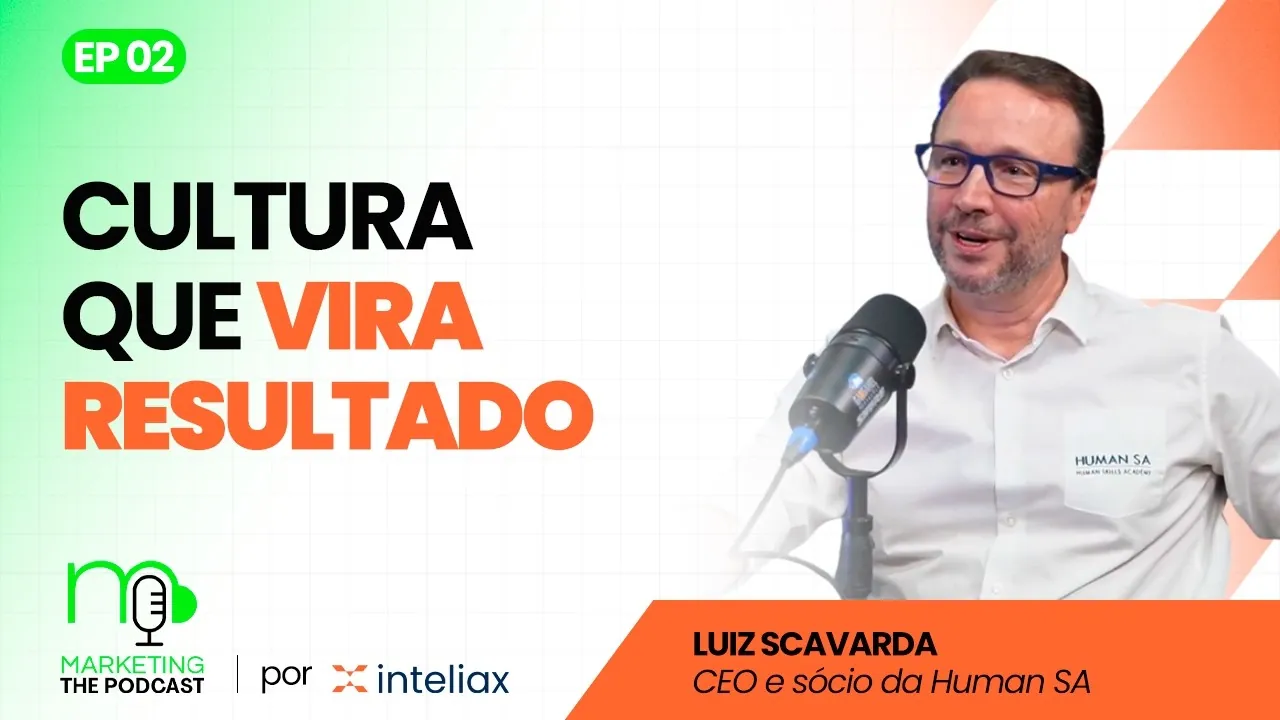
In the video above, Scavarda details practical examples from project routines and explains how to manage the mental intensity caused by data overload in executive presentations.
Foundational knowledge and the curation principle
The abundance of AI-generated answers does not remove human accountability for the final output. Scavarda explains that excess information generated by automated tools can hinder synthesis in strategic presentations if there is no clarity regarding business objectives. "The responsibility is yours; you have to evaluate what is genuinely important to include and what to leave out," he says.
To illustrate the interdependence between the tool and a professional's analytical capability, Scavarda compares the current moment with the rise of spreadsheets in the past. "I remember back when I was an intern and Excel arrived—it was the spreadsheet revolution. It was that basic rule: garbage in, garbage out. That is what AI is. If you don't know how to ask, or how to analyze and interpret, it won't help at all," he points out.
In Scavarda's view, AI acts as an accelerator for professionals who have already mastered the technical fundamentals of their field, rather than a substitute for conceptual learning.
A new revolution in workplace dynamics
Amid uncertainties in the job market, Scavarda does not foresee the elimination of jobs, but rather a structural transformation comparable to previous historical shifts. "The arrival of AI is a new revolution. Social, cultural, technological, human—it is a new revolution, and we have experienced this several times in the past, such as the Industrial Revolution itself," he emphasizes.
Scavarda rejects the idea that AI is merely a passing corporate trend. "I see it like social media. You can fight it, you can criticize it—I have several criticisms myself—but the fact is, it has arrived, it will stay, and you have to adapt to harness the potential behind it," he concludes.
PUBLICIDADE (GAM) — 1250x250