 Business
The Two Biggest Mistakes in Measuring Social Impact
Dihego Pansini analyzes the transition from effort-based metrics to real outcomes and the role of corporate communication.
Dihego Pansini discusses common pitfalls in corporate social projects and the need to prioritize real transformation over narrative. The debate examines outcome metrics and the role of communication in ensuring accountability.
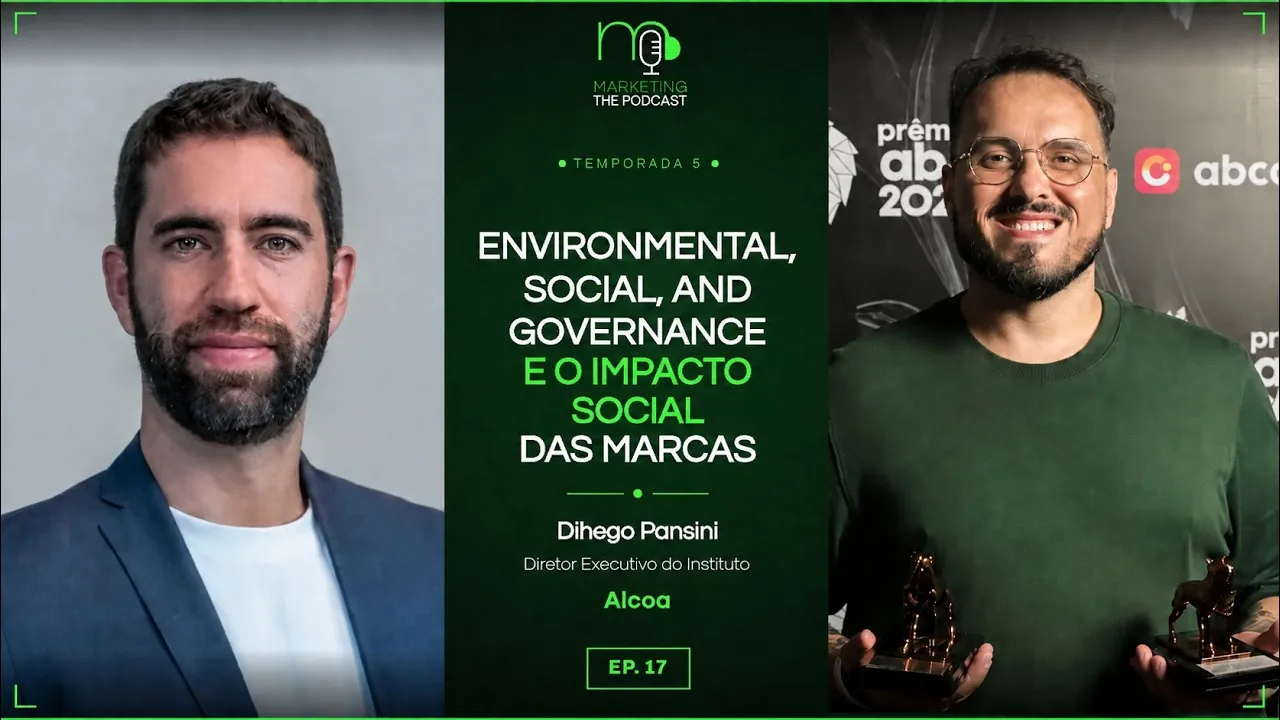
Speaking with Bruno Gimenes on Marketing - The Podcast, Dihego Pansini addressed the challenges of measuring social impact and the primary missteps companies make when structuring community initiatives.
In the video above, the discussion explores how organizations often manage internal investments with ease but face uncertainty when operating across territories and municipalities. Pansini points out that traditional social monitoring models focused solely on allocated budgets or raw headcounts—metrics that no longer meet today's governance demands.
PUBLICIDADE (GAM) — 1250x250
The shift in impact metrics
Pansini explains that evaluating social projects now demands indicators of tangible transformation, moving away from purely quantitative output numbers. "Before, it was: 'How many people did I train?' Today, it is: 'How many of those trained people got jobs?' 'How much did that business or enterprise we invested in increase income for that cooperative or association?'" he notes.
For Pansini, the same rigor applies to initiatives in other sectors, such as education. It is not enough to track financial allocations; organizations must monitor whether pedagogical growth occurred, whether teaching quality improved, and how that directly reflected in student performance.
The two main corporate mistakes
When outlining the most frequent missteps in social project management, Pansini narrows the issue down to two core fronts. The first mistake is deploying capital without defining the intended social transformation goal in advance.
"If building relationships used to be enough, and today we have all these other layers, it's not enough to know how many people I trained, but what kind of change I generated. To reach that point, the first question is: 'What transformation do I want to create?'" Pansini highlights. Without this foundational definition, indicators lose their strategic purpose.
The second mistake Pansini points out is prioritizing storytelling and PR before establishing real impact. Marketing and communication should not replace practical outcomes, but rather come into play after a clear strategy, objectives, and measurement metrics are established.
Communication as accountability
According to Pansini, publicizing social initiatives serves a legitimate purpose when it delivers transparency and public utility. "Storytelling and communication exist to generate value around what you have already established as a strategy," he states.
Pansini emphasizes that making initiatives public enables society and local residents to discover available opportunities and take part in projects. Institutional communication therefore strengthens reputation and perceived brand value by operating as an instrument of community accountability.
PUBLICIDADE (GAM) — 1250x250