 Business
Aligning ESG, Social Impact, and Corporate Reputation
Diego Pansini explains how to structure data-driven social projects backed by governance and business viability.
In an interview with Bruno Gimenes, economist Diego Pansini discusses the evolution of ESG from a reputational tool into a core pillar of business viability. The conversation explores private social investment, empirical metrics, and marketing's role in translating real-world impact.
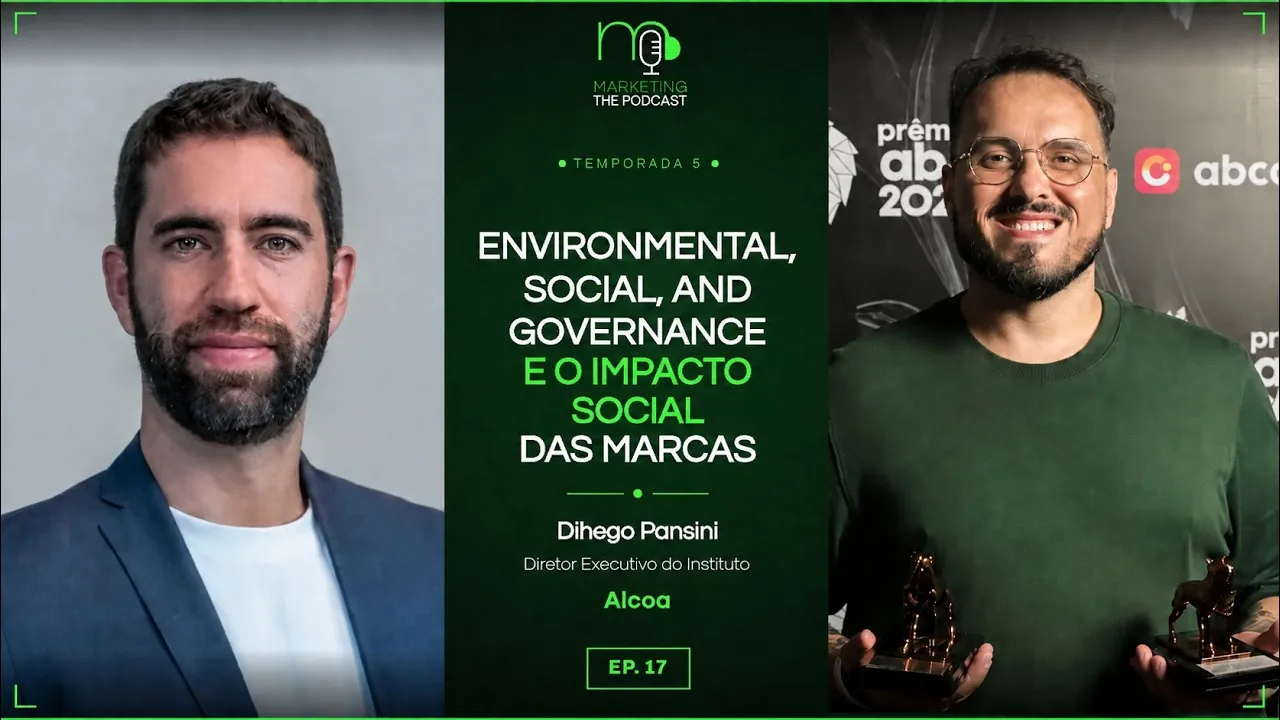
In a conversation with Bruno Gimenes on Marketing - The Podcast, economist Diego Pansini discussed how sustainability and social responsibility strategies have evolved from mere PR tools into essential pillars of business viability and longevity. His analysis spans from the foundations of human development to the operational criteria required to measure regional transformations and communicate results transparently.
In the video above, Pansini and Gimenes discuss the complexities of institutional negotiations and the technical rigor required to manage large-scale socioeconomic impact projects.
PUBLICIDADE (GAM) — 1250x250
Education as a tool for social transformation
Pansini emphasizes that access to structured education is the primary driver of individual and collective socioeconomic mobility. Educated in the public school system and a recipient of a philanthropic scholarship, he points out that academic qualifications build a lasting foundation of autonomy for communities.
"I truly believe that it has an incredible power to transform people's lives," Pansini states when analyzing how nations and territories rebuild their productive and social fabrics by prioritizing education.
Combining education and sports for social development
When addressing the integration of sports and schooling, Pansini argues that initiatives of this nature should combine efforts rather than create mutually exclusive paths. Holistic development fosters discipline and expands opportunities for youth in vulnerable communities.
"We always have to work toward bringing things together, adding value," Pansini notes. "Always operating with an 'and' mindset—where someone can both play a sport and pursue their studies."
Who is Diego Pansini
Reflecting on his journey and core values at age 40, Pansini underscores the importance of balancing professional rigor, faith, and family life. For him, corporate work gains true meaning when dedicated to serving others and making concrete contributions to the surrounding environment.
"When you work, do it with excellence. When you focus on personal life, care for it with excellence, great generosity, and enjoy the beauty of life," Pansini highlights.
The evolution of ESG: from PR to business viability
Pansini explains that corporate social investment has moved beyond a purely philanthropic phase driven by donations and sponsorships aimed solely at immediate brand perception. Growing public awareness and social media have demanded operational consistency and direct accountability from companies regarding the impact of their operations.
"The 'S' in ESG is no longer merely a reputational choice; it has become a variable of business viability," Pansini explains, noting that a social license to operate, risk management, and human rights dictate whether an organization can thrive over the long term.
Private social investment and community development
The capital deployed by the private sector should act as a catalyst for regional development, strengthening formal job creation, local workforce training, and supply chain integration. Pansini observes that structured productive inclusion is the most effective way to address economic vulnerability.
"Social investment does not function as a tool to mitigate negative operational impacts or reputational issues," Pansini states. "On the contrary, it must serve as a catalyst for growth."
Structuring social projects, governance, and goal setting
The effective execution of sustainability initiatives requires clarity from day one regarding the tangible change a company aims to create. Pansini emphasizes that complex decision-making processes require robust governance, alignment with public authorities, and solutions grounded in empirical data and evidence.
"Impact without reputation fails to create perceived value. Conversely, communication without real impact is unsustainable over time," Pansini summarizes, describing the need to pair social empathy with disciplined corporate management.
Impact metrics, active listening, and common mistakes
Among the common pitfalls in corporate strategies, Pansini points to top-down program design without actively listening to local communities, as well as prioritizing storytelling before validating results. Modern impact measurement looks beyond input metrics or headcount served to evaluate real shifts in local income, health, and learning outcomes.
"The most common mistake large organizations make is investing without a clear understanding of the specific change they want to create," Pansini warns. "The second is prioritizing the narrative before proving the impact."
Marketing as a social translator of corporate impact
Corporate communications and marketing play a crucial role when they translate tangible impact for society rather than substituting empty rhetoric for real change. When executed properly, outreach serves as both accountability and public engagement to amplify the reach of corporate initiatives.
"Marketing won't create the impact itself, but it helps translate that impact for society," Pansini stresses. "In my view, marketing acts as a social translator in this context."
Profile and core competencies of impact professionals
Working in sustainability and social responsibility requires the ability to engage diverse stakeholders, from grassroots community leaders to executive boards. The role demands technical mastery of management, metrics, and processes, combined with a strong sense of purpose and empathy for local realities.
"The defining skill for this field is the ability to develop technical management expertise while maintaining the empathy to genuinely care," Pansini concludes.
PUBLICIDADE (GAM) — 1250x250