 Business
Structuring Social Projects with Governance and Impact
Dihego Pansini analyzes the need for data, indicators, and governance to ensure real transformation.
Structuring corporate social projects requires clarity on objectives and societal change. Dihego Pansini explains how applying governance, data, and indicators delivers real impact. The model demonstrates why corporate communication must be anchored in concrete results.
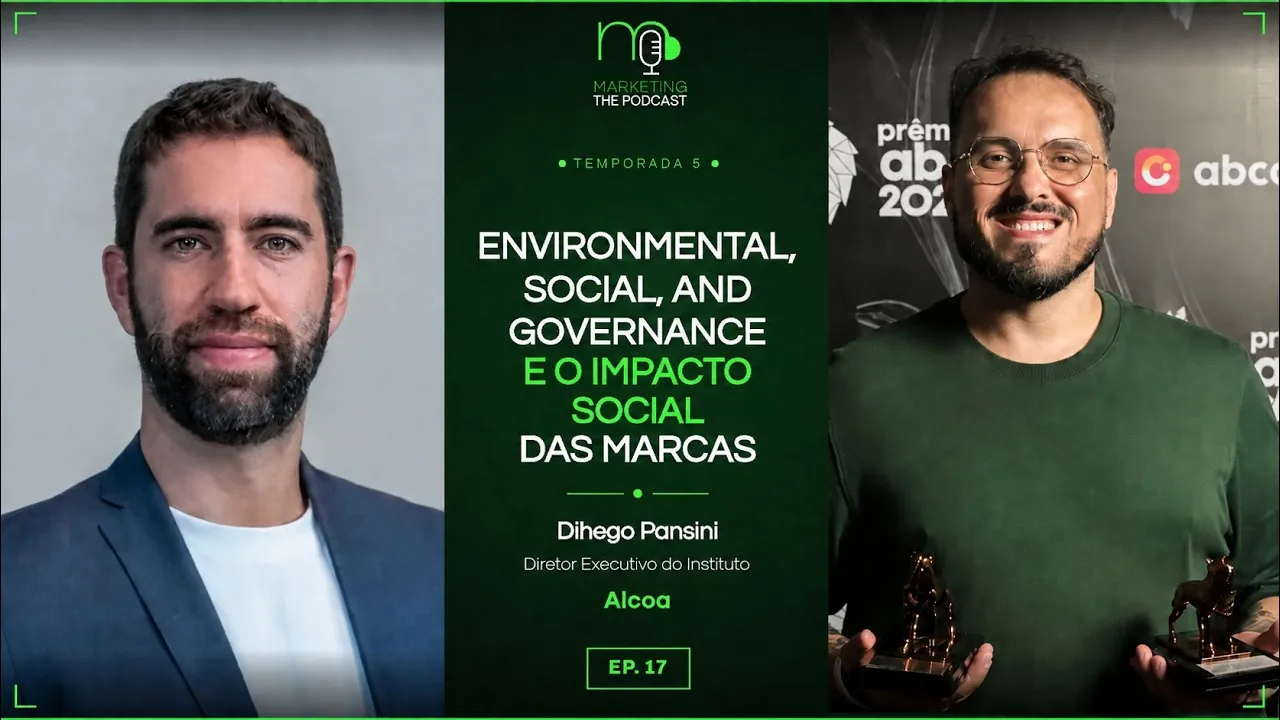
Economist Dihego Pansini examined the technical criteria for planning private social investment and corporate sustainability initiatives during a conversation with Bruno Gimenes on Marketing - The Podcast. The analysis was part of a broader discussion on governance, purpose, and institutional reputation.
In the video above, Pansini explores the need to replace ad-hoc social actions with management frameworks rooted in clear goals, robust data, and local community engagement.
PUBLICIDADE (GAM) — 1250x250
Defining Objectives and Contextual Assessment
When designing or evaluating a social project within an organization, the fundamental first step is determining the final destination of the intervention. Pansini notes that organizations often allocate financial resources without clarity on which specific metric they intend to move. Structuring initiatives requires a preliminary community assessment to map local vulnerabilities: "the major first step, as simple as it sounds, is asking what change do I want to generate with that investment?"
Without a structured planning discipline and a defined theory of change, investments tend to degenerate into one-off sponsorships aimed solely at immediate public relations gains. While brand visibility is part of the process, it loses relevance when a company cannot prove the tangible social transformation resulting from its contribution.
Governance and Evidence-Based Solution Design
The rising sophistication of the ESG agenda has introduced new layers of complexity to decision-making. Projects require continuous alignment with public authorities, community leaders, and multiple internal departments. Pansini defines the role of this organizational framework: "It represents the entire decision-making process required to move your initiative from point A to point B."
Decision-making now demands an empirical foundation regarding the effectiveness of available interventions. In areas such as income generation, where multiple methodologies exist, data-driven management evaluates which models have historically succeeded prior to capital allocation, embedding the project into a strategic regional development vision.
The Link Between Real Impact and Value Perception
The evolution of the sector also demands a shift in the profile of sustainability professionals, who must combine business acumen, key performance indicators, and management rigor with traditional interpersonal skills. Building brand equity remains critical, but it must function in direct alignment with tangible delivery on the ground.
Long-term coherence relies on mutual reinforcement between technical execution and corporate messaging. Pansini summarizes the necessary balance: "impact without reputation fails to generate perceived value. Conversely, communication without real impact is unsustainable over time."
PUBLICIDADE (GAM) — 1250x250