 Business
Private Social Investment and Local Development
Dihego Pansini analyzes how social investment drives regional economies and ensures long-term business viability.
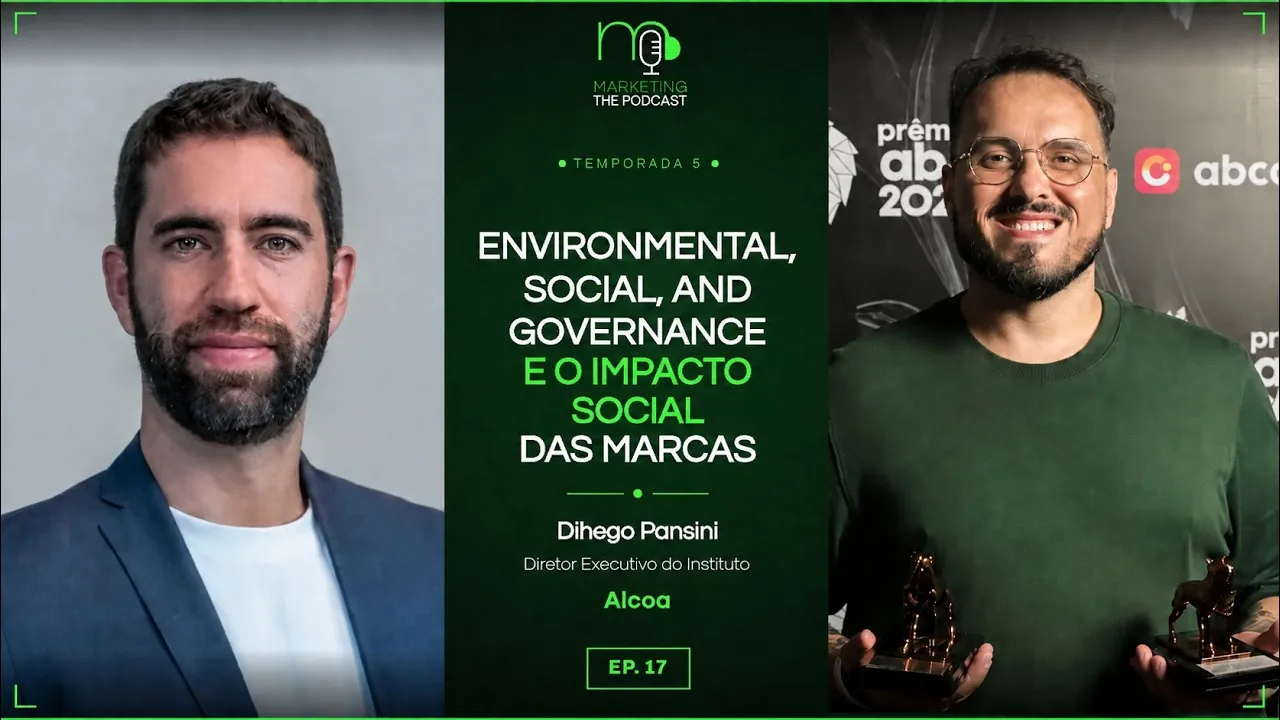
On Marketing - The Podcast, Dihego Pansini explains why private social investment has evolved from a reputational choice into an operational necessity. The economist highlights how job formalization and income generation fuel local development.
Economist Dihego Pansini discussed the relationship between major corporate operations, value creation, and community impact during an interview with Bruno Gimenes on Marketing - The Podcast. The conversation explored how business and industrial activities directly influence regional economic dynamics, going beyond surface-level image management.
In the video above, Pansini breaks down the practical mechanisms connecting corporations, the public sector, and local communities to build long-term impact initiatives across various regions.
PUBLICIDADE (GAM) — 1250x250
Operational impact and social license to operate
Pansini points out that any structured human activity produces both positive and negative impacts on the environment and society. According to him, acknowledging this reality is the first step toward responsible management, citing historical infrastructure and academic projects that were carried out under environmental standards far different from today's.
Beyond immediate public perception, corporate focus has shifted toward business continuity. Pansini summarizes this shift: "So, whereas before I had to look at reputation, communication, and perception, now, when talking about business, I'm talking about a social license to operate, risk management, human rights, territorial development, and ultimately, business sustainability." From this perspective, "social initiatives are no longer just a reputational choice; they become a critical business viability variable."
Social investment as a catalytic tool
A company's core operations—through tax payments, local hiring, and procurement—often carry far greater socioeconomic weight than standalone social projects. For Pansini, private social investment should not be treated as mere damage control, but rather as an ecosystem accelerator.
"Quite the contrary, it should serve as a catalytic instrument," Pansini emphasizes. By investing in local workforce training or strengthening regional suppliers, a company retains capital within the community and revitalizes local commerce and services.
Pansini illustrates how this approach works in practice: "For instance, when I allocate part of that social investment to foster local employability or entrepreneurship that can benefit from the money circulating in that area, I'm catalyzing the overall impact the company creates in that territory."
Formal employment and reducing vulnerability
When addressing poverty alleviation, Pansini underscores the central role of structured employment. Citing 2024 IBGE data, he highlights that the population living in poverty consisted primarily of 47% unemployed individuals, around 20% informal workers without formal contracts, and only 6.7% formally registered employees.
Formalization and compliance with legal and labor standards therefore act as direct drivers of social inclusion, while private social investment fosters additional conditions for broader community development.
PUBLICIDADE (GAM) — 1250x250