 Sports
Ironman Training: Gandolfo Method & Fonseca's Routine
Roberto Fonseca details up to 30-hour training weeks, chasing cycling watts, and effort-based training.
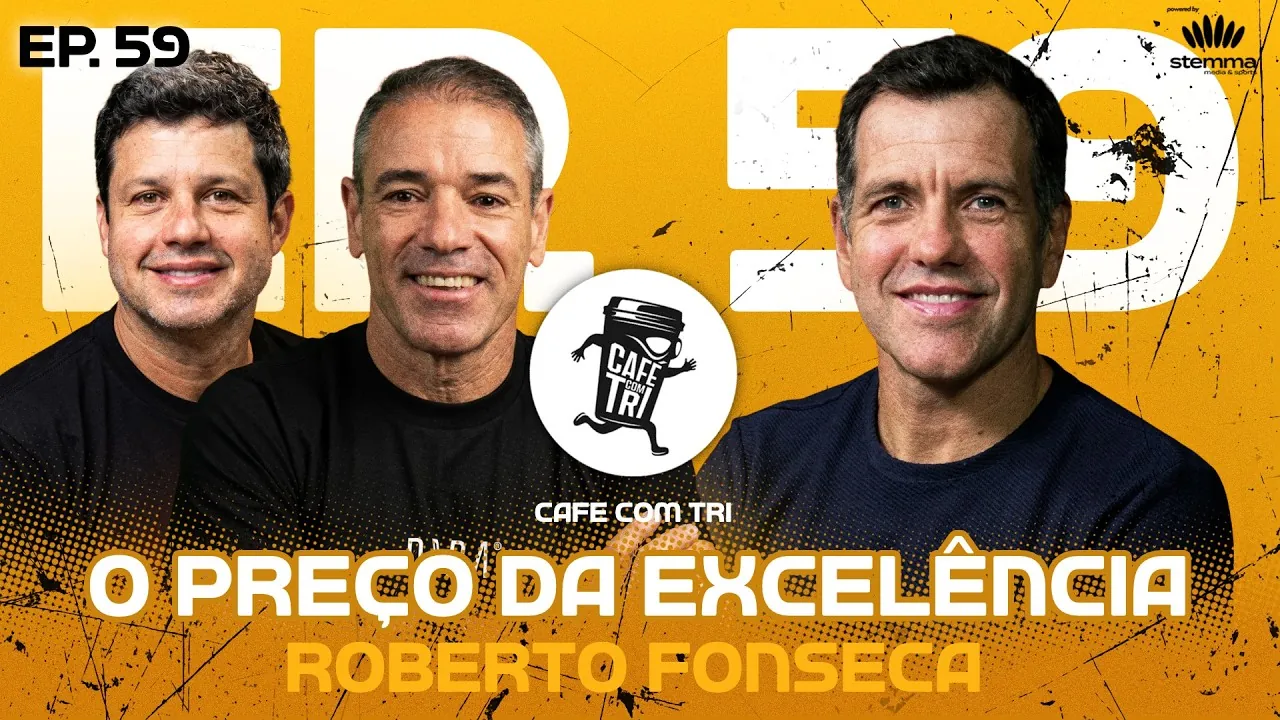
In an interview on Café com Tri, Roberto Fonseca breaks down his training routine and how he tackles his biggest weaknesses. The triathlete also reveals what goes on behind the scenes of coach Luiz Gandolfo's blind training method.
Balancing high performance in Ironman requires a precise combination of volume, consistency, and strategy to refine weak points. On the Café com Tri podcast, Roberto Fonseca opened up about what goes into his preparation, detailing the grueling routine that fuels his international success and his working dynamic with veteran coach Luiz Gandolfo.
PUBLICIDADE (GAM) — 1250x250
Weekly volume and the pursuit of cycling power
Roberto’s routine is staggering when it comes to the numbers: during standard base-building weeks, his workload ranges from 17 to 22 hours, climbing to 23 to 25 hours during specific build phases, and peaking at up to 30 hours weekly—not counting supplementary strength training sessions. His schedule includes swimming 5 to 6 days a week, cycling 6 days, and running almost daily across 6 to 7 sessions, including recovery runs.
Although running is his strongest discipline and he boasts a competitive swim anchored by an aggressive mindset in open water, Fonseca considers cycling his greatest challenge. As a lighter athlete, he explains that generating high power—such as holding 300 W—requires a disproportionate amount of effort. Consequently, he targets the 240 to 260 W range at race pace and relies on gym strength training to raise his ceiling and maintain speed on descents and crosswind sections.
Luiz Gandolfo's RPE-based training method
Another critical pillar in Fonseca’s development is the methodology used by Luiz Gandolfo. Far from prescribing workouts rigidly tied to power zones or fixed FTP numbers, the coach works with perceived exertion scales—ranging from recovery and easy to moderate, hard, and race pace. This approach compels the athlete to develop body awareness and real-time race-reading skills.
One of Gandolfo’s hallmarks in track and pool sessions is strict pacing control without announcing the entire set in advance. The coach often prescribes broken blocks—such as 100- or 200-meter repeats—and extends the volume on the fly without athletes knowing when the workout will actually end. The goal is to rein in early overzealousness, teaching triathletes how to pace themselves and stick strictly to the target split on the stopwatch.
Squad benchmarks and the reality of Kona
In his daily training, Roberto relies on elite benchmarks to push his limits: battling to stay on the feet of faster swimmers in the pool and hanging onto the wheels of stronger cyclists on the road. This demanding environment directly pays off in grueling races like the Ironman World Championship in Kona, where brutal factors such as extreme humidity, howling winds on the descent from Hawi, and intense heat demand total adaptation and mental resilience.
PUBLICIDADE (GAM) — 1250x250