 Sports
Breaking Psychological Barriers in Women's Swimming
Ricardo Cintra reflects on Poliana Okimoto's mental training and the turning point for Brazilian female swimmers.
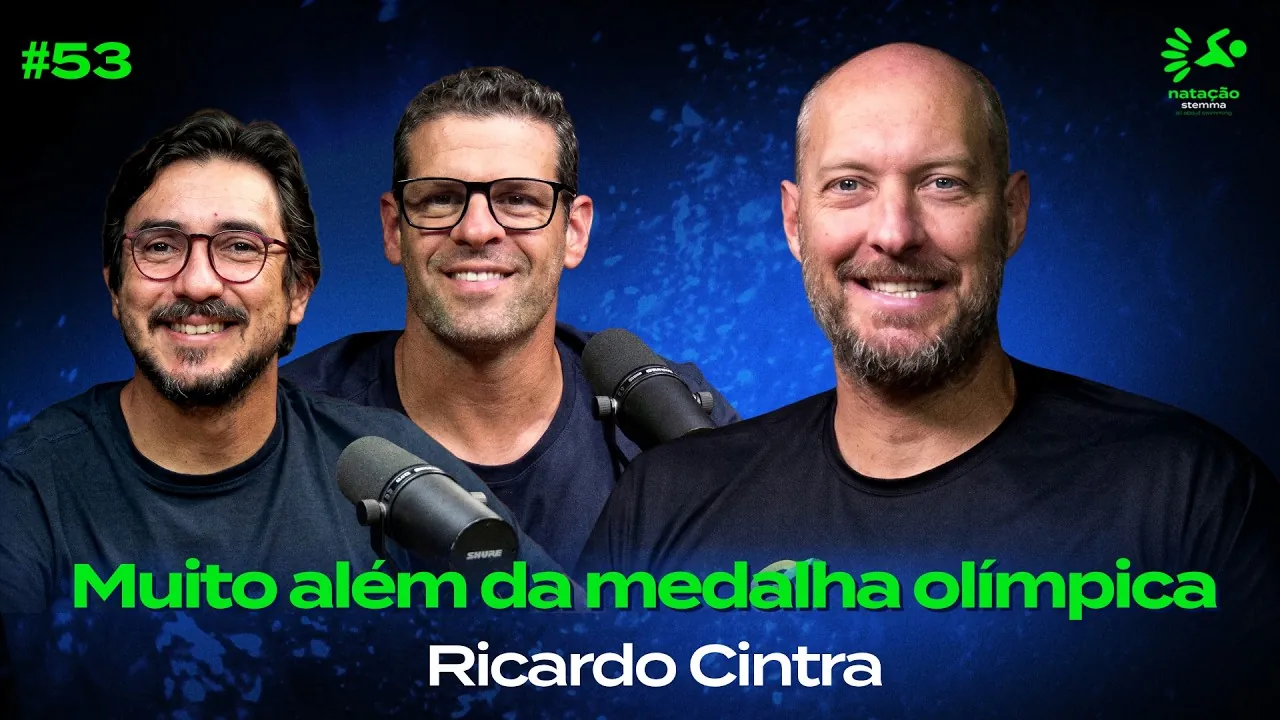
Speaking on Natação Stemma, coach Ricardo Cintra shared how open-water marathon medals unlocked self-confidence across Brazilian women's swimming. He detailed the psychological barrier overcome by Poliana Okimoto alongside her long-standing dominance in the pool.
For decades, Brazilian female swimmers reaching the Olympic podium was treated almost as a technical and cultural impossibility. Appearing on the Natação Stemma podcast, coach Ricardo Cintra recalled how the victorious journeys of Poliana Okimoto and Ana Marcela Cunha in open-water marathons served as a turning point for an entire generation's self-confidence, inspiring pool athletes such as Etiene Medeiros as well.
PUBLICIDADE (GAM) — 1250x250
The stigma of impossibility and the fight for recognition
When Poliana first emerged on the national competition scene, women's swimming in Brazil faced severely limited expectations. Simply qualifying for the Olympics was considered an extraordinary achievement, reserved for a rare few like Fabíola Molina. The institutional disbelief was so palpable that athletes organized T-shirt protests during editions of the Troféu Brasil, demanding the use of 'B' qualifying standards to ensure greater female representation at the Olympic Games.
Poliana joined these demonstrations when she was just 14 or 15 years old. This widespread skepticism created an invisible barrier, reinforcing the notion that Brazilian female swimmers could not contend for medals on the world's biggest stages.
Mental training on the path to the Olympic podium
Even after establishing herself as a medalist at the World Championships and on the World Cup circuit, Poliana still had to confront internal mental blocks inherited from the environment she grew up in. Convincing her that she was a legitimate contender for Olympic gold and silver required intensive, interdisciplinary work.
During the decisive Olympic cycle, Cintra enlisted the support of sports psychologist Regina Brandão. Mental conditioning proved decisive in dismantling the limiting belief that her generation did not belong on the Olympic podium, paving the way for Brazilian distance swimming to become a global benchmark of competitiveness.
Pool dominance and records while training for the open sea
Despite tailoring her preparation entirely to open-water marathons, Poliana maintained near-total dominance in domestic pools for roughly 15 years. Under Ricardo Cintra's guidance, she set five Brazilian short- and long-course pool records and went virtually undefeated in distance events at both the Troféu Brasil and Troféu José Finkel—conceding only isolated defeats to Ana Marcela Cunha and, toward the twilight of her career, to Viviane Jungblut in the 800m freestyle.
Her remarkable versatility produced memorable milestones for her coach, including victories over Joana Maranhão in the 400m freestyle and an impressive third-place finish in the 200m freestyle at the Unisanta pool in 2011, touching wall-to-wall alongside sprint specialists such as Tatiana Lemos and Manuella Lyrio.
PUBLICIDADE (GAM) — 1250x250