 Business
How Reverse Logistics for Electronics Works in Brazil
Robson Esteves explains ABREE's role in household e-waste disposal, regulatory frameworks, and cost sharing.
Electronics reverse logistics connects manufacturers, consumers, and legislation to enable proper household e-waste disposal. Speaking on Marketing - The Podcast, Robson Esteves breaks down collective management and industry compliance.
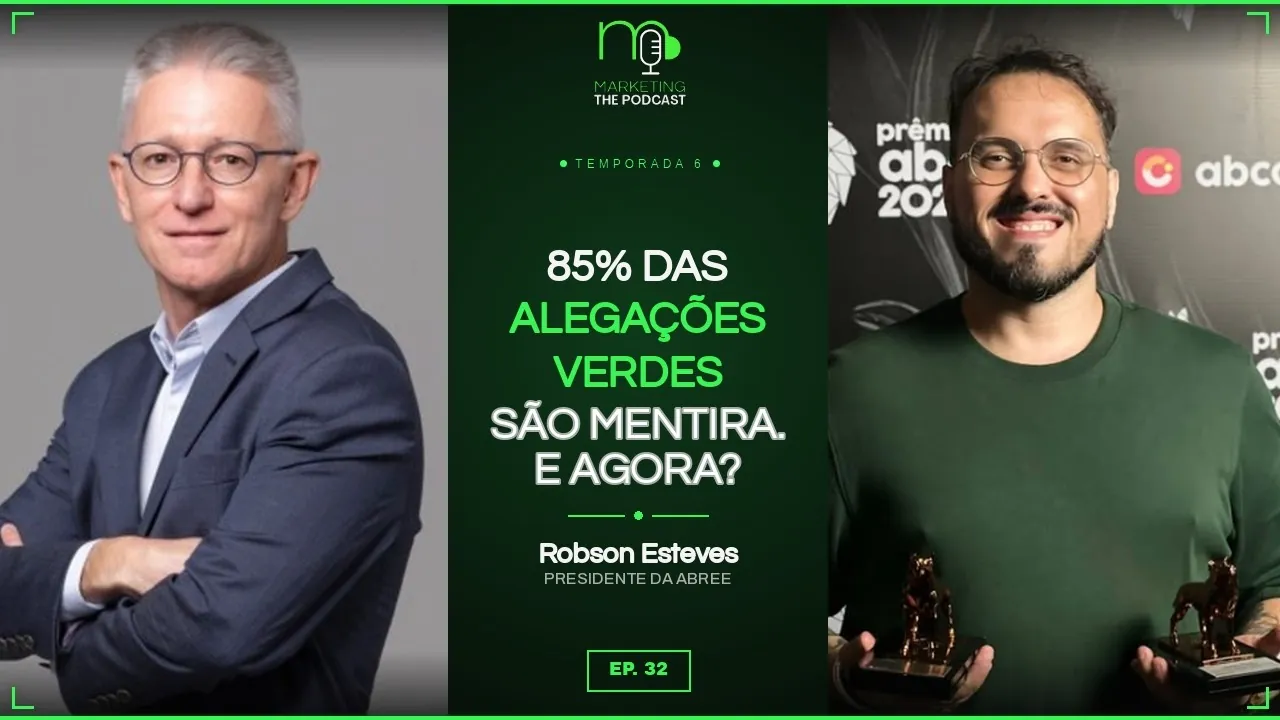
Robson Esteves, president of ABREE, spoke with Bruno Gimenes on Marketing - The Podcast about the structure of reverse logistics in Brazil and the role of management entities in the proper disposal of electronics and home appliances. The full episode also covers other topics related to communication and sustainability in the sector.
In the video above, Esteves explains how the logistics chain organizes the collection and processing of discarded consumer items, while highlighting the importance of alignment among competing companies.
PUBLICIDADE (GAM) — 1250x250
The difference between forward and reverse logistics
While traditional logistics focuses on transporting and delivering goods from the factory to the end consumer—driven by the country's vast geography and the demand for distribution centers—reverse logistics handles the opposite journey once a product reaches the end of its life cycle.
ABREE's primary focus is on household post-consumer products, distinguishing residential disposal from corporate waste. As Esteves explains: "In what we call the B2B sector, companies have specific tax and accounting processes for disposal. We don't operate there; our focus is on the consumer who bought a cell phone, television, or refrigerator, used it, and at some point, it becomes post-consumer waste that no longer serves them."
Environmental risks and regulatory frameworks
The accumulation of disused electronics in households often stems from a lack of information about where and how to discard them. Because they contain chemical components, these materials cannot be thrown into regular trash without risking soil contamination and public health hazards. According to Esteves, "this waste contains chemicals that are harmful not only to the environment, but to people as well."
The sector's framework in the country gained momentum in 2010 with the enactment of the National Solid Waste Policy, which established guidelines for specific industries such as batteries, light bulbs, oils, and packaging. In the electronics sector, operational guidelines were detailed by Decree 10,240 in 2020, defining the targets and procedures that manufacturers, importers, and distributors must follow.
Cost sharing and compliance through associations
Although a company can set up its own reverse logistics system individually, joining a management entity enables economies of scale. Centralization allows businesses to split logistical expenses and simplifies the mandatory reporting of large volumes to regulatory agencies.
For Esteves, shared management ensures legal certainty and operational compliance: "an association first provides cost sharing—dividing expenses—and is far more efficient because everything we're talking about, dealing with tons and massive volume, must be reported to the Ministry of the Environment or state agencies, which is very demanding." Beyond meeting legal requirements, he emphasizes that companies also join the system out of an understanding of their environmental impact.
PUBLICIDADE (GAM) — 1250x250