 Business
How Reverse Logistics Engages Consumers and Corporate Boards
Robson Esteves explains how proper disposal messaging and new generations are transforming corporate ESG agendas.
Robson Esteves details the flow of electronics reverse logistics and the vital role of public awareness. The discussion highlights how consumer demand is driving corporate leadership to prioritize circular economy practices and traceability.
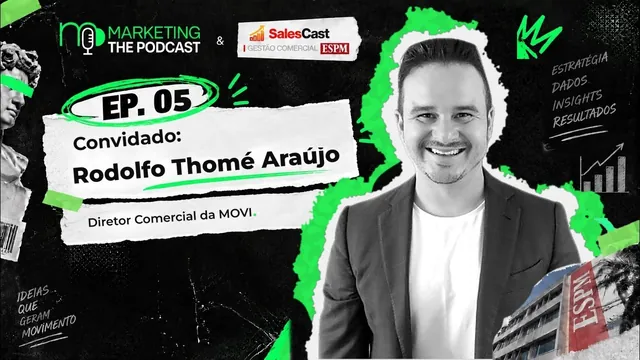
Robson Esteves, president of ABREE (Brazilian Association for the Recycling of Electronics and Home Appliances), spoke with Bruno Gimenes on Marketing - The Podcast about the challenges of educating the public on proper electronic waste disposal and how consumer demand has pressured corporate boards to look beyond traditional balance sheet metrics.
The segment is part of a broader podcast discussion exploring sustainability and environmental practices across the industrial sector.
PUBLICIDADE (GAM) — 1250x250
The recycling cycle and shared responsibility
For Esteves, consumer communication must clearly outline the shared responsibility among manufacturers, public authorities, and society. The reverse logistics flow relies on voluntary consumer drop-offs so materials can return to the production cycle rather than ending up in landfills.
According to Esteves, the final destination of these components feeds base industries: "The process is: once it arrives at a collection point, a voluntary drop-off site, we collect it and take it to our reverse manufacturing operators, who will sort it, dismantle it, separate it, and shred it." He highlights that raw materials such as glass, plastic, and metal are reused—refrigerator steel, for example, can be turned into rebar for construction, while printed circuit boards contain valuable components such as rare earths and trace amounts of gold. "The objective of the circular economy is just that: to pollute less and extract fewer virgin materials from nature," Esteves points out.

Consumer pressure on corporate boards
Addressing the shift in mindset across boards of directors and executive leadership, who historically focused solely on operational metrics like EBITDA, Esteves points out that this movement was driven by the profile of modern buyers.
"The trigger for this is the consumer," explains Esteves, noting that the rise of younger demographics with financial independence and ESG-driven purchasing criteria has compelled corporate leaders to adapt their agendas. This influence, already well-established in European and Asian multinationals, has expanded across the Brazilian market as brands seek commercial appeal with this new customer base.
Traceability and combating greenwashing
The practical execution of this agenda on the commercial side is reflected in the adoption of packaging certifications and accountability in recycling processes. For Esteves, the entity's seal serves as a credibility asset for affiliated manufacturers and importers.
Esteves emphasizes that transparency is backed by rigorous audits: "All reverse logistics is documented, traceable, and verifiable. So there is no greenwashing here—or we don't want any—everything is thoroughly audited." For him, brands that overlook this shift in consumer habits face direct risks to their competitiveness: "Companies that haven't yet realized this or recognized its importance could lose market share," he concludes.
PUBLICIDADE (GAM) — 1250x250