 Business
How Bario Bar Uses Eatertainment to Grow in São Paulo
Flávia Roma details the business model, venue formats, and expansion into large-scale operations.
Grupo Bario Bar's marketing manager breaks down the brand's journey from opening in Pinheiros to expanding into Santo Amaro and Tatuapé. The business model blends food service and arcade gaming to boost customer dwell time.
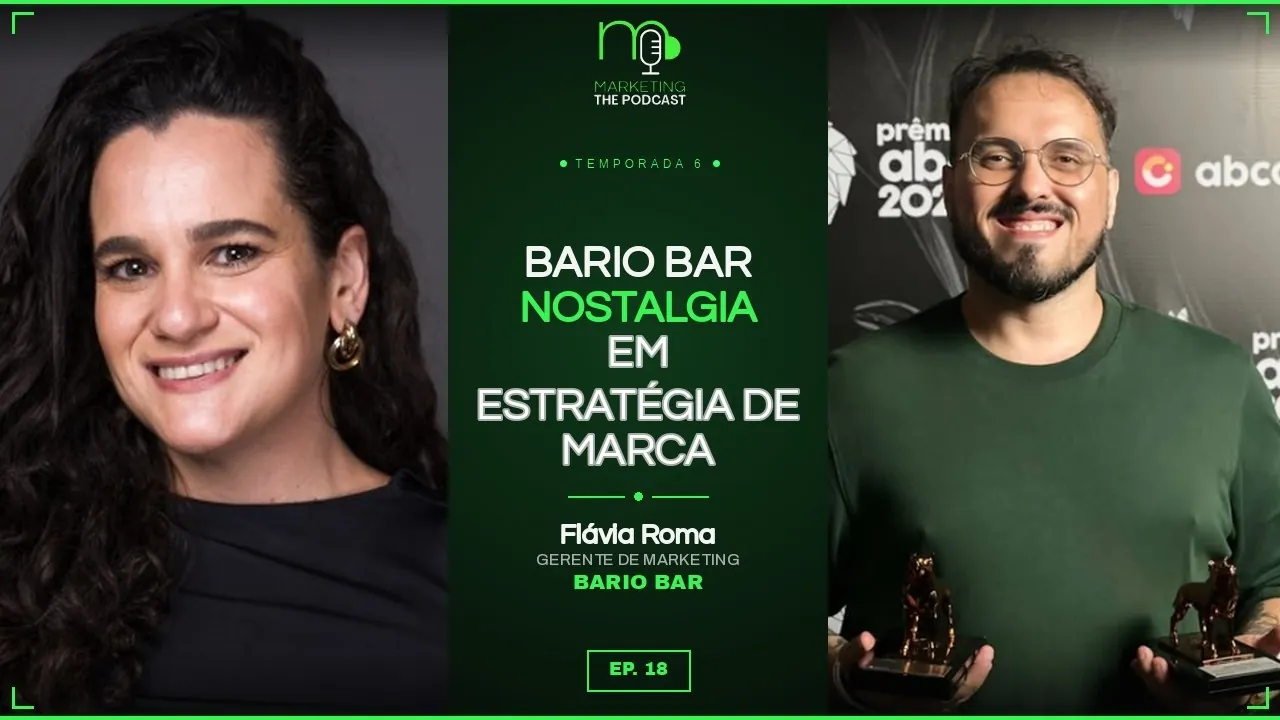
Flávia Roma, Marketing Manager at Grupo Bario Bar, detailed on Marketing - The Podcast the business strategy behind the São Paulo barcade and how pairing entertainment with dining fuels the chain's growth.
In the video above, Roma explains that the company was founded in 2021 during the pandemic by two brothers who already imported entertainment machines and held exclusive distribution rights for pinball manufacturer Stern in Brazil. The initial concept brought together a bar, restaurant, and 40 pinball machines in a 400 m² venue in Pinheiros. "Our Pinheiros concept was very American. It was pure pinball—40 machines. A venue with neon lighting and a moody, yet highly Instagrammable atmosphere," she explains.
PUBLICIDADE (GAM) — 1250x250
Physical expansion and entertainment diversification
Following the consolidation of its first venue, the chain initiated its expansion roadmap in 2023. In May 2024, it opened the Tatuapé location, built on a larger scale with an expanded mix of attractions to meet demand in São Paulo's East Zone for dining combined with leisure.
With the larger footprint, the venue introduced new gaming formats beyond traditional pinball. "We realized we could offer other forms of entertainment besides pinball. That's when we brought in classic arcades, racing simulators, claw machines, and air hockey," Roma notes. Later, the brand launched its Santo Amaro venue—spanning 1,600 m² across three floors—and is currently developing a 3,000 m² project designed to feature an indoor roller coaster.
Brand adaptation across three distinct consumer profiles
Although all three venues share the same visual branding, lighting, and menu, consumer behavior shifts noticeably by neighborhood. Roma points out that managing these differences requires fine-tuning messaging to connect with three distinct customer profiles without diluting brand identity.
"Pinheiros serves as a transition spot. People drop in on Saturday for pre-drinks before heading out to a club," she notes. In Tatuapé, visitors treat the venue as their final destination and stay for extended periods. In Santo Amaro, the layout draws families: "Because it spans three floors—with dining on the ground floor and games across the upper levels—people either play first, come down to eat, and leave, or they eat first, head up to play, and head home," Roma summarizes.
PUBLICIDADE (GAM) — 1250x250