 Business
AI Is a Tool, Not a Crutch in Marketing, Says Flávia Roma
Executive discusses visual homogenization on social media and the limits of automation in experiential businesses.
Flávia Roma examines how unchecked artificial intelligence usage creates cookie-cutter content and dilutes brand identity. The marketing leader highlights the risks of replacing human creativity with shallow automation.
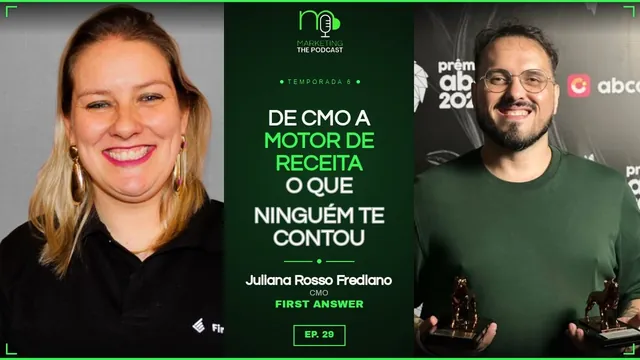
Flávia Roma, marketing manager at Grupo Bario Bar, shared on the Marketing - The Podcast with Bruno Gimenes that the unchecked rise of artificial intelligence has led to aesthetic and conceptual homogenization across digital marketing. While the full episode also explores the expansion of eatertainment and barcade operations, the core discussion addresses the common pitfalls agencies and brands face when adopting generative tools.
For Roma, easy access to AI has encouraged professionals to skip essential creative steps, producing virtually identical assets across completely different industries. "I have an aversion to AI because people don't know how to use it. You open Instagram, and everyone looks the same," Roma says. She emphasizes that in physical, sensory-driven businesses—where the atmosphere and the product are the primary assets—replacing authentic captures with synthetic creations undermines the core value proposition.
PUBLICIDADE (GAM) — 1250x250
In the video above, Roma and Bruno break down how operational haste compromises brand consistency, offering practical examples from everyday agency and marketing department workflows.

Visual homogenization and the loss of brand identity
The pushback against indiscriminate AI use stems from the observation that the technology is often deployed to avoid the heavy lifting of creative work rather than to elevate the final product. Roma notes that established brands and local businesses frequently adopt the same visual and written templates, making their social media profiles indistinguishable to consumers.
Recalling discussions with content vendors, Roma stresses that authenticity cannot be compromised for operational shortcuts: "AI is a tool to help you; it is not your crutch, and it is not the solution to your problems. I'm someone who builds things from scratch. If I have to make a presentation, I open PowerPoint and build the whole thing myself. At most, I'll run it through AI afterward to fine-tune the details."
Analytical support instead of outsourced thinking
According to Roma, AI finds its true value in reading metrics, organizing data, and structuring reports—areas where the technology delivers genuine analytical speed. However, most users still limit its application to basic prompts for copywriting or generating uninspired graphics.
Roma points out that the technology directly reflects the operator's own expertise, meaning shallow prompts inevitably yield poor results: "AI is trained by you, so if you don't know what you're doing, it won't either." Bruno added by citing a Notion study revealing that only 12% of middle management marketing professionals have advanced to sophisticated AI applications, while the rest remain stuck in surface-level interactions.
The risk of disconnect in presentations and planning
Another side effect of passively relying on tools like ChatGPT is a growing disconnect between professionals and the strategic plans they deliver. Bruno and Roma observe teams bringing AI-generated proposals into meetings with clients and leadership without understanding the underlying reasoning behind the recommendations.
When marketers copy and paste arguments without building the underlying logic themselves, they lose both the strategic narrative and the ability to defend the project. The result is generic roadmaps that lack real-world market context and fail to address the specific needs of the business.
PUBLICIDADE (GAM) — 1250x250