Sports
Álvaro José on Sports Reporting Behind the Iron Curtain
Traveling without passport stamps and under tight watch, the veteran broadcaster reflects on assignments in Cuba, Moscow, Czechoslovakia, and Seoul.
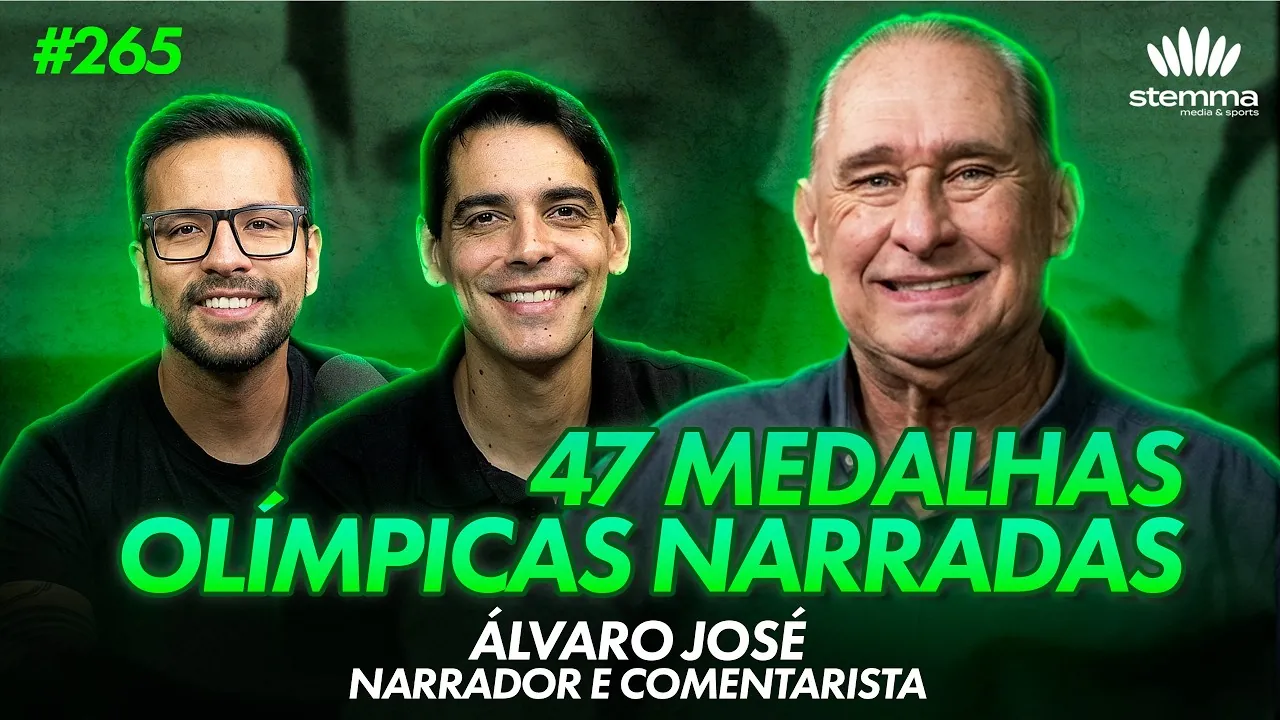
In an interview on the stemma podcast, veteran broadcaster Álvaro José reflects on the diplomatic hurdles and security challenges of covering sports across the socialist bloc during the 1980s. The journalist details his experiences reporting from Cuba, the Soviet Union, Czechoslovakia, and South Korea.
Covering international sports during the 1980s required far more than technical expertise and a microphone in hand: it demanded resourcefulness to navigate the bureaucracy and mutual distrust of the Cold War era. In a conversation on the stemma podcast—an episode that also explores other milestones of his career—play-by-play announcer and commentator Álvaro José recalled the unique realities of traveling to socialist bloc nations and covering major sporting events under heavy diplomatic and military surveillance.
PUBLICIDADE (GAM) — 1250x250
Paper Visas in Cuba and the 1984 Boycott
One of his first major experiences in this environment came in 1984, when Álvaro joined the TV Bandeirantes team—alongside J Júnior and Franciscângelis—to cover the Olympic Qualifying Tournament in basketball in Santiago de Cuba. At the time, Brazilian passports could not receive official Cuban entry stamps due to restrictions imposed by Brazil's military regime. The local authorities' workaround was issuing a separate paper visa.
The trip coincided with pivotal moments in sports geopolitics. After the Brazilian national team was eliminated, the broadcast crew was at the Havana airport preparing to return to Brazil when they watched Fidel Castro's famous six-hour speech announcing that Cuba would boycott the 1984 Los Angeles Olympic Games, aligning with the Soviet-led boycott.
Daily Life in Czechoslovakia and the Volleyball World Championship
In 1986, Álvaro traveled to Czechoslovakia to cover the FIVB Volleyball Women's World Championship. Unlike his previous experiences in Moscow and Havana, procedures were considerably more flexible: his passport was stamped without issue, and official press credentials granted unrestricted movement across different host cities.
The Brazilian squad played matches in the capital of Prague, as well as in Brno and Ostrava—the hometown of tennis star Ivan Lendl. Álvaro recalled that the assignment unfolded without friction from local authorities, with press credentialing and domestic travel operating with surprising efficiency across the country's industrial provinces.
The Friendship Games in Moscow and a Family Loss
Also in 1984, shortly after the conclusion of the Los Angeles Games, Bandeirantes assigned the broadcaster to cover the Friendship Games (Druzhba-84), a multi-sport event held across the Soviet Union and allied nations for countries that boycotted the US Olympics. His initial schedule had him calling a tennis match in Santos alongside his family, but last-minute orders on a Wednesday sent him on a flight to Moscow by Saturday.
During the assignment in the Soviet capital, the journalist received word of his father's death from cancer, who passed away shortly after celebrating his birthday on August 31. Unable to return immediately, Álvaro completed his coverage of the so-called 'Red Olympics' and landed in Brazil just in time to attend the seventh-day memorial service.
High Tension and Strict Security at Seoul 1988
Although South Korea was not part of the Eastern Bloc, the Seoul 1988 Olympic Games featured one of the strictest security apparatuses the announcer ever encountered. The heightened alert stemmed from the shootdown of the Korean Air Lines commercial flight over Sakhalin Island and ongoing threats of terrorist attacks in the region.
At access control checkpoints, the lack of modern X-ray scanners forced security personnel to conduct intensive physical pat-downs, requiring journalists to remove layers of clothing to clear metal detectors. The episode highlighted the stark contrast between the tense daily reality of journalists from the Eastern Bloc and the shock of Western professionals faced with such extreme measures.
PUBLICIDADE (GAM) — 1250x250