
How to Apply Open Innovation and AI Agents in Marketing
Paulo Silveira explains white-label acceleration, training intra-builders, and modeling business futures.
Paulo Silveira discusses how advertising and marketing agencies can connect with artificial intelligence startups through open innovation. The approach covers empowering internal teams as builders and moving beyond traditional strategic planning frameworks.
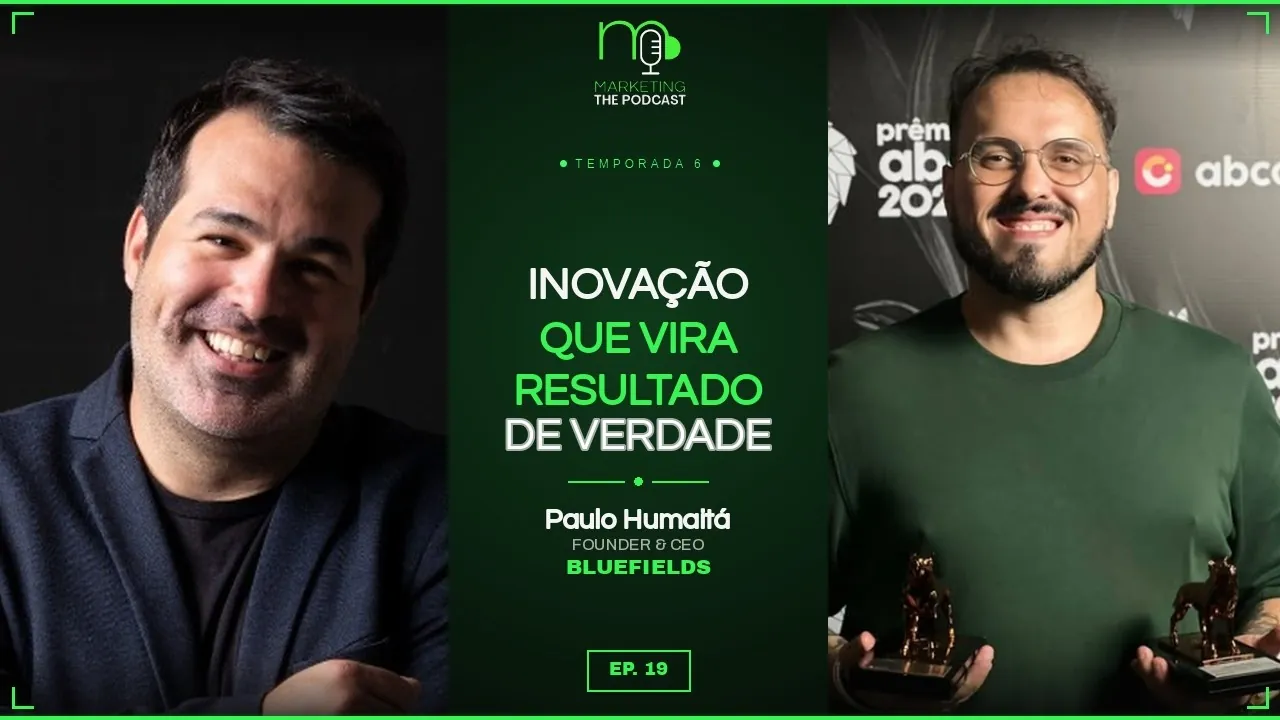
Paulo Silveira, founder of Bluefields Aceleradora, spoke with Bruno Gimenes on Marketing - The Podcast about how open innovation and artificial intelligence are reshaping advertising and product development. The episode also touches on governance and business validation, while focusing on practical guidance for agencies and brands navigating media disruption.
In the video above, Silveira details how to structure strategic alliances with technology startups. In his view, communications companies face accelerating transformations and must decide whether to build tools in-house or collaborate with those who have already mastered new technical solutions.
White-label acceleration and AI agents in advertising
When analyzing advertising industry dynamics, Silveira emphasizes that market competition no longer occurs in isolation. "Because I truly believe it's no longer just Company A versus Company B," he points out. In his view, the real battle is "Company A's innovation ecosystem versus Company B's innovation ecosystem," making external solution sourcing a decisive differentiator.
In practice, Bluefields operates a multi-tenant acceleration model in a white-label format. An advertising agency can, for example, hire the sourcing and acceleration of 20 AI agent startups under its own brand. The process embeds these emerging companies' technical expertise into the agency's ecosystem, enabling contextual intelligence and automation across marketing projects.
Intra-builders and team autonomy through AI
Beyond partnering with external startups, open innovation encompasses the direct upskilling of employees. Silveira explains that the model extends past external ecosystems: "Open innovation isn't just about startups, like many think. It's about fostering intrapreneurship—what we're calling intra-builders here." As an example, he mentions a designer on his team who built a networking app for participants and investors using Claude, without writing traditional code.
This autonomy eases the historical strain on IT departments. Silveira argues that turning employees into builders of practical solutions expands internal resource generation and reduces reliance on helpdesk tickets for day-to-day operational needs.
Redemptive Futures and alternatives to SWOT analysis
For strategic planning, Silveira recommends moving past conventional management diagnostics. "Instead of continuing to apply SWOT, Porter's—you know, Porter's Five Forces—man, everyone is doing that," he states. According to Silveira, SWOT analyses conducted by competitors are often 80% to 90% identical, yielding predictable pathways.
As an alternative methodology, Bluefields uses the Redemptive Futures process, grounded in design thinking and Futures Back techniques. The approach maps out multiple possible futures within a business model funnel, turning hypotheses into proactive action plans so leadership doesn't simply react as trend followers.