 Business
How Escape 60 Uses Gamification for Teams and Brands
Jeannette Galbinski details how escape rooms are applied to corporate training, innovation, and brand building.
Escape 60 CMO Jeannette Galbinski explains how immersive escape room experiences have evolved into a strategic corporate tool. The model spans leadership development, product launches, and workplace mental health initiatives.
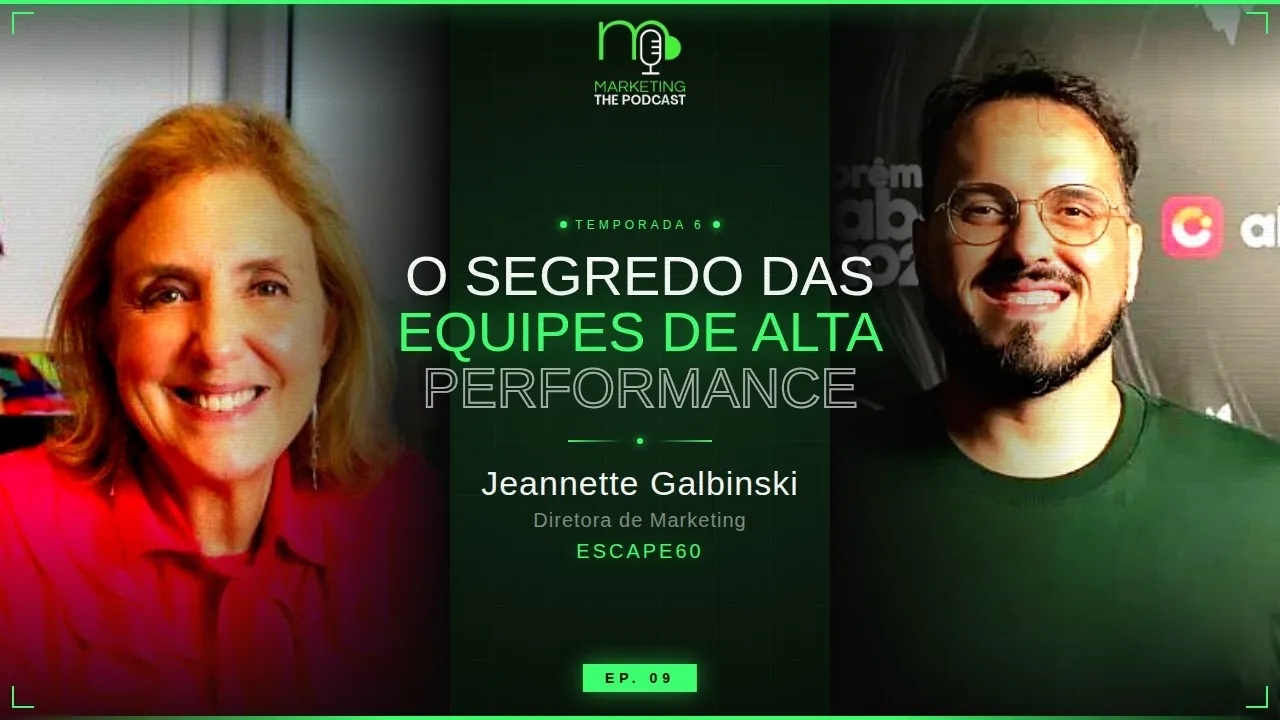
Jeannette Galbinski, Chief Marketing Officer at Escape 60, joined Bruno Gimenes on Marketing - The Podcast to discuss the business model behind live escape games and the company's expansion across the corporate sector. Operating locations across Brazil and Mexico, the chain has built a portfolio of themed escape rooms that blend entertainment with business applications.
In the video above, Galbinski shares behind-the-scenes insights into puzzle design, team management dynamics during gameplay, and how both in-person and digital formats have evolved over the company's decade of operations.
PUBLICIDADE (GAM) — 1250x250
Overview and the Escape 60 Concept
The core concept of Escape 60 places groups inside themed, scenographic rooms where participants have 60 minutes to solve mysteries and find their way out. The dynamic requires continuous collaboration and logical reasoning under time pressure.
"You feel like the main character of this story. There's real storytelling—you live that storytelling inside the room and have 60 minutes to escape," Galbinski explains. The company has developed themes ranging from prisons and subways to murder mysteries, horror, adventure, and children's storylines.
Jeannette's Career Path and Founding Escape 60
Holding an engineering degree from USP's Escola Politécnica and working as a business consultant, Galbinski transitioned into marketing after identifying the need to structure her own consulting firm. Escape 60 was founded in June 2015 alongside three partners with complementary expertise in set design, business, and puzzle development.
The launch coincided with an economic downturn in Brazil. "I moved into marketing, and for me, it was about building a brand, building a logo—in reality, we built an entertainment category that didn't exist in Brazil," Galbinski recalls regarding the company's inception.
Corporate Gamification and Team Dynamics
Corporate adoption of the methodology grew from the realization that team behavior under pressure inside the rooms mirrors real workplace dynamics. The company developed the MAP methodology to assist organizational psychologists with structured observations of leadership, communication, and time management.
Corporate applications include training programs, recruitment assessments, and company-wide conventions for organizations of all sizes. According to Galbinski, hands-on experience accelerates concept retention: "We do a lot of work around mission, vision, and values when a company rebrands. Instead of delivering it via PowerPoint, I deliver it through gamification—people learn everything without even realizing it."
Innovation, Technology, and Licensing in Experiences
Refreshing the rooms involves licensing partnerships with major entertainment brands and studios, such as Paramount, El Chavo del Ocho, and Monica and Friends. These intellectual properties tap into players' nostalgia while broadening appeal across diverse age demographics.
"The first rooms relied entirely on physical padlocks you had to open. Today, we have a million options," Galbinski explains. Technical upgrades have introduced electronic automation, hidden mechanisms, and specialized engineering teams dedicated to game design.
Creator Economy, Communities, and Multichannel Presence
The company's marketing strategy engages top-tier digital influencers as well as everyday customers acting as micro-influencers across social platforms. The brand also runs the "Escape Lovers" community to pilot new initiatives and co-create future concepts.
Regarding content distribution, Galbinski notes that different channels serve distinct audiences and decision-makers, with email marketing remaining their highest-converting B2B channel: "Our open rate exceeds 30%. In 10 years, that hasn't changed. For the corporate segment, it remains our most effective tool."
Mental Health, NR-1 Standards, and Off-Site Corporate Events
Following the rollout of workplace mental health and stress prevention guidelines linked to Brazil's NR-1 regulatory standard, demand has surged for decompression and interpersonal reconnection activities. Escape 60 adapted its offerings to serve these needs directly on-site at client offices and major trade shows.
The company's mobile infrastructure features a customized touring bus used for off-site activations and brand experiences at conventions, alongside specialized assessment programs where hiring teams evaluate candidates in real-time problem-solving scenarios.
Pandemic Challenges and Escape 60's Pivot
When in-person venues closed during the COVID-19 pandemic, the company rolled out a digital version of its escape games within 15 days. The initiative kept brand awareness high across both family and corporate segments through strategic partnerships and on-demand experiences.
"My role in marketing was to ensure that companies, individuals, and schools didn't forget about Escape 60," says Galbinski. The strategy encompassed free digital games as well as custom launch activations designed for enterprise clients handling high volumes of concurrent users.
Artificial Intelligence, Productivity, and the Brazilian Market
Artificial intelligence is deployed across two fronts: driving internal efficiency in CRM and marketing workflows, and serving as an interactive gameplay mechanic inside escape rooms. The company has engineered rooms where players must interact directly with AI systems to advance through puzzles.
Galbinski and Gimenes also addressed the broader need for tech qualification in Brazil to support digital transformation without undermining core economic drivers like agribusiness, a sector that is increasingly investing in immersive training and corporate events.
PUBLICIDADE (GAM) — 1250x250