 Business
Creativity, AI, and Human Connections in Niche B2B Marketing
Josiele Saugo discusses active listening, community leadership, and practical strategies for trade unions and associations.
In an interview on Marketing - The Podcast, Josiele Saugo explores the intersection of behavioral analysis, innovation, and human relationships. The marketing leader addresses communication challenges across non-profits, cross-generational dynamics in the workplace, and how practical creativity drives business success.
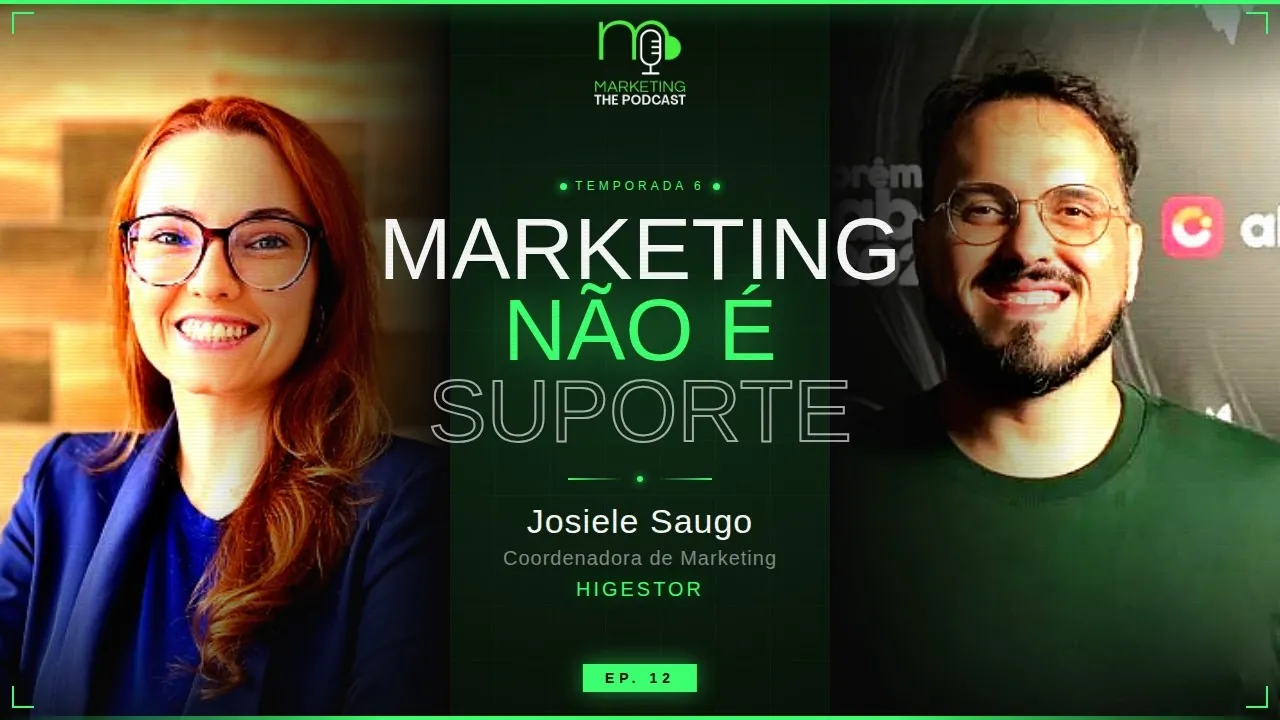
Josiele Saugo, marketing coordinator at HiGestor, joined Bruno Gimenes on Marketing - The Podcast to discuss the integration of business strategy, human behavior, and the B2B marketplace.
Throughout the conversation featured in the video above, Saugo shared her insights on leading teams and community initiatives, highlighting how analytical frameworks and diverse cultural perspectives help build sustainable commercial strategies.
PUBLICIDADE (GAM) — 1250x250
Josiele Saugo's career path and Pythagorean numerology
With a background in advertising and extensive experience across the tech and management sectors, Saugo built her career around a curiosity about human behavior. During the pandemic, she pursued training in Pythagorean numerology to better understand individual and team dynamics, applying those concepts directly to her leadership approach.
"I use numerology as a self-awareness tool rooted in Pythagoras, which is the system I study. I use it primarily to examine and identify behavioral patterns—something we rely heavily on in marketing. When applied to people management and leadership, it fosters active listening and a more empathetic perspective," Saugo explains.
The CMO Summit, AI, and the centrality of human connection
Reflecting on her participation in the CMO Summit and recent discussions at SXSW, Saugo addressed the widespread race toward tech predictions at the expense of direct human interaction. In her view, artificial intelligence should serve as operational support rather than replace interpersonal intuition and face-to-face exchange.
"AI cannot replace what makes us human, which involves emotions, empathy, and truly perceiving others—and that requires being genuinely present first," Saugo emphasizes. Gimenes added that in-person settings reveal subtle non-verbal cues essential for building strong partnerships and closing business deals.
The creative economy, World Creativity Day, and strategic learning
As the leader of the World Creativity Day edition in Itajaí, Saugo discussed the economic shift from extracting physical resources to developing intangible and intellectual assets. The event showcases how creativity drives sustainable urban growth while providing a forum for topics such as the longevity economy and ageism in the workforce.
"World Creativity Day serves as a catalyst, illustrating how creativity acts as an engine and a framework to foster sustainable local economic growth," Saugo notes. To expand strategic perspectives, she recommends podcasts like De Carona na Carreira and Elefantes na Neblina.
Generational differences, young leadership, and active listening
Dialogue also centered on evolving work models and collaboration across diverse age groups. Saugo reflected on leading the Startup Weekend Vertical Woman in Itajaí, a Techstars event where teams build and validate startups in 54 hours, featuring 75% female participation.
Citing the book O Palhaço e o Psicanalista, Saugo stressed the importance of leaders listening to their teams: "It broadened my perspective on leadership—reminding us that in management, we must listen more than we speak. Ultimately, leaders are there to serve their team just as much as they serve the company."
Niche B2B marketing and the role of creativity in associations
Examining the Brazilian landscape—which includes over 15,000 registered labor unions and more than 300,000 active non-profit associations according to IBGE data—Saugo observed that these organizations require institutional stability and clear messaging to engage members. With research showing low automation adoption in the third sector, practical creativity provides solutions to real operational bottlenecks.
"Creativity first expands our horizons by encouraging fresh perspectives and deeper research, but in practice, it must be useful and serve a clear operational purpose," Saugo points out.
The social and sustainable impact of businesses
Concluding the discussion, the guests examined how corporate initiatives can move beyond profitability to support environmental conservation and local community development. Saugo cited sustainable production models in the Amazon as prime examples of responsible supply chain integration.
"Instead of merely extracting raw materials, why not integrate local communities directly into downstream operations in ways that minimize environmental impact?" Saugo asks, emphasizing that aligning business goals with socio-environmental stewardship is vital for a sustainable market.
PUBLICIDADE (GAM) — 1250x250