 Sports
Victor Schildt: Olympic Management and the Sub-10 Ironman
Recoma CFO details the sports infrastructure industry and his journey across nine Ironman races to break the 10-hour barrier.
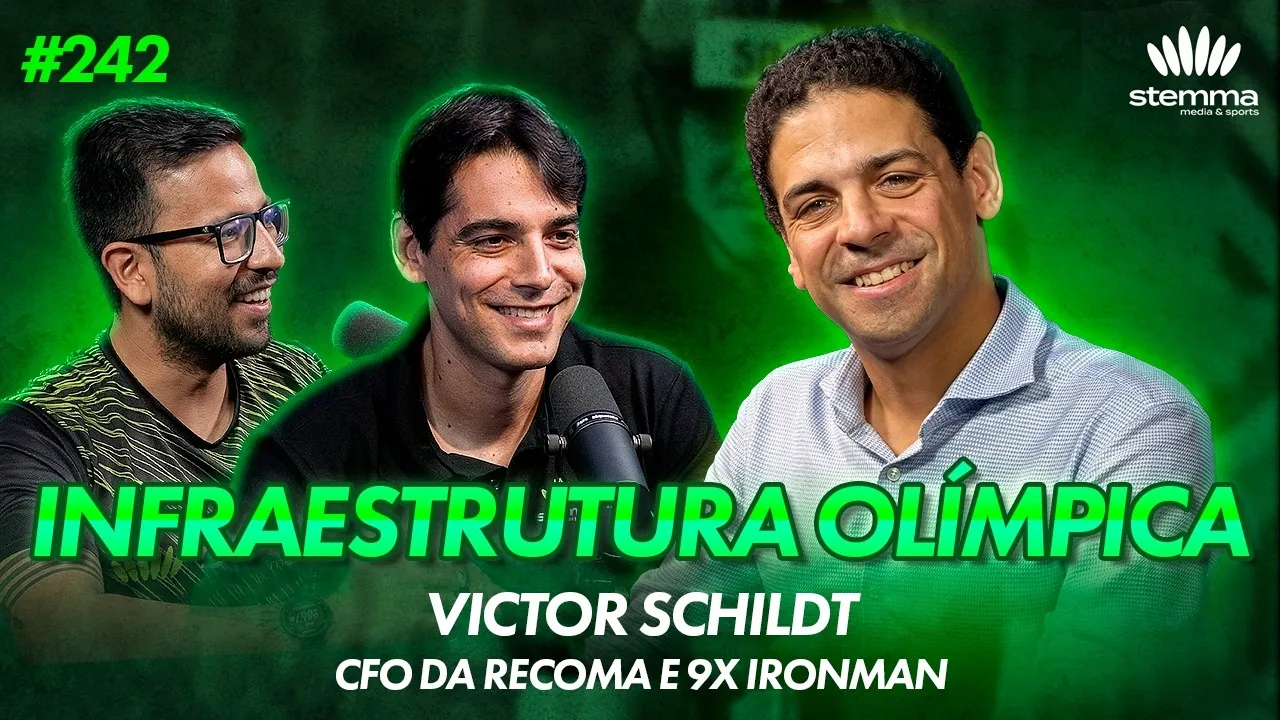
Executive and triathlete Victor Schildt discussed how Recoma became a leader in high-performance sports flooring. He also shared behind-the-scenes stories from his endurance career, from desert ultramarathons to breaking sub-10 in the Ironman.
Balancing the financial leadership of a sports infrastructure powerhouse with rigorous training for Ironman competitions is a rare feat. Victor Schildt, CFO of Recoma, navigates this duality every day. Overseeing projects that range from community courts to premier Olympic venues worldwide, he has completed nine full-distance Ironman races, competed at World Championships in St. George and Nice, and relentlessly pursued breaking the elusive 10-hour barrier.
PUBLICIDADE (GAM) — 1250x250
From Hardwood to the Olympics: The Evolution of Recoma
Originally established in commercial hardwood flooring, Recoma entered the sports sector after identifying basketball players' needs for specific acoustic and shock-absorption properties. Over time, the company expanded into synthetic surfaces, martial arts tatamis, and rubber running tracks. In 2004, it evolved into a general contractor to deliver turnkey solutions for arenas and training centers.
The international breakthrough occurred at the Rio 2007 Pan American Games and expanded during the Rio 2016 Olympic Games, where the company supplied over 35,000 square meters of sports flooring. Recoma continued this global presence at Lima 2019 through a direct contract with UNOPS (the operational arm of the UN), and most recently at Casa Brasil during the Paris 2024 Olympic Games. The company also supports elite Brazilian athletes, counting Olympic champions Maurren Maggi and Arthur Zanetti among its longtime ambassadors.
State-of-the-Art Infrastructure and Democratizing Sports
During the discussion, Victor highlighted the structural differences between Brazil's sports infrastructure model and those of powerhouse nations like the United States and China. In Brazil, the primary engine for high performance and Olympic medals lies in developmental clubs, the S-System, and the Armed Forces. For Schildt, the country's most significant recent milestone has been the large-scale modernization of public gymnasiums and sports centers, bringing international-standard surfaces to local communities and public schools.
Meeting technical requirements for these facilities demands strict compliance. For athletics tracks, World Athletics certifications mandate precise mechanical testing for shock absorption, drainage, and rubber layer thickness. The same rigor applies to FIFA-certified synthetic turf systems, which undergo biomechanical assessments to guarantee proper ball roll and joint safety for athletes.
Extreme Beginnings and the Plunge into Triathlon
Victor’s relationship with running began in childhood and grew through self-guided training. He started by running solo marathons through the streets of São Paulo, leaving water bottles with his building's doorman to hydrate on every loop. His appetite for distance quickly led to extreme challenges, including the Bertioga-Maresias 75 km solo ultramarathon and a 50 km run at the Burning Man festival under 120-degree heat and sandstorms.
His transition to triathlon came through coaching group Mevi Lelo after family members raised concerns about unsupported ultramarathons. Victor fully immersed himself in the sport: in his first year alone, he completed six Ironman events—three 70.3 races and three full-distance events, including two fulls (Florida and Cozumel) in the same month, inspired by a veteran couple in their 50s with dozens of finishes under their belts.
The Pursuit of Sub-10 and Redemption in Maryland
Breaking the 10-hour mark in a full Ironman turned into a multi-year pursuit. At Ironman Western Australia, following pandemic delays, Victor finished in 10:06 after serving a drafting penalty on the bike. In subsequent attempts at Ironman Italy and Ironman Texas, he came close with times of 10:05 and 10:14 under harsh, windy conditions.
Redemption arrived at Ironman Maryland. Despite a chaotic race day—marked by jellyfish in the swim, a mechanical bike issue that cost 18 minutes in transition, and flooded run sections caused by high tide—Victor maintained his mental focus and crossed the finish line in 9:58:59. The performance earned him third place in his age group and a qualifying slot for the Nice World Championship, where he raced without a watch after losing it in the swim and posted his best full-distance marathon split.
Looking Ahead to Ironman Wales and the Kona Legacy Goal
Now coached by Wagner Spadotto, Victor is preparing for his next major test at Ironman Wales, known for its grueling elevation profile and freezing waters. His long-term goal is securing a spot at the Ironman World Championship in Kona through the Legacy program, which requires finishing at least 12 full-distance Ironman events over a decade.
Reflecting on his executive and athletic career, Victor emphasized the importance of balance: aligning personal ambition with sustainable family life and professional responsibilities. For him, endurance sports prove that when physical energy is spent, the ultimate driver is mental clarity and conviction in personal commitments.
PUBLICIDADE (GAM) — 1250x250