 Sports
Triathlon Physical Therapy: Prevention, Recovery, Peak Performance
Discover how sports physical therapy is your essential ally for preventing injuries and optimizing results in triathlon.
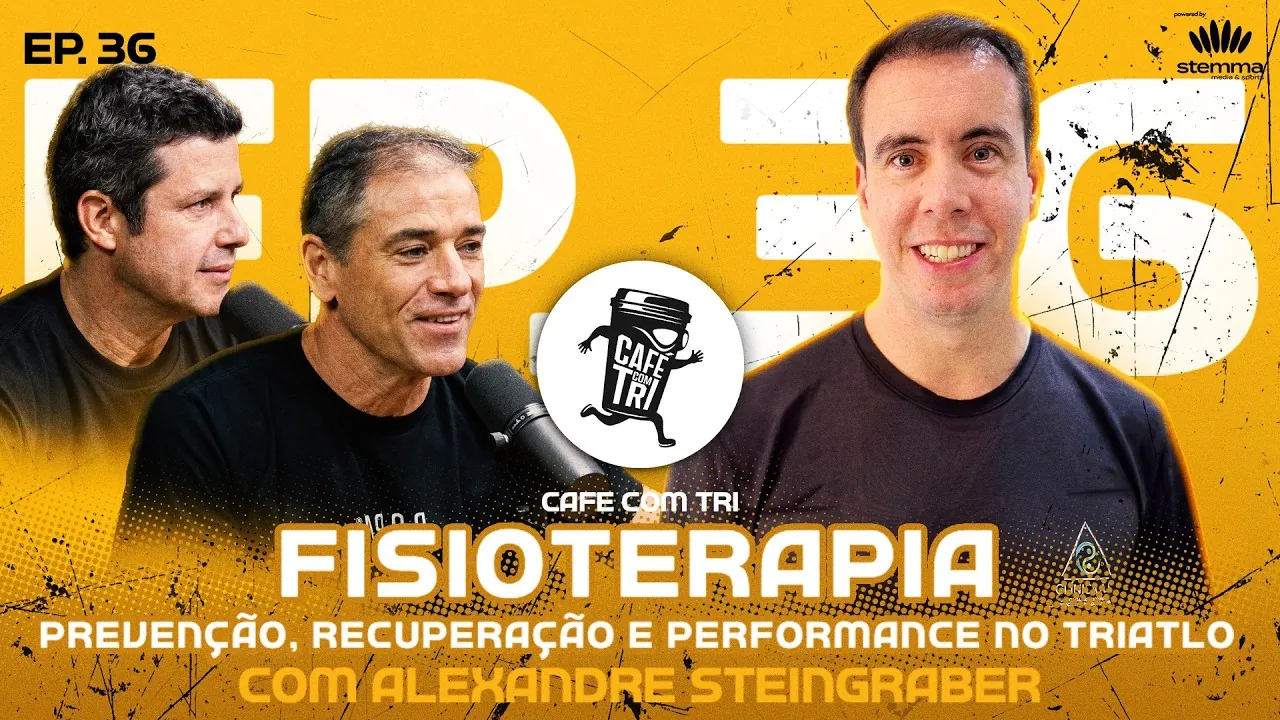
In this episode of Café com Tri, hosts Sérgio Magalhães and Beto Nitrini welcome physical therapist Alexandre Steingraber to unveil the role of physical therapy in a triathlete's training cycle. The discussion covers Alexandre's journey in sports and the most modern techniques for injury prevention and recovery, ensuring you live your best athletic life without interruptions.
In Café com Tri, your favorite Stemma Sports show, hosts Sérgio Magalhães and Beto Nitrini (with a humorous nod to the absence of Wagner Spadotto) welcomed Alexandre Steingraber, a sports physical therapist with over 17 years of experience, for a relaxed and informative chat. The central theme was the crucial role of physical therapy in the prevention, recovery, and performance of athletes, especially in triathlon.
PUBLICIDADE (GAM) — 1250x250
The Journey of an Athlete Physical Therapist
Alexandre Steingraber shared his own journey, which began in competitive swimming at clubs like Pinheiros and Hebraica, swimming 100m and 200m breaststroke and 50m freestyle events. Realizing the Olympics wouldn't be his destiny, he transitioned to physical therapy, combining his passion for sports with healthcare. His first professional experience was as an intern at Companhia Atlética, a fitness icon in São Paulo. It was there that he discovered the world of triathlon and adventure races, drawing inspiration from athletes like Cris Carvalho and even Shubi Guimarães (from XTREMMA Sports). This immersion in the sports environment, training and living alongside athletes, gave Alexandre a deep understanding of the pains and needs of his future patients, many of whom became training partners, like Beto Nitrini himself.
The Evolution of Sports Physical Therapy: From Treatment to Prevention
Alexandre highlighted the shift in the physical therapist's role: from a professional sought only after injury to an essential daily ally for athletes. He emphasizes that 80% of his schedule is dedicated to prevention, an indicator of increasing awareness among amateur athletes. Modern physical therapy operates as part of a multidisciplinary team, alongside coaches, nutritionists, and doctors, ensuring that body care is aligned with the training plan.
An Arsenal of Techniques and Technology
With comprehensive training that includes Chinese medicine (with certification in China), chiropractic, and manual therapy, Alexandre emphasizes the importance of having a range of options. He compares physical therapy to a toolbox, with drawers for different approaches. He clarifies that Chinese medicine goes far beyond acupuncture, including cupping and auriculotherapy.
To optimize diagnosis and treatment, his clinic invests in advanced technology, such as clinical thermography (which detects inflammation points by heat) and portable imaging ultrasound (to assess muscle injuries in real-time).
Among the most effective techniques, Alexandre highlights:
- Shockwave Therapy: His "favorite" for treating chronic injuries like tendinitis and bursitis, promoting tissue regeneration.
- Electroacupuncture: Highly effective for analgesia and relaxing deep muscles, such as the piriformis and hamstrings.
- Manual Therapy: Considered the "icing on the cake," it is essential for muscle release and structural liberation around the injury, complementing technological treatments.
Common Triathlon Injuries: Identification and Strategies
The conversation explored the most frequent injuries in each triathlon discipline:
Runners: Knees, Shins, and Feet
For running, the most common injuries are iliotibial band syndrome, patellar tendinitis, shin splints, and plantar fasciitis. Plantar fasciitis, in particular, is often linked to a lack of fascia stretching, shoes with little cushioning, and even overweight. Alexandre warns about the delicacy of changing running biomechanics or foot strike; unless there's a chronic injury, intervention isn't always necessary, as the body adapts. Specific strengthening is crucial to avoid problems like chronic calf issues, a challenge faced by many, including Fabio Barbag.
Cyclists: Hips and Cervical Spine
In cycling, hip injuries are prevalent in women, often related to weaknesses in the gluteus medius, core, and pelvic floor, especially postpartum. The cervical spine is also a critical point, particularly with the use of aero bars on triathlon bikes. The aerodynamic position requires strengthening of the deep neck and paraspinal muscles, reinforcing the importance of a proper bike fit, as previously discussed on the show with Ryan Cordeiro.
Swimmers: The Shoulder Challenge
Swimming has the shoulder as its Achilles' heel. Rotator cuff injuries (such as supraspinatus and infraspinatus) are common due to the suspended nature of the shoulder joint and overhead movements that stress ligaments and muscles. Lack of adequate strengthening and even genetic characteristics (like acromial shape) can predispose athletes to these injuries.
The Central Role of the Core
Regardless of the discipline, core strengthening and deep muscle work emerge as a common denominator in injury prevention. Sérgio Magalhães highlighted the benefits of calisthenics for this purpose, while Alexandre emphasizes that many weightlifters focus only on basic exercises, neglecting the stabilizers and deep muscles, which are the foundation of a resilient body.
Optimizing Recovery: Stretching, Mobility, and Tools
Stretching vs. Mobility: When and How
Alexandre clarified the difference between stretching and mobility. Mobility (e.g., hip, torso, arm rotations) should be done before training to warm up the joints. Stretching, focused on range of motion, is not recommended immediately after intense workouts, as muscles are already stressed, and there may be a risk of injury. The ideal is to set aside one day a week for a longer stretching session (20-30 minutes), preferably after strength training or on rest days.
At-Home Recovery Tools: Conscious Use
For a basic at-home recovery kit, Alexandre suggests: a resistance band, a massage ball, and a foam roller. Massage guns (Theragun and similar) are effective but should be used with moderation and correct technique (following the muscle direction), never forcing on the same spot for too long. More advanced tools, such as compression boots or Compex (electro-stimulator), require technical knowledge to avoid improper use that could even hinder recovery or cause injuries. The "stronger is better" rule does not apply, and professional guidance is essential.
Sauna and Ice: Strategic Allies in Recovery
Saunas (steam, dry, or infrared) and ice baths (cryotherapy) are valuable tools. Sauna is recommended for relaxation, improved circulation, and even thermal adaptation (such as for races in hot climates like Kona). Recent studies show benefits of infrared sauna for cognition and prevention of mental diseases. As for ice, Alexandre recommends its strategic use after long and intense workouts (a "long session"), but not for all sessions. The vasoconstriction caused by ice can inhibit the body's natural inflammatory process, which is fundamental for muscle adaptation and hypertrophy. The ideal protocol is 10 minutes at 10 degrees Celsius. Excessive use or use at the wrong times can be counterproductive. In terms of mental health and breathing control, ice has a positive impact, but for physical recovery, moderation and timing are key.
To conclude, Alexandre reinforced the message that preventive physical therapy is an essential investment in athletic longevity and success. Don't wait for pain to arrive; make it a proactive part of your journey. You can find Alexandre and his team at Clínica AS (@clinicas.multi on Instagram), with two units in Brooklyn, São Paulo, one of which is inside Companhia Atlética da Kansas.
PUBLICIDADE (GAM) — 1250x250