
 Sports
The Rise of Chinese Sneakers: From Factories to Global Giants
Discover how brands like Li-Ning and Anta transformed the 'Made in China' stigma into national pride and global sports innovation.
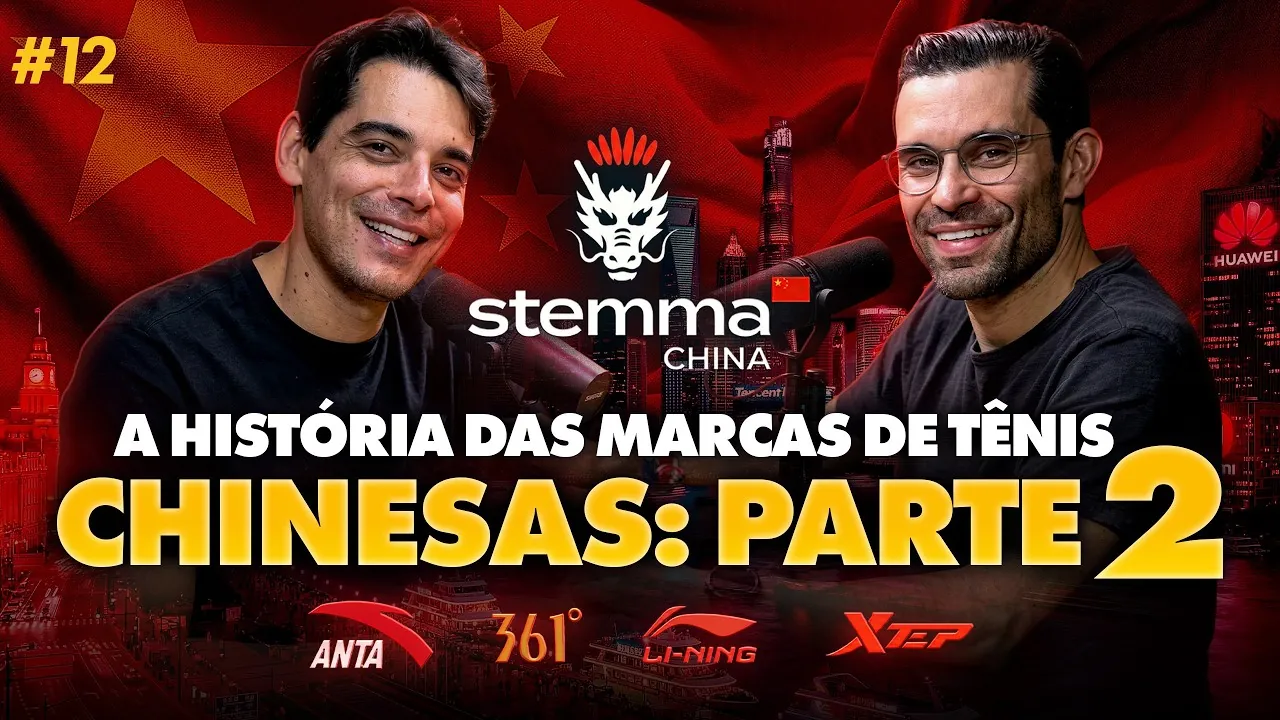
In this episode of Stemma China, Fabio Bessa and CJ Gueiros delve into the second part of the fascinating history of Chinese sneaker brands. From mere manufacturers to global powerhouses, these companies have redefined innovation, competing head-to-head with giants like Nike and Adidas. Learn about the challenges, bold marketing strategies, and technological revolution that propelled them.
In the second episode of Stemma China, hosts Fabio Bessa and CJ Gueiros continue to explore the complex and surprising journey of Chinese sneaker brands. The program, part of the Stemma Sports hub, details the evolution of these companies, from their origins as third-party manufacturers to becoming global competitors in the competitive sports market.
PUBLICIDADE (GAM) — 1250x250
From the World's Factory to Creating Their Own Identity
Initially, China was primarily seen as the "world's factory," with companies acting as OEMs (Original Equipment Manufacturers), producing footwear and sportswear for Western brands. However, this reality began to change when these factories decided to create their own brands and identities. Brands like Li-Ning (born in Beijing) and others from Fujian, which previously manufactured for third parties, had the "aha moment" of wanting a product to call their own. This movement was crucial in changing the perception that Chinese products were merely copies or of low quality, driving the creation of proprietary brands with a focus on technology and design.
Challenges and Internationalization Ambitions
The Chinese consumer market, which was non-existent in the 1980s, grew exponentially, attracting giants like Nike and Adidas. Chinese brands then faced the challenge not only of competing domestically against these behemoths but also of internationalizing and overcoming the "Made in China" stigma, often associated with imitation or low durability. 361°, for example, demonstrated this ambition by sponsoring the volunteers for the Rio 2016 Olympic Games, becoming the first Chinese brand to officially arrive in Brazil in 2014 with a focus on exploring markets outside of China.
The Slogan Battle and the Impact of Iron Man
The search for a memorable slogan led to a curious dispute. Li-Ning adopted "Anything is Possible" in 2002. However, this slogan had already been used by Iron Man since 1998, which even led to legal battles. Meanwhile, Adidas, with its "Impossible is Nothing" (inspired by Muhammad Ali), added another layer to this complexity. Interestingly, between 2015 and 2020, the Iron Man brand itself was acquired by the Chinese group Wanda Group, reflecting Chinese interest in diversifying investments into sports and entertainment, including expanding events like the Iron Man 70.3 and the Rock and Roll Marathon Series.
NBA and Sponsorship Strategies
The rise of basketball in China was a catalyst for sports brands. Li-Ning sought out NBA stars, signing Shaquille O'Neal in 2006, even towards the end of his career. Later, Anta also invested heavily, poaching Kevin Garnett from Adidas. This strategy aimed not only for exposure in the American market but also for the approval of Chinese consumers, who idolized NBA athletes.
An aggressive move came from Li-Ning, which, by sponsoring the CBA (Chinese Basketball Association), prohibited players from wearing other brands' sneakers. This culminated in the Yi Jianlian incident, where he removed his Li-Ning shoes in protest to wear his Nikes, giving rise to the "Pay to Play" tactic (paying a fee to wear another brand's sneakers, even with an official sponsorship).
IPOs, Acquisitions, and the "Multi-Brand" Strategy
To fund their ambitions, brands like Anta (2007), Li-Ning (2004 in Hong Kong), 361°, and Peak (2009) conducted IPOs (Initial Public Offerings). Anta distinguished itself with its "single focus multi-brand omni-channel" strategy, seeking to diversify its portfolio through acquisitions. Examples include the operation of Fila in China (acquired in 2009), Descente (Japanese premium ski brand), Kolon Sport (Korean outdoor brand), and the Amer Sports group (which includes Salomon and Wilson), solidifying its presence across various sports segments.
Li-Ning, on the other hand, had some less successful acquisition attempts with brands like Kappa and Lotto, which highlighted the complexity of integrating global brands into Chinese culture and market.
The "Damned Lake" and Li-Ning's Turnaround
In the post-Beijing 2008 Olympics period, euphoria and optimism led Chinese brands to overproduce, resulting in a stock surplus known as the "Damned Lake" between 2011 and 2013. Li-Ning was one of the most affected. In 2012, under new leadership (and with founder Li Ning not serving as CEO), the company tried to change its positioning, switching its slogan to "Make the Change" and focusing on premium products, but failed to coordinate the change with its distributors, which worsened the crisis. Li Ning himself had to return as CEO in 2015, bringing back the slogan "Anything is Possible" and expanding e-commerce to revive the company.
Meanwhile, Anta managed to clear its inventory quickly and, in 2012, surpassed Li-Ning in Chinese market share, a position it has maintained ever since.
The "Guochao" Movement and the Foam Revolution
The late 2010s marked the emergence of the Guochao movement (national wave or national trend) in China. This cultural consumption trend combined national pride (preference for local brands) with modern design, incorporating elements of traditional Chinese culture. A landmark moment was Li-Ning's runway show at New York Fashion Week in 2018, which demonstrated that Chinese brands could be synonymous with beauty, technology, and innovation.
In parallel, the sneaker market was revolutionized by super foams and carbon plates, initially led by Adidas's Boost technology (2013) and Nike's Vaporfly (2017). Chinese brands did not lag: Li-Ning launched its "Boom" super foam in 2018, followed by others like Anta's "Nitro Edge" and 361°'s "Quick Flame." In 2021, the first victories in Chinese marathons with domestic sneakers began to appear, proving the effectiveness and competitiveness of these technologies.
The Current Landscape and Future of Chinese Brands
Today, Chinese brands continue to make significant signings, such as Bekele by Anta, and Kyrie Irving and Nikola Jokic by 361° and Li-Ning in basketball, respectively. Anta also became an official sponsor of the IOC until 2028. These actions demonstrate the relentless pursuit of global validation and recognition. Even giants like Nike and Adidas responded to Guochao with specific collections for the Chinese market, recognizing the power of local consumers and cultural importance.
The journey of Chinese brands is a testament to resilience, innovation, and adaptation. They overcame the "copycat" stigma, invested in research and development, and are now reaping the rewards, competing on an equal footing in the global sports arena. What was once a series of small workshops now represents a force that challenges the status quo and shapes the future of high-performance sports, especially in the running and triathlon world. The future of these brands promises even more excitement and innovation, with the potential to solidify their position as global leaders.
PUBLICIDADE (GAM) — 1250x250




