
 Sports
Renato Cordani: From Troféu Brasil to Tokyo 2020 Glory
Former CBDA executive and swimmer reflects on Tokyo 2020 medals and lifelong perseverance in pool and open water.
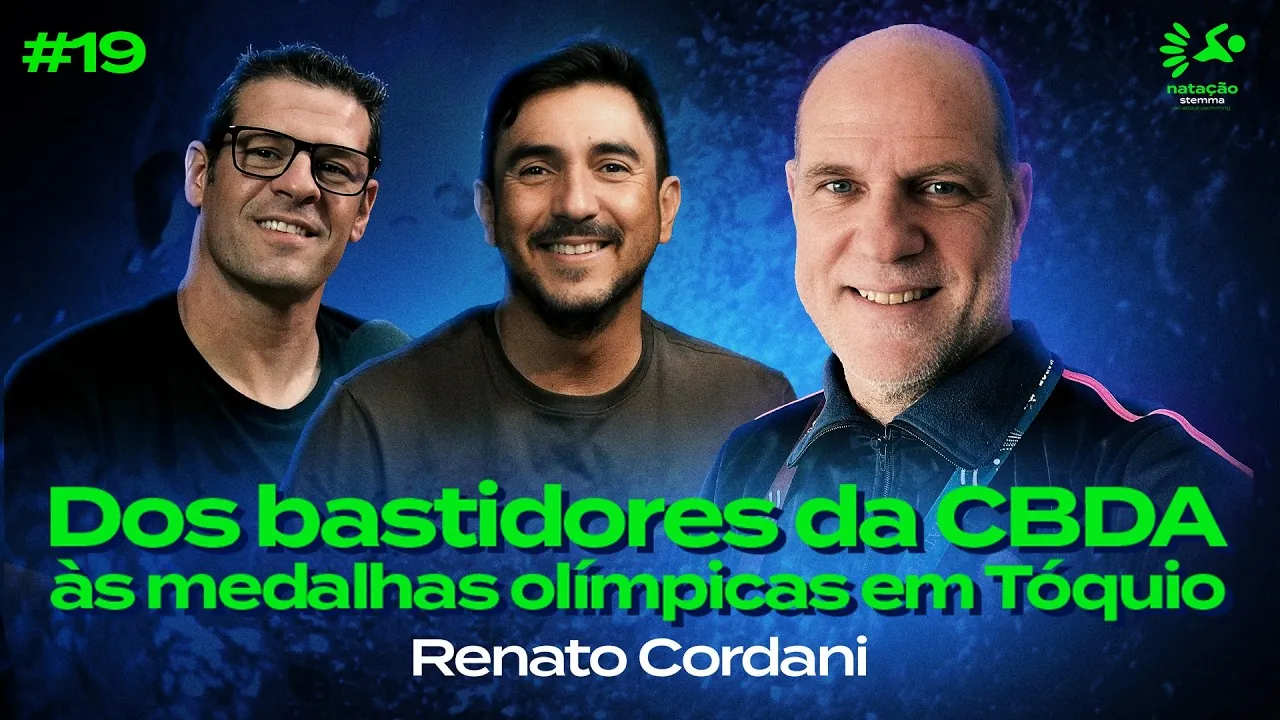
Former CBDA vice president and veteran swimmer Renato Cordani looks back on his athletic journey and sports management challenges. In an interview on Natação Stemma, he shares behind-the-scenes insights into Brazil's Tokyo 2020 Olympic medals and the power of resilience across swimming disciplines.
Geophysicist with a master's and doctorate from USP, Renato Cordani built a career that combines his experience as a competitive athlete, a passion for open water swimming, and direct work behind the scenes in Brazilian sports administration. In an interview on Natação Stemma with Samir Barel and Wanderley Santos, Cordani recalled his early years in the pool, the challenges of high-performance sport, and the details of leading the Brazilian national swim team as technical director at the Tokyo 2020 Olympic Games.
PUBLICIDADE (GAM) — 1250x250
Late Bloomer and the Breakthrough at Júlio Delamare
Cordani began age-group swimming at Esporte Clube Pinheiros under the guidance of coach Pantcho. However, his physical development did not follow a straight line. During his youth career, late physical maturation kept him far from the top national rankings in the junior divisions.
The turnaround came at age 17. Maintaining consistent training and dedication to the sport, Cordani made a major performance leap, dropping eight seconds off his personal bests to win the Brazilian national youth title in the 200m breaststroke at the 1987 Troféu Júlio Delamare. The milestone marked the start of his senior-circuit career and reinforced the importance of respecting each swimmer's biological timeline with the support of a strong team environment.
Persistence and the 200m Breaststroke Saga at Troféu Brasil
One of the most defining chapters of his athletic career became known as "The 200 Breaststroke Saga," a story he later published on his blog Epichuros. After his youth triumphs, Cordani entered the Troféu Brasil de Natação aiming for a spot on the senior national podium.
What followed was a severe test of patience: for five consecutive years, Cordani fell just short, finishing in fourth place every single time. The medal finally arrived on his sixth attempt when he reunited with coach Pantcho at Pinheiros and captured the coveted bronze medal from lane three, a feat he repeated at the following edition. Alongside his pool events, his heavy training volume at the time also allowed him to compete in traditional open water marathons, including the classic 25 km Ilhabela-Caraguatatuba crossing in 1990, where he finished third.
Epichuros, Historical Preservation, and the Hall of Fame
After stepping away from competitive swimming to focus on his professional career and family, Cordani reconnected with the aquatic community in 2012 by launching the blog Epichuros. The platform featured historical anecdotes, technical discussions, and critical analysis of Brazilian national teams at major international events.
This cultural initiative led to a project honoring the history of the sport: the Brazilian Swimming Hall of Fame, a virtual project guided by an independent committee that annually honors two historic swimming icons, from pioneers like Tetsuo Okamoto and Maria Lenk to athletes of subsequent decades.
CBDA Management and the Single Olympic Trials Model
His involvement in swimming discussions led Cordani to the technical directorship and later the vice presidency of the Brazilian Confederation of Aquatic Sports (CBDA) starting in 2017. Among the key policies implemented during his tenure was the adoption of the single trials model for major international competitions.
The proposal aimed to accustom Brazilian athletes to the pressure of hitting qualifying times on demand, mirroring the high-stakes environment of Olympic and World Championship finals. During this period, the federation also revived focus on the men's and women's 4x200m freestyle relays on national calendars and restricted tech suits in age-group categories.
Behind the Scenes of the Tokyo 2020 Medals
Serving as Brazilian swimming's team leader in Tokyo 2020, Cordani coordinated a delegation of 26 swimmers and 10 technical staff members amid strict Covid-19 pandemic protocols, including daily morning saliva tests and rigorous contact tracing inside the Olympic Village.
The campaign ended a nine-year Olympic medal drought in the pool with two memorable achievements: bronze for Fernando Scheffer in the 200m freestyle, swimming from lane 8 after qualifying for the final and holding off the field on the home stretch, and bronze for Bruno Fratus in the 50m freestyle. Fratus underwent a focused, isolated preparation with his coach Michelle Lenhardt to manage emotional strain heading into the final.
In open water swimming, crowning glory came with Ana Marcela Cunha's historic gold medal in the 10 km marathon swim at Tokyo Bay, orchestrated by coach Fernando Possenti with an aggressive strategy skipping hydration on the final lap, cementing her status as the world's best.
Open Water Crossings and Returning to Masters Swimming
Even after stepping down from the federation's board, Cordani remained active in the water. In 2024, under the guidance of ultramarathon swimmer Samir Barel, he completed the 36 km Leme to Pontal Challenge in Rio de Janeiro, recording the fourth-fastest non-wetsuit time in event history and becoming the first swimmer over 50 to complete the course.
Today, Cordani maintains a training routine focused on records and competitions on the masters pool circuit, combining four decades of experience in aquatic sports.
PUBLICIDADE (GAM) — 1250x250




