Sports
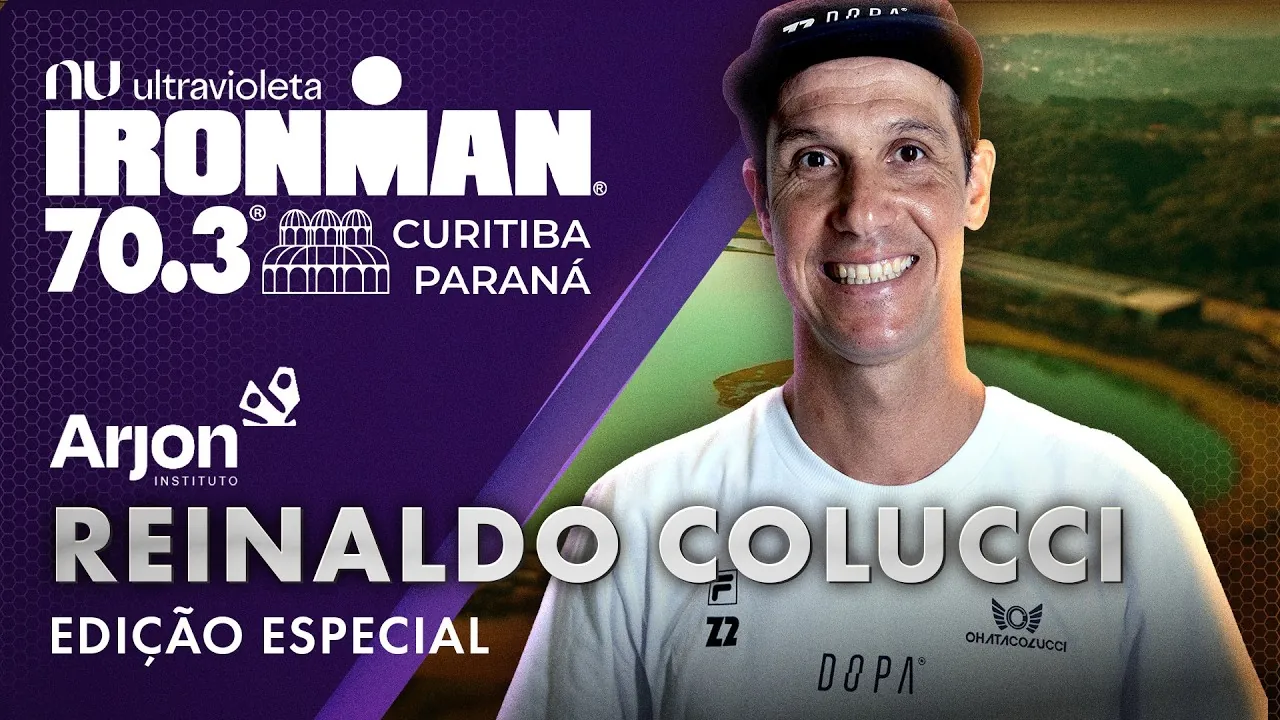
Reinaldo Colucci Previews Ironman 70.3 Curitiba
The veteran triathlete details his season kickoff toward Ironman Brazil, the new drafting rule, and tech advances in tri-suits.
Ahead of Ironman 70.3 Curitiba, Reinaldo Colucci breaks down his early-season preparation and the challenging bike course. He also shares insights on the new drafting rule and Miguel Hidalgo's status as race favorite.
The Brazilian triathlon season opened with Nubank Ultravioleta Ironman 70.3 Curitiba. Speaking directly from the capital of Paraná, veteran triathlete Reinaldo Colucci broke down his training phase for the season debut, analyzed the bike course profile, and explained the impact of new professional elite guidelines.
PUBLICIDADE (GAM) — 1250x250
Season Build-Up and Focus on Ironman Brazil
The Curitiba event marks the kickoff of a long racing calendar running from March through late November. Colucci emphasized that he is currently in a base-building phase targeting his primary goal of the first half of the year: Ironman Brazil in Florianópolis at the end of May. While not yet at his physiological peak, the athlete noted that his training went smoothly, and he arrives healthy and confident for a solid race.
A Selective Course and the 20-Meter Drafting Rule
The bike course in Curitiba features distinct characteristics compared to other circuit races, with short, steep climbs. The terrain resembles Colucci's training grounds in São Carlos, which suits his riding style and climbing power.
Beyond the elevation profile, the race promises to be more fragmented due to the new drafting rule for the pro division, which increased the mandatory distance between cyclists from 12 to 20 meters. This change makes large pace lines harder to maintain, rewarding stronger and more self-sufficient cyclists.
The Miguel Hidalgo Factor and Swim Dynamics
When sizing up the starting field, Colucci pegged Miguel Hidalgo as the top title contender. With World Triathlon Championship Series (WTCS) experience and exceptional top-end speed across all three disciplines, Hidalgo sets a swim pace far above standard domestic 70.3 events.
For Colucci, this early intensity in the water could create decisive gaps right from the start, enabling a solo breakaway or forcing rivals well out of their comfort zone to avoid falling behind.
Aerodynamics and Equipment Evolution
The conversation also turned to the technological leap in triathlon apparel over recent decades. The athlete recalled competing in swim briefs and tops or basic two-piece Lycra kits devoid of aerodynamic engineering, evolving through sleeveless suits to modern short-sleeve tri-suits.
Racing in a kit developed alongside apparel brand Dope, Colucci explained that using breathable, textured fabrics across the sleeves and back helps channel airflow and save watts on the bike—technological details that make a tangible difference in elite performance.
PUBLICIDADE (GAM) — 1250x250