Sports
Pedro Morganti: The Science of Ultra Cycling in RAAM
With over 30 Ironmans completed, the 63-year-old athlete breaks down his training, past mistakes, and strategy to cycle across the US.
At 63 and with over three decades in endurance sports, Pedro Morganti is preparing for his third solo Race Across America attempt. The athlete shares how to pace efforts, manage severe pain, and structure daily 400 km riding blocks.
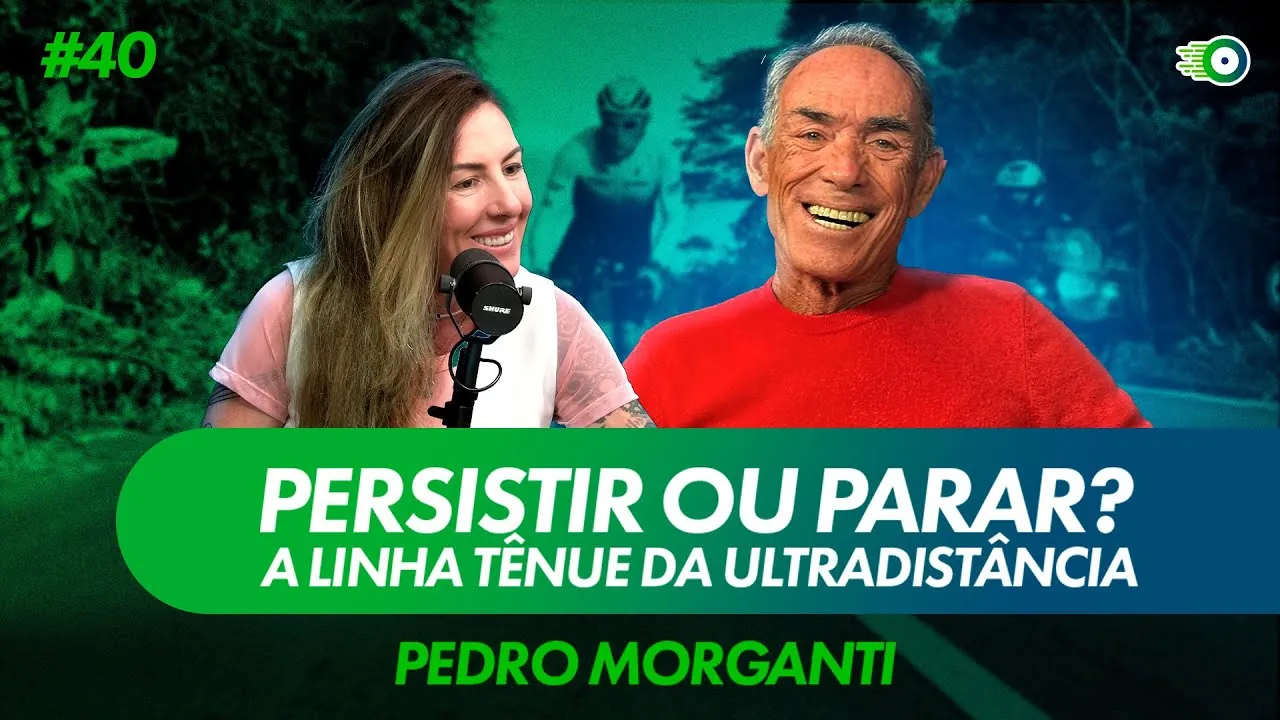
At 63 years old and with a resume that includes more than 30 Ironman races, five Ultraman events, and epic mountain bike stage races like Cape Epic and Brasil Ride, Pedro Morganti—known as Pedrão—embodies longevity in endurance sports. In an interview on Na Roda do Stemma with Gisele Gasparotto, the athlete detailed the mindset and physical rigor required to tackle world cycling's ultimate test: the solo Race Across America (RAAM).
For Pedrão, ultra-distance is a distinct discipline, defined by challenges exceeding 300 km on the bike or 10 km in the water. In the RAAM, the demands border on the unbelievable: covering roughly 4,900 km coast to coast across the United States, requiring an average of 400 km per day for 12 to 13 consecutive days through scorching deserts and formidable mountain passes.
PUBLICIDADE (GAM) — 1250x250
Lessons from early RAAM attempts
Experience in solo RAAM teaches hard lessons. In his first attempt, Morganti completed 3,200 km before withdrawing due to acute Achilles tendon inflammation—the result of riding over 500 km nonstop on a time-trial bike, whose aggressive geometry was never designed for days on end of continuous effort.
On his second attempt, the mistake was pacing at the start. Pushing too hard over the first 130 km in intense heat before descending into the desert, Pedro became severely dehydrated without realizing it. Severe cramping and vomiting led to an eight-hour hospital stay and four liters of IV fluids. Although he returned to the course and logged roughly 2,800 km, time cutoffs and mounting exhaustion within his support crew forced him to withdraw.
Strategy for a third solo journey
For his upcoming attempt to cross the United States, Pedro has completely overhauled his approach. His preparation involves training in consecutive 400 km blocks alongside a golden rule for intensity: never exceed 70% to 75% of maximum capacity. In ultra-distance racing, burning through your legs on a single segment jeopardizes the days ahead.
Support logistics, overseen by specialists like Nelson Barreta, have also been refined. Stops must be surgical, lasting 15 to 20 minutes during the day, with roughly 4 to 5 hours of rest at night. One key tactic involves eating warm, solid meals while still on the bike roughly 30 minutes before reaching a checkpoint, saving precious transition time for massage and sleep.
Weekly routine and managing pain
Pedrão's current training routine totals 500 to 600 km per week on the bike. Weekdays are split between urban bike paths and the University of São Paulo (Cidade Universitária), reserving Friday, Saturday, and Sunday for higher volume—including rides exceeding 180 to 200 km with demanding climbs, such as Serra de Mogi.
When addressing the extreme pain inherent to ultra-endurance racing, Pedro's mindset is straightforward: the pain of physical exertion must be managed through hydration, amino acid supplementation, proper nutrition, targeted pace reductions, and mental resilience. The athlete emphasizes that ultra-distance isn't about gratuitous suffering, but about daily consistency and a conscious decision to embrace the sport as a lifestyle.
PUBLICIDADE (GAM) — 1250x250