Sports
Menopause & Performance: Training and Hormone Therapy
Dr. Potyra Labonia explains why menopause is not the end of athletic performance and how to adapt training, sleep, and overall health.
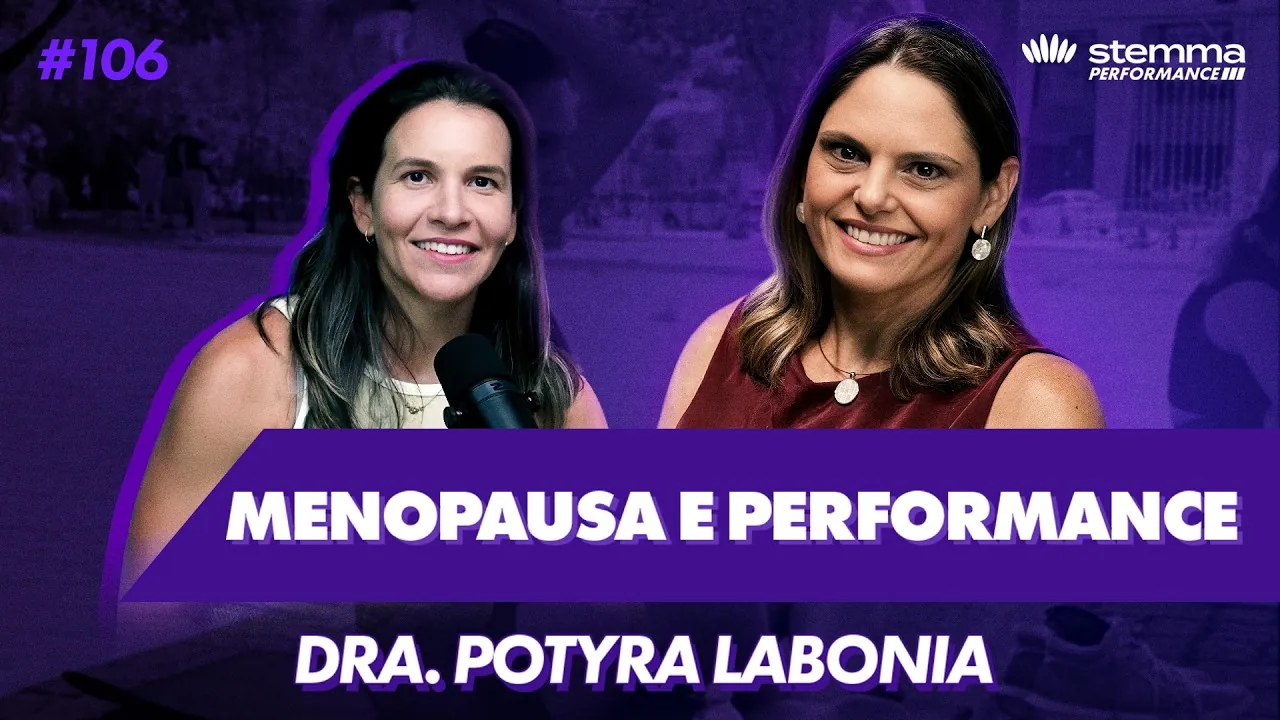
Hormonal decline during perimenopause does not have to halt progress in endurance sports. Sports medicine physician Dr. Potyra Labonia explains how to adapt training volume, the benefits of bioidentical hormone replacement therapy, and essential supplementation for female athletes over 40.
The transition into menopause is still approached with apprehension by many endurance athletes, but hormonal decline does not mean the end of athletic performance. Speaking with Bruna Mahn on Stemma Performance, gynecologist and sports medicine physician Dr. Potyra Labonia emphasized that proper education and individualized adjustments to training, nutrition, and hormones turn this stage into a productive new chapter rather than the conclusion of an athletic journey.
PUBLICIDADE (GAM) — 1250x250
Early signs and perimenopause
Although menopause is clinically defined as the absence of menstruation for twelve consecutive months (occurring at an average age of 48), the first symptoms of perimenopause can appear up to a decade earlier. Beginning around age 35, ovarian production of progesterone naturally starts to decline. The earliest indicator is often a shift in sleep patterns: athletes begin waking up tired, experiencing mid-night awakenings (frequently around 3 a.m.), or noticing increased irritability and anxiety.
The physician emphasizes that regular exercise does not delay the onset of menopause—which is primarily dictated by genetics—but it does provide greater metabolic flexibility. Well-conditioned bodies manage hormonal fluctuations with much milder symptoms, less susceptibility to sudden weight gain, and fewer complaints of hot flashes.
Differential diagnosis: perimenopause or REDs?
A critical consideration for women in endurance sports such as triathlon and marathon running is distinguishing physiological hormonal shifts from the symptoms of REDs (Relative Energy Deficiency in Sport). An abrupt surge in training volume without adequate caloric intake can suppress menstruation at age 40 simply due to low energy availability, mimicking ovarian failure. Dr. Potyra stresses that blood tests and specialized medical oversight are essential to avoid confusing relative energy deficiency with hormonal transition.
Training adaptations: lower volume, higher precision
As estradiol levels drop, women lose part of the natural muscular and vascular recovery protection that historically gave them an advantage over men. Tendon tissue becomes more prone to injury, insulin sensitivity decreases, and the time required to recover from an intense workout increases.
The solution to maintaining performance is not training more to compensate, but training with precision. Instead of grinding through grueling 16-to-20-hour weekly blocks, strategies prioritizing shorter sessions with carefully calibrated intensity and low-impact cross-training (such as deep water running) provide consistent adaptations without overloading tendons and joints.
Hormone replacement therapy and anti-doping rules
Dr. Potyra noted that historical fears surrounding hormone replacement therapy stem from outdated studies (such as the 2002 WHI trial) conducted on sedentary populations using obsolete synthetic progestins. Today, modern clinical practice relies on bioidentical hormones (such as natural progesterone and estradiol), which offer proven clinical safety and are widely available in standard pharmacies.
For athletes participating in sanctioned competitions with anti-doping controls, there is a crucial distinction: estrogen and progesterone are not considered doping. Using these hormones merely restores natural female physiological levels. Testosterone, conversely, remains on the prohibited list maintained by regulatory bodies (WADA/USADA) and constitutes an anti-doping rule violation in sanctioned sports.
Essential supplementation for female athletes over 40
To manage symptoms and preserve lean muscle mass, several key nutrients are strongly recommended:
- Creatine: Supported by robust scientific evidence to preserve strength, cognitive function, and lean muscle mass, even for athletes who do not log high training volumes.
- Magnesium and zinc: Essential for muscle relaxation, cramp prevention, and metabolic balance.
- Vitamin D and omega-3s: Support bone density, immune function, and inflammatory modulation.
- Black cohosh (Actaea racemosa): A botanical with clinical support in medical literature for easing hot flashes.
- High-biological-value protein: Distributed intake throughout the day is crucial to combat the accelerated sarcopenia driven by hormonal decline.
The specialist concludes that reaching age 40+ should never be viewed as a limitation. Understanding your body's shifting physiological responses, maintaining open communication between doctor and coach, and prioritizing recovery are the keys to continuing to perform at a high level.
PUBLICIDADE (GAM) — 1250x250