
 Sports
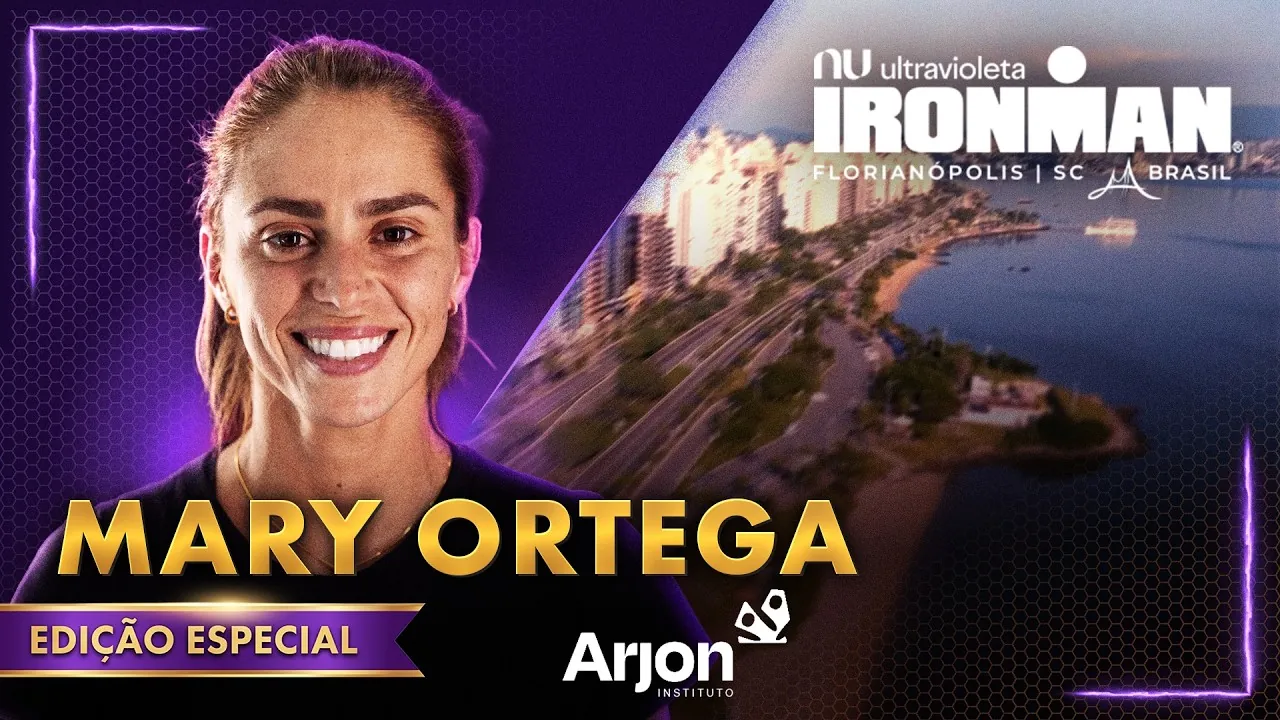
Mari Ortega: Farewell to Full Ironman Brazil, Focus on Road Running
The professional triathlete shares insights into her preparation, challenging routine, and future plans post-Nubank Ultravioleta Ironman Brazil.
In an exclusive interview before the Ironman Brazil, triathlete Mari Ortega revealed the intensity of her preparation, the challenges of early morning training, and her decision to bid farewell to full Ironman races. She also shared valuable tips for beginners and her expectations for the competition.
In an exclusive chat live from the Nubank Ultravioleta Ironman Brazil coverage, Mari Ortega, professional triathlete and physical educator, spoke with presenters Fabio Bessa and Thiago Kawamura about her journey leading up to the competition. With an intense routine and deep reflections on her career, Mari opened up about her preparation for what will be her last full Ironman race.
PUBLICIDADE (GAM) — 1250x250
Intense Preparation and Routine Challenges
Mari Ortega's journey to the Ironman Brazil was marked by positive and intense preparation, without major obstacles. However, the most challenging aspect of her routine was cycling, especially early morning training sessions. Due to the urban logistics of Rio de Janeiro, where street cycling is limited, Mari prioritizes indoor training, but when she does go out, it's always in the early hours of the day.
This demand shaped a rigorous routine: "I try to be in my bed, ready, by 8 PM with everything dark." To tackle the early mornings, Mari plans to go to bed early and wake up around 3 AM, a strategy that requires discipline and adaptation to ensure her body is ready for the effort.
Mental Strategies and Race Focus
The final stretch before the Ironman is a period of rest and care. Mari emphasizes the importance of maintaining a controlled diet, without introducing new foods or eating anything different from her usual. For her, mentalization and race visualization are crucial, a practice she's had since her swimming days. "Race visualization is very present in what I want to achieve." This technique helps align what will be executed at each stage, including nutrition – which she considers fundamental for long-distance racing.
For the Ironman, Mari adopts a specific nutritional strategy, consuming 80g of carbohydrates per hour during cycling and 50g of carbohydrates per hour during running. She also highlights the importance of anticipating and mentalizing what could go wrong, so she knows how to act if something unexpected happens.
Farewell to Full Ironman and New Horizons
In an emotional announcement, Mari Ortega revealed that the Nubank Ultravioleta Ironman Brazil will mark her farewell from full Ironman races. Her plan for the second half of the year is to dedicate herself to road running, a discipline in which she has shown excellent performance and wishes to further develop.
Regarding her athletic journey, Mari expresses gratitude: "I've already experienced so much in this sporting realm... I feel like I've reached that level of a sports icon." Her biggest goal as an athlete and person is to be an inspiration to her family, something she feels she has already achieved. She also values the competitiveness of the female elite in Ironman, which drives her to always strive for more.
Advice for Beginners and Inspirations
Mari's first triathlon race was the Capixaba de Ferro in 2021, a long-distance event. Her main tip for those starting out is: "Enjoy it. Savor everything." She warns against getting too caught up in metrics, suggesting instead to use the feeling of effort to fully enjoy the experience.
When asked about the song she'd like to hear when crossing the finish line, Mari didn't hesitate: "We Are the Champions." A choice that reflects resilience and passion for the sport. With the race approaching, Mari is excited for a beautiful, rain-free day and hopes to replicate the best of her training for a flawless performance. She wishes for a wonderful day not just for herself, but for all athletes.
Following Mari Ortega's journey is an inspiration for any athlete. Her dedication, strategic intelligence, and passion for the sport offer valuable lessons that apply both on the track and in life.
PUBLICIDADE (GAM) — 1250x250




