
 Sports
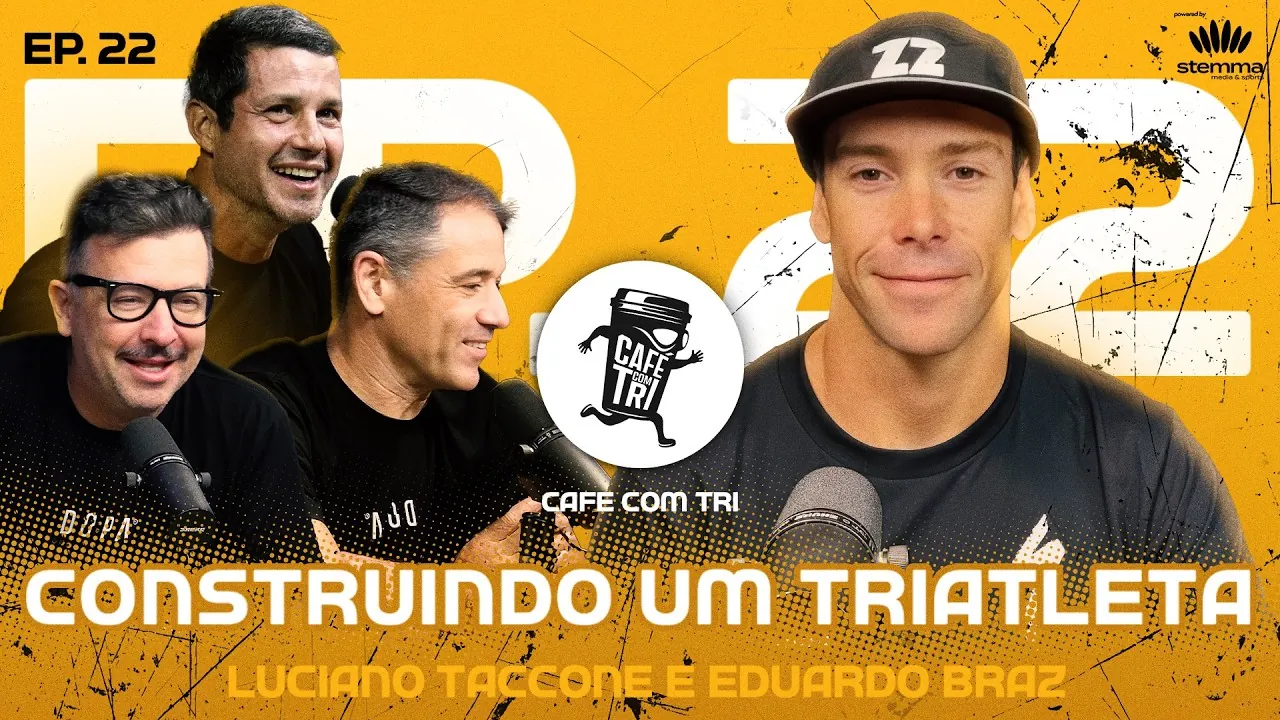
Luciano Taccone and Eduardo Braz on Transition to Ironman
From the Olympic cycle to long-course success, the Argentine triathlete and coach explain technical adjustments, bike fit, and fueling.
Luciano Taccone and coach Eduardo Braz look back on the Argentine triathlete's journey from short-course World Cups to victories at Ironman Brazil. The duo breaks down the challenges of adapting to a time trial bike, gaining cycling efficiency, and evolving intra-race nutrition strategies.
The transition from short to long-distance triathlon requires far more than merely bumping up weekly mileage. In elite racing, changing distances means redesigning cycling mechanics, training the gut to handle massive carbohydrate loads, and rebuilding the training routine. Argentine triathlete Luciano Taccone and his coach Eduardo Braz experienced this transformation firsthand.
PUBLICIDADE (GAM) — 1250x250
From ITU World Cups to pre-Tokyo adversity
Luciano Taccone built a solid career in the Olympic distance (ITU), representing Argentina at the Rio 2016 Olympic Games and claiming victories in World Cup stages such as Huatulco. While preparing for the next cycle under Eduardo Braz in the SESI training group—alongside athletes like Manoel Messias and Reinaldo Colucci—Taccone captured bronze at the 2019 Pan American Games in Lima.
His road to Tokyo, however, was derailed by a string of setbacks. A training crash in the Czech Republic caused a fractured clavicle and limited shoulder mobility. Soon after, the pandemic halted the Continental Cup calendar, severely limiting his qualifying points for the Olympics. Facing this reality, athlete and coach decided to expedite their move to long-distance racing and focus on the Ironman circuit.
Rebuilding on the time trial bike and biomechanical adjustments
Although always an aggressive cyclist in draft-legal racing, Taccone struggled to transfer his power to the time trial (TT) bike. Adapting to the new position took roughly two years and placed physical strains on his body that he had never encountered in Olympic-distance events.
The turning point on the bike came through real-world aero testing and expert-guided bike fit adjustments, including switching to shorter 150 mm crank arms and adopting a position prioritizing an open hip angle rather than merely chasing an excessively low front end. Finding mechanical comfort without sacrificing sustained wattage unlocked his best cycling form, proving decisive for securing dominant wins at Ironman Brazil.
The carbohydrate revolution and lessons from Nice
Another critical pillar in his step up to the full distance was his nutritional approach. While short-course fueling was limited to modest energy intake, long-distance gut training demanded rapidly digestible products in high volumes per hour.
The vulnerability of this strategy was laid bare at the Ironman World Championship in Nice, where Taccone lost two nutrition bottles just 30 km into the bike leg. Forced to improvise with unfamiliar on-course aid station products, the Argentine suffered dehydration and a severe caloric deficit, which derailed his marathon and led to a DNF to preserve his body for upcoming races.
Eyeing Kona and the vital role of the swim
With his competitive peak targeted for the upcoming seasons, Braz and Taccone's primary focus is on the opening leg. In modern professional Ironman racing—heavily dictated by packed swim packs and the fast pace set right out of T1—exiting in the front pack has become a non-negotiable prerequisite to contend for top honors at the Ironman World Championship in Kona.
PUBLICIDADE (GAM) — 1250x250




