 Sports
José Belarmino: From Swimming to the Top of Triathlon
Ironman and 70.3 world champion details his swimming background, transition to triathlon, and coaching philosophy.
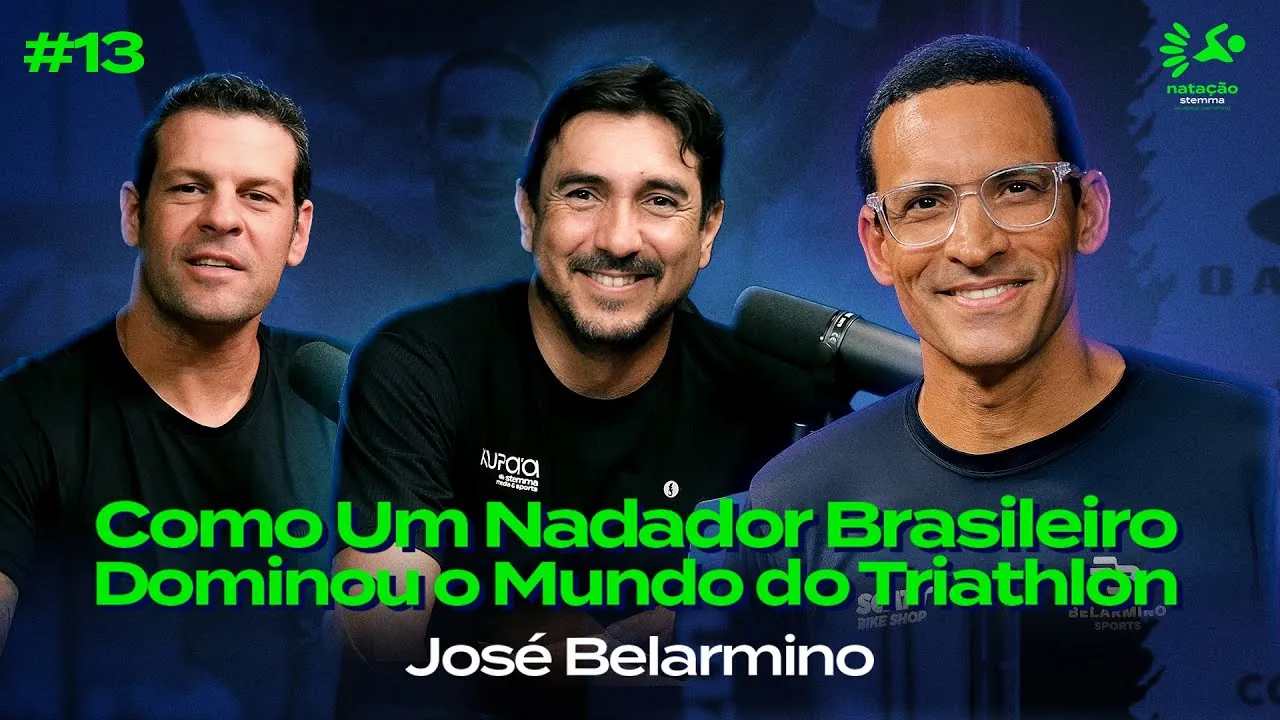
With a background on the Brazilian National Swimming Team and Ironman world titles in Kona and St. George, José Belarmino reflects on the key pillars of his career. In a conversation with Samir Barel and Wanderley Santos, the athlete and coach discusses technique, multisport transition, and longevity in endurance sports.
Few Brazilian athletes have built such a consistently dominant career in endurance sports as José Belarmino. Before claiming the amateur world champion titles in both the Ironman in Kona and the Ironman 70.3 in St. George in the same year (2022), Belarmino built a solid foundation in the pool, representing the Brazilian National Team at World Cup stages and contending for medals at major national swimming championships.
PUBLICIDADE (GAM) — 1250x250
The pool foundation and Mirko Cevales' lessons
Belarmino took up swimming as a child on medical advice. At age 9, upon joining the Estilo team in São Bernardo do Campo, he began a decade-long partnership with coach Mirko Cevales, who guided him until he was 22. Specializing in the 100m and 200m breaststroke and 200m individual medley, Belarmino came within just four seconds of an Olympic qualifying time, experiencing the high-volume training era of the 1990s firsthand.
Even during an era where athletes swam up to 15 kilometers a day across three sessions, Belarmino emphasizes that the defining factor of his development was an obsession with technique and biomechanical efficiency. Details such as the breaststroke underwater pullout, turn mechanics, and gliding efficiency were exhaustively refined after the main workout sets.
Transitioning to triathlon and rate of perceived exertion
After stepping away from competitive swimming and spending time away from elite sports, Belarmino found fresh motivation in triathlon. Just two years and eight months after entering his first race, he won the overall title at Ironman Fortaleza, capturing the attention of the national endurance scene.
In his view, years spent in the water provide a decisive edge: a finely tuned rate of perceived exertion. While runners and cyclists often rely on monitors and GPS watches to manage intensity, swimmers learn to gauge pace zones through physiological feedback and bodily awareness. However, Belarmino cautions that running requires careful adaptation: swimmers possess immense cardiovascular capacity, but their bone and muscular structures are unaccustomed to impact, demanding gradual progression to prevent injury.
Coaching philosophy and long-term partnership
Working as a coach for swimmers and triathletes—including open-water ultramarathoner Ana Sudo—Belarmino applies the concepts he learned from Cevales, prioritizing individualized planning and open communication over one-size-fits-all training templates.
Belarmino argues that training success hinges on an even split of responsibility (50% athlete, 50% coach). Understanding day-to-day fluctuations, everyday stress, and recovery enables coaches to tailor training volumes, manage gear like paddles or drag chutes, and program demanding sets aimed not just at physiological gains, but at building the mental resilience required during race-defining moments.
Family, longevity, and new open-water challenges
At 48 and a father of three boys (8-year-old twins and a 5-year-old), Belarmino maintains an active lifestyle without imposing athletic pressure on his children. He stresses the importance of letting kids develop at their own pace, prioritizing fun and water safety during childhood.
While primarily focused on triathlon—where he consciously chose to compete in age-group divisions to balance family and career—Belarmino keeps his passion for marathon swimming alive and does not rule out tackling classic Brazilian open-water challenges in the future, such as the iconic Travessia 14 Bis.
PUBLICIDADE (GAM) — 1250x250