
 Sports
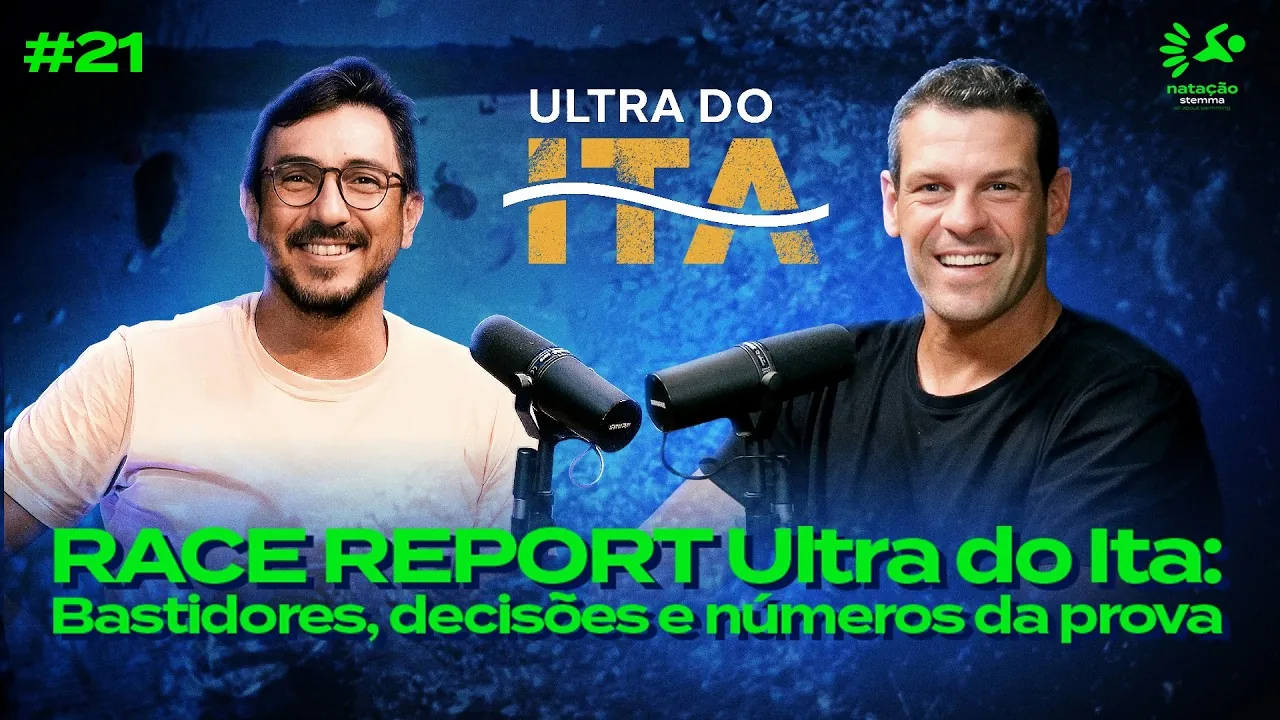
Itanhaém River Ultra: Behind the Scenes of the 15 km Race
With 350 entrants and a challenging tide, Samir Barel and Wanderley Santos break down the technical details of the 8th edition.
The 8th edition of the Itanhaém River Aquatic Ultramarathon brought together hundreds of swimmers for a 15 km course marked by technical tides and strong sun. Organizers and coaches Samir Barel and Wanderley Santos shared official statistics, safety logistics, and performance evaluation criteria.
Swimming a 15 km open-water river ultramarathon requires far more than steady strokes: it demands reading currents, fueling strategies, and adapting to unpredictable variables. At the 8th edition of the Itanhaém River Aquatic Ultramarathon, over 300 athletes tackled the course on a day that tested both swimmers' tactical patience and the organizing team's surgical precision.
PUBLICIDADE (GAM) — 1250x250
How to evaluate open-water swimming performance
One of the main post-race discussions revolved around finish times. With slower tidal conditions than during simulation training weeks earlier, many athletes finished with higher split times. In open-water racing, however, raw GPS time rarely reflects actual swimming performance, as current intensity fluctuates hour by hour.
To gauge true progress without getting hung up on the clock, technical coaches recommend four comparative benchmarks: the percentage gap behind the overall winner, the gap to your age-group winner, a benchmark comparison against a peer of similar pace who has competed across multiple editions, and the historical pace variation across the same race year over year. When nature slows the entire field's average pace, maintaining your gap to the leaders signals improved efficiency.
15 km results and highlights
In the men's division, the overall victory went to Lebais, who completed the course in 2h53min, closely followed by Guilherme Zampieri (2h54min) and João Pedro (2h56min). In the women's division, Valentine Pereira claimed the overall title in 3h27min04s, with Talita Ade (3h31min) taking second and Amanda (3h33min) in third place.
An interesting highlight of this edition was how the individual champions performed relative to the relays: both the male and female individual winners crossed the finish line before the fastest relay team, the trio GTF (Guto, Taíse, and Fabinho), two-time category champions with a time of 3h47min. The race's overall average finish time was 4h15min, with the final swimmer completing the course in 5h50min, well within the 6-hour cutoff.
Start logistics and the tidal challenge
Behind the scenes, the organization had to redesign the starting area following preventive closures at the Sesc pier. With ground soaked by rain the day before, a fast-boarding roundabout was set up for kayaks and swimmers, and a covered pavilion was opened to shelter families.
The decision to start promptly at 11:00 AM was dictated by tide tables and nautical safety. With the tide turning in the early afternoon and sunset approaching around 5:30 PM, delaying the start would have forced slower swimmers to fight harsh headwinds and currents entering the channel or finish in the dark.
Economic impact and the power of volunteers
In total, the race accounted for approximately 4,155 km swam across all individual competitors and relay teams, achieving a finish rate above 90%. The most competitive age groups were the Master E categories (45+) for both men and women.
Beyond sports, the event drew an estimated crowd of 1,600 people, generating over R$ 300,000 in local commerce, dining, hospitality, and boat hires. Another cornerstone was the return of the volunteer corps in partnership with Swim House, bringing in experienced athletes to assist rescue boats and transition points.
PUBLICIDADE (GAM) — 1250x250




