 Sports
Ironman 70.3 Aracaju: Felipe Bianchi's Heat Strategies
Felipe Bianchi reveals his preparations for the Ironman 70.3 Aracaju heat, optimizing performance in his second race.
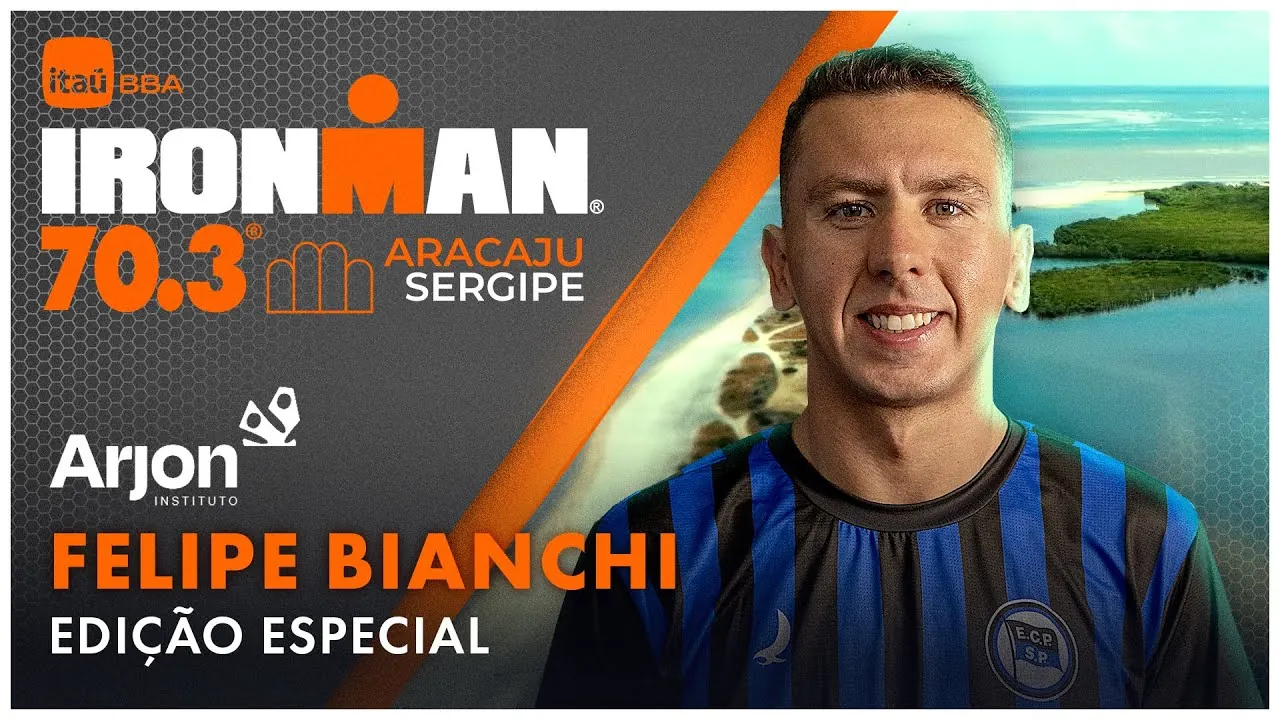
Triathlete Felipe Bianchi shares his experiences and strategies for the 2025 Ironman 70.3 Aracaju. After his debut in the distance in São Paulo, he details the transition from the Standard pace and specific training to tackle the city's intense heat. This offers an in-depth look at high performance and adaptation in triathlon.
Fábio Bessa and Thiago Kawamura, from STEMMA TV, welcome triathlete Felipe Bianchi for a direct chat about his preparation for the Itaú BBA IRONMAN 70.3 Aracaju 2025. After his 70.3 debut in São Paulo, Felipe shares the lessons learned and strategies to optimize his performance, especially concerning the challenging heat of the Sergipe capital.
PUBLICIDADE (GAM) — 1250x250
Transitioning from Standard to 70.3: A New Race Pace
Felipe Bianchi made his debut in the 70.3 distance in São Paulo, an experience that left its mark. Unlike the Standard, known for its "breakneck" pace, the 70.3 allows for more conscious race management. "You're not constantly out of breath; sometimes you still have time to correct something you messed up," explains Felipe, highlighting the room for adjustments that doesn't exist in shorter races, where a minimal error in transition can cost you the competition. The longer distance demands intelligence and resilience, allowing the athlete to explore a new level of performance.
Mastering Intensity and Strategy in 70.3
While the Standard requires constant pace variations, in 70.3 the dynamic is more controlled, but no less challenging. Felipe notes that despite being more measured, there are moments of "attack" from other athletes. In a hot environment like Aracaju, strategic awareness is crucial. "You have to be very conscious about whether you're going to respond, especially due to hydration," he states. Hydration management and energy become decisive factors to maintain performance without "breaking down" on the course. It's a battle both physical and mental.
Thermal Acclimatization: The Challenge of Heat in Aracaju
Aracaju is synonymous with intense heat, a factor Felipe took seriously in his preparation. In São Paulo, where it wasn't as hot as expected, he improvised acclimatization training. Riding on a trainer indoors with the window closed and no fan, or even wearing long pants and a windbreaker on hot days on the bike path, were tactics to simulate extreme conditions. "It's something totally different," he admits, even after a prior course reconnaissance. Thermal adaptation is one of his biggest focuses to deliver a solid performance and avoid the dreaded dehydration.
Felipe Bianchi's journey to the Ironman 70.3 Aracaju is a testament to the constant pursuit of high performance in triathlon. His story resonates with any athlete who ventures into new distances, facing challenges like heat and strategic race management. May this experience inspire you to chart your own paths of overcoming challenges, whether in sport or in life. The energy of Aracaju awaits another Ironman ready for the challenge.
PUBLICIDADE (GAM) — 1250x250