 Sports
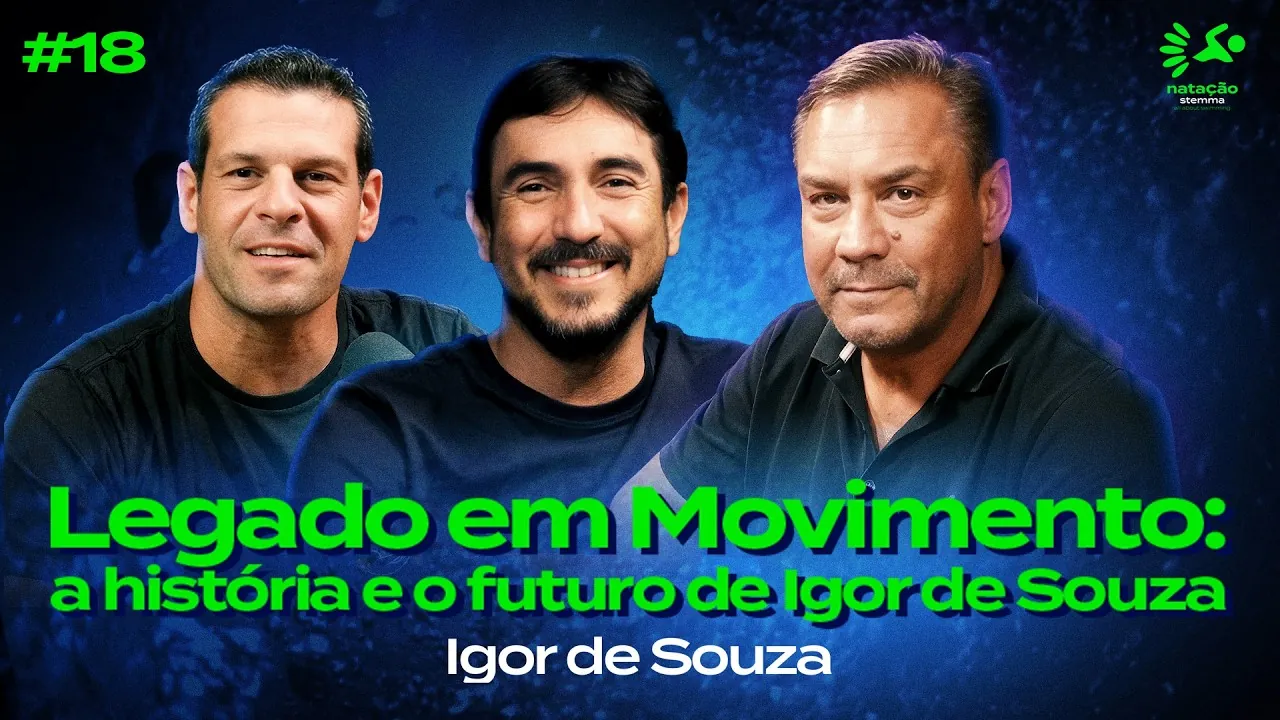
Igor de Souza and His Open Water Legacy
Ultra-marathon swimming pioneer recalls his English Channel double crossing, sports management, and youth development.
With a career highlighted by a two-way English Channel crossing and world titles, Igor de Souza reflects on the evolution of open water swimming. The swimmer and sports manager discusses the transition from pool to ultra-distance races, grueling training routines, and the challenges facing long-distance swimming in Brazil.
Igor de Souza is one of the most iconic figures in Brazilian aquatic sports. A three-time Manhattan Island Marathon Swim champion, the first Brazilian to complete a two-way crossing of the English Channel, and technical director for the Brazilian national team during its historic team world title at Barcelona 2013, he built a singular career blending grueling ultra-endurance training with mathematical precision.
PUBLICIDADE (GAM) — 1250x250
From São Paulo pools to ultra-marathons
Born in Santo André in 1963, Igor took his first strokes at Clube Atlético Aramaçan with encouragement from his father. In his youth, he split his time between judo, diving, and soccer before focusing exclusively on swimming. Initially a sprinter, he discovered his true competitive edge in endurance events once his physical stature began limiting his potential in the 50-meter and 100-meter freestyle sprints.
His transition to extreme distances took shape on the international open water circuit during an era devoid of modern support systems. Igor competed in 17 ultra-marathons over 17 consecutive weeks across the globe, tackling iconic races such as Capri-Napoli, Lake Memphremagog, and Lac Saint-Jean, frequently braving freezing waters without a wetsuit and improvising nutrition strategies on the fly.
The English Channel double crossing
The pinnacle of his crossing career took place at the English Channel. In 1996, Igor completed a one-way crossing in 11 hours and 1 minute, clocking the fastest time in the world that season under severe tidal conditions. Frustrated by weather conditions that prevented a speed record, he returned in 1997 to tackle the full two-way route, becoming the first South American to accomplish the feat.
For Igor, extreme open water events demand mental maturity and absolute respect for nature. Success in these crossings hinges on stroke consistency and adaptability to currents—factors that go far beyond technical favoritism at the starting line.
Analytical background and sports management
Holding a degree in Mathematics along with specializations in Sports Management and Sports Psychology, Igor applied analytical rigor to both career planning and business. Serving for nearly two decades as sports marketing director for Speedo in Brazil, he led strategic partnerships with the Brazilian Confederation of Aquatic Sports (CBDA) and supported top athletes including Gustavo Borges, César Cielo, Poliana Okimoto, and Ana Marcela Cunha.
Alongside his corporate work, he maintains an active role as a volunteer coach, leading high-mileage training sessions in the early morning hours. His methodology emphasizes discipline, precise split-time control, and stroke refinement for swimmers preparing for endurance races and ocean crossings.
Challenges facing long-distance swimming in Brazil
Drawing on his experience leading the national team, Igor offers a critical perspective on the current state of Brazilian swimming. He notes a premature overspecialization in sprint events across youth development programs, while training systems for distance swimmers (800m, 1500m, and open water marathons) suffer from insufficient volume and a lack of endurance sports culture.
According to him, the country boasts ideal year-round weather conditions for open water training, but it must invest in international competitive exchange and grassroots development to produce new world-class talent. The swimmer's journey is currently being chronicled in an upcoming documentary and a biography in production.
PUBLICIDADE (GAM) — 1250x250