 Sports
Fabão Fagundes: From Pro Cyclist to Brazilian Cycling Management
Former professional cyclist and Giro organizer, Fabão Fagundes reveals the differences and challenges of amateur and elite cycling in Brazil.
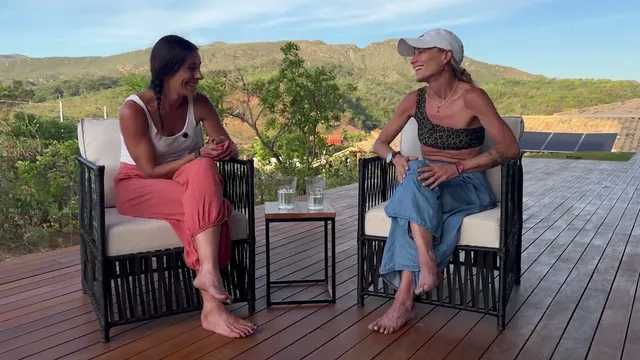
Fabão Fagundes, a former professional cyclist with a 28-year career and now an organizer of events like the Giro Ride Like a Pro, shares his rich journey. In a conversation with Gisele Gasparotto on the Na Roda do Stemma podcast, he explores the complexities and behind-the-scenes aspects of amateur and professional cycling. The episode covers Fabão's transition from the peloton to management and the challenges faced in organizing major races in Brazil.
On the Na Roda do Stemma podcast, host Gisele Gasparotto welcomed Fabão Fagundes, an emblematic figure in Brazilian cycling. With a 28-year career as a professional cyclist, Fabão was a two-time Brazilian track champion and participated in the Pan American Games in Santo Domingo in 2003. Today, he leads the management of cycling events such as the Giro Ride Like a Pro, applying all his athletic experience to the organization.
PUBLICIDADE (GAM) — 1250x250
A Life Dedicated to Cycling: From Riding to Organizing
Fabão's passion for cycling began early, with the bicycle serving as his primary mode of transport. At 16, he was "discovered" at an amateur race, even with simple equipment, thanks to his explosiveness and ability to pedal standing up. This fortuitous encounter with the sport led him to a professional career and, later, to use scholarships to earn degrees in Physical Education and postgraduate studies, a differentiator for someone from a humble background.
The transition from athlete to organizer of the Giro Ride Like a Pro happened in an unusual way. After participating in editions of the event as a cyclist, Fabão sent an email with suggestions to improve the race. The feedback, focused on the cyclist's perspective and safety, caught the attention of the organizer, Fábio, who invited him to join the team. Fabão emphasizes that the goal was to bring a more "humanized" approach to the event, understanding the needs and risks faced by cyclists.

Challenges and Behind-the-Scenes of Organizing Major Races
Organizing a large-scale cycling event like the Giro is a complex and costly task. Fabão reveals impressive numbers:
- 5,000 cones and 5,000 barriers are used.
- 930 staff members are needed on race day, with transport and catering logistics.
- Security involves various armed forces and police, requiring 270 snack kits just for them.
- Planning for a Giro begins years in advance, working on future editions (e.g., the 2027 Giro).
His experience as an organizer completely changed his perspective. "I'll never again complain that a race number was missing a safety pin or that the start was delayed by 10 minutes," he states. The complexity of closing highways, dealing with municipalities, and ensuring the safety of thousands of athletes is immense. Fabão emphasizes the importance of minimizing the impact on the local population and the concern for providing a structure that doesn't overburden public services, such as the Giro's private medical team in local hospitals.
Safety First
Safety is a top priority. Fabão and his team dedicate 15 days in Campos do Jordão for preparation, using 36 liters of paint to mark the course with arrows and asterisks indicating hazards. He rides the course three times in the early morning hours of the event to check for unforeseen issues like landslides or fallen branches. One of the biggest challenges is dealing with accidents, and Fabão feels personally responsible for each one, constantly seeking feedback from the medical team to improve safety measures and, most importantly, to prevent fatal accidents.
Among the most difficult situations, he recalls a bus that got stuck in Paiol the day before the race, requiring a task force with 12 event pickup trucks to move it. Additionally, managing animals on the course and other unforeseen events are routine challenges that most participants don't even notice.
Amateur vs. Professional Cycling: A Fine Line
Fabão highlights a stark difference between amateur and professional cycling, especially in race organization. Amateur cyclists, who represent 90% of participants in events like the Giro, require extra attention to safety and inclusion. He recalls that, in the past, many cyclists were cut from official races due to insufficient skill level, which caused frustration. Mário Roma's vision, with the creation of Claro 100K, was fundamental for the emergence of amateur races that allow everyone to start and finish, focusing on the personal challenge.
"The professional has a different dynamic, a different rhythm," explains Fabão. While professionals are already "seasoned" and attentive to details, amateurs may not have the same experience to identify dangers. Therefore, rules like foot-down fueling in amateur races are crucial to prevent accidents.
Segregation That Hinders the Sport
Fabão criticizes the segregation imposed by federations and confederations between amateur and professional athletes. He argues that many high-level amateurs, such as Gui Couto and Luiz Felipe Fialho (Galeto), dedicate their lives to the sport but lack the full structure of a professional. If forced to compete in the professional category, they would be at a disadvantage against complete teams, without a masseur, support car, or wheel changes. This deters them from federated races.
He proposes that events like the Giro could simultaneously count towards national rankings for professionals and offer podiums for amateurs, using electronic timing to manage classification. "Today, the structure is already in place," he states, citing the Gran Cup Ubatuba as a successful example of this integration. This change would end the division that is often artificial and discourages participation.
The "Brazilian Way" and the Rules
One behavior Fabão would like to eliminate is the "Brazilian way" (jeitinho brasileiro) of trying to bypass rules, such as cyclists who affiliate with a federation the week of the race just to start in a privileged gate or register as amateurs while being federated to seek a podium spot. He recounts a recent case at the Giro where an athlete was disqualified from the general podium for this practice. Fabão argues that while creating new rules is important, the application and enforcement of existing rules, with clear penalties, is fundamental for the integrity of the sport.
The Future is "Humanized": Giro in Downtown São Paulo
Fabão emphasizes that the "humanized side" is what he is most passionate about in his work with the Giro, which is dedicated to listening to athletes and adapting the event to their needs. This philosophy is reflected in decisions such as separate starts for women's pelotons and the creation of specific categories.
Looking ahead, Fabão shares an exclusive spoiler: the Giro will feature an unprecedented 100km stage in Downtown São Paulo, scheduled for August 23 or 26, with circuit details still in the final organizational phase. This will be an immense logistical challenge, aiming to minimize the impact on city traffic and routine, but the promise is of a spectacular race, bringing cycling to one of Brazil's urban hearts.
The conversation with Fabão Fagundes on Na Roda do Stemma reveals that cycling, whether amateur or professional, is driven by passion, but that organizational excellence and an inclusive vision are key to its continued growth. His journey, from the peloton to management, offers a unique perspective on the sport and the complexity behind the scenes that ensures the magic of every start.
PUBLICIDADE (GAM) — 1250x250