 Sports
Edu Suzuki Analyzes the Chinese Sneaker Landscape in Brazil
The founder of Tênis Certo shares his insights on the quality, pricing, and market challenges for Asian brands.
On Stemma China, Edu Suzuki, founder of Tênis Certo, delves into the world of Chinese running shoes. He discusses the evolution of quality, import challenges, and Brazilian consumer perception. This in-depth analysis is for sports enthusiasts.
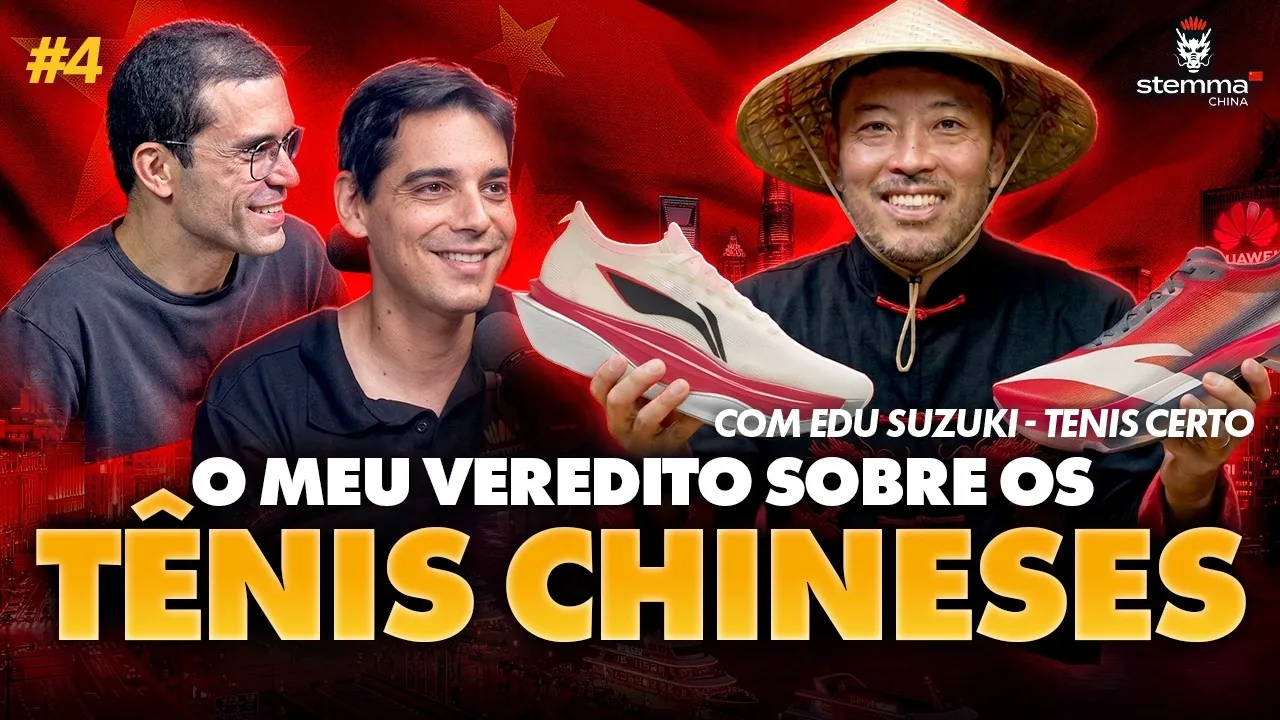
We welcomed Edu Suzuki, co-founder of Tênis Certo, the world's largest running shoe review channel, for an in-depth conversation on the Stemma China podcast. Alongside hosts Fábio Bessa and Carlos Gueiros, Edu shared his vast experience and insights into the growing impact of Chinese running shoes on the global market, and particularly in Brazil.
The discussion revolved around how Chinese models are dispelling the association of low price with low quality, and how their performance and technology are matching or even surpassing traditional brands.
PUBLICIDADE (GAM) — 1250x250
Tênis Certo and the Arrival of Chinese Brands
Edu Suzuki explained that Tênis Certo's policy is to focus on reviewing shoes officially sold in Brazil. Even with this restriction, the channel has already accumulated reviews of various Chinese brands, such as 361 (with the Sensation 2 and Bio Speed, and later 10 other models), Xiaomi (Mijia Energy, an ultra-affordable smart shoe), Xtep, Li-Ning, Anta, and Dynafit. Carlos Gueiros conducted a detailed survey, showcasing the evolution and number of Chinese models covered by the channel.
These brands largely entered Tênis Certo's radar through events like The Running Event in the USA, where Chinese brands seek influencers to showcase their products. Edu noted the Chinese interest in follower counts in Brazil but emphasized that Tênis Certo, despite different numbers from Chinese giants, is recognized as the world's largest review channel, even surpassing American channels.
Quality and Technology: Beyond Price
The quality of Chinese sneakers has been a pleasant surprise for Edu. According to him, in the last 12 months, all tested models stood out for their finish and materials. Chinese brands are integrating advanced technologies, previously only seen in high-end models from major brands, into their daily trainers, demonstrating speed in implementing innovations.
Another point Edu observed is the evolution in design. More recent models feature original silhouettes and more stylized logos, moving away from the "generic" look of the past. He cites examples of high-performance foams like Li-Ning's Boom and Xtep's Dynamic Foam PB. Xtep, in particular, stands out among fast runners in China, being the choice of most athletes achieving sub-3 marathon times, targeting a performance niche.
The Challenge of the Brazilian Market
Despite their quality, the massive entry of Chinese sneakers into Brazil faces significant barriers. Edu Suzuki believes that Brazil is not currently among the primary target markets for Chinese brands, which are more focused on the USA. High taxes, distribution complexity, and the need for large investments in marketing and physical presence in the country make the scenario challenging.
The price issue is crucial in Brazil, where consumers are sensitive to this factor. If taxes, import fees, and marketing costs are included, Chinese sneakers might lose their competitiveness. Edu illustrates this by comparing a high-end Chinese sneaker costing R$ 1,999 with a Puma Deviate Nitro Elite 4 at R$ 1,899; the weight of the traditional brand is still very strong in purchasing decisions, even with similar quality.
The Brazilian culture of waiting for promotions and the logistics of immediate delivery are other factors hindering penetration. "Point five" models (intermediate annual versions) launched by Chinese brands would also challenge traditional retail, which needs to clear current collections before new ones arrive.
Personal Highlights and Innovation
Among the models that caught his attention the most, Edu cites the Dynafit Xiaonian, a Hong Kong startup just two years in the market, which he considers a lightweight and versatile shoe, comparable to the Hoka Clifton or Nova Blast. Peak's super shoe is also praised, with a feel similar to the Vaporfly but firmer. 361, with models like Furious and Eleos, is highlighted for continuous evolution with each collection.
The "China plus one" strategy, where companies diversify production to countries like Cambodia and Vietnam to circumvent trade barriers, was also mentioned. The discussion also covered the growth of the counterfeit shoe market, a worrying phenomenon that can compromise runners' health, as these products do not undergo the biomechanical studies and research laboratory testing that serious brands invest in.
The Future of Tênis Certo and an Invitation to China
Edu Suzuki commented on the evolution of Tênis Certo, seeking content formats that go beyond technical reviews, with a more personal approach focused on practical experience. The goal is to promote conscious consumption, questioning the need to invest in high-end shoes for all runners. The channel also invests in community groups on Telegram (with over 380,000 members) and WhatsApp, in addition to a new website and app, consolidating its digital presence.
The conversation concluded with a bold proposal: organizing a "Tênis Certo Stemma China Expedition" for enthusiasts. The idea would be to visit company headquarters in Fujian, participate in sports fairs like the Canton Fair, and even run a marathon in Shanghai, with the goal of experiencing the local running shoe culture and market. A unique way to explore the world of Chinese sneakers, which, according to Edu, will soon be inevitable in Brazil.
PUBLICIDADE (GAM) — 1250x250