 Sports
Dr. Luís Altenfelder: Cycling as an Ally for Mental Health
The psychiatrist and cyclist shares how the Psykle project uses bikes to promote well-being in motion and rehabilitation.
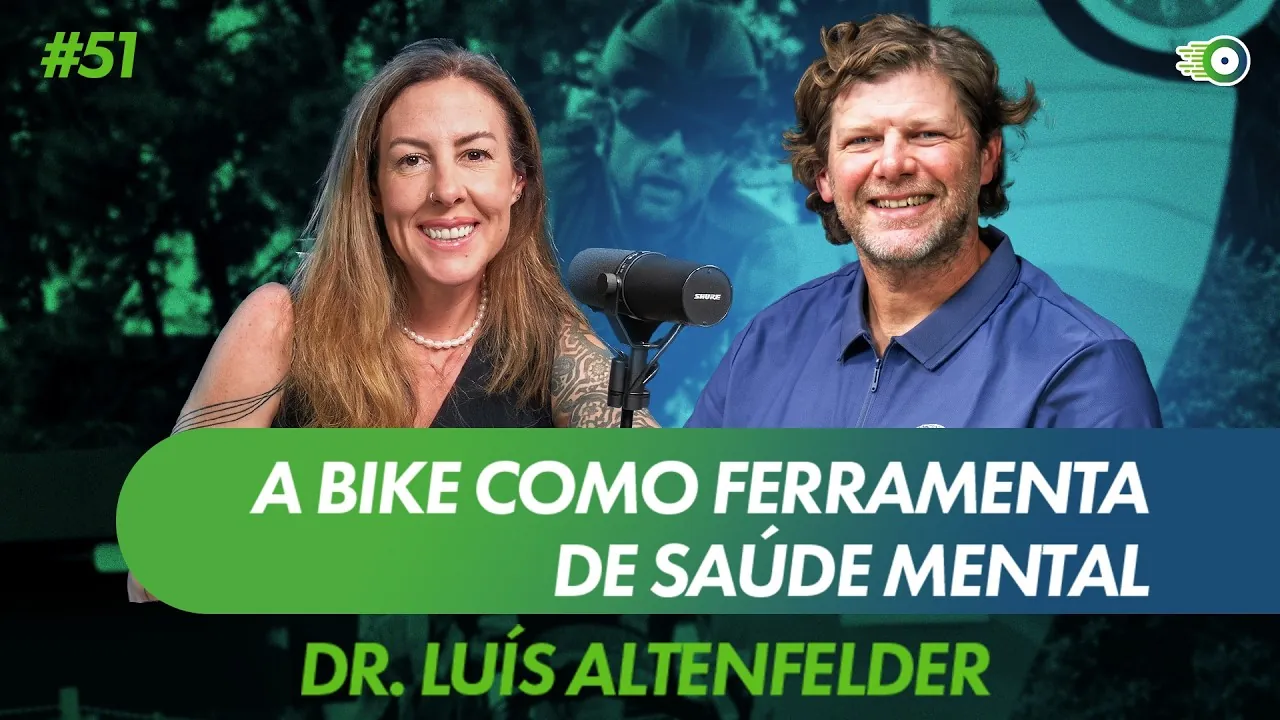
Dr. Luís Altenfelder, a psychiatrist and cyclist, deeply explores the relationship between cycling and mental health. He shares the story of Psykle, a project that takes patients on trails, using the bicycle as a therapeutic tool. An inspiring conversation about movement, community, and demystifying psychophobia.
In the high-performance sports scene, where the pursuit of results and pushing limits is constant, an essential debate arises about an often-neglected aspect: mental health. In a special episode of the podcast "Na Roda do Stemma," Dr. Luís Altenfelder, a psychiatrist and cyclist, brought an innovative perspective on how cycling can be a powerful tool for mental, emotional, and therapeutic transformation. With a life dedicated to psychiatry and a deep-rooted passion for cycling, Dr. Altenfelder is the creator of Psykle, a project that unites science, nature, and pedaling to promote well-being.
PUBLICIDADE (GAM) — 1250x250
A Life on Two Wheels: From Childhood to Competition
Dr. Luís's connection with cycling began very early, in childhood, accompanying his older brother in BMX races in São Paulo in the 80s. His Christmas Caloi Extra Light sealed this passion, transforming the bicycle into a lifestyle, used for commuting to school and exploring the world. With the arrival of mountain bikes in the 90s, and family trips to Ilhabela, cycling became an immersion in nature, generating feelings of well-being that he would only later be able to study and scientifically understand.
Although it was never just a hobby, competition only entered his life after the age of 30, in 2014, when Enduro mountain biking gained traction. This phase of challenges and races coincided with the beginning of his vision for Psykle in 2015, marking the prelude to a new approach in psychiatry.
Psykle is Born: From Clinic to Trail
With over 15 years of experience in psychiatry, Dr. Luís, coming from a family of psychiatrists (his father, Dr. Pedro, and Dr. Marcelo are also in the field, with the exception of a lawyer brother), realized that the consulting room alone was not enough to address the complexities of mental disorders, especially in large urban centers where contact with nature and a sense of community are scarce. The idea of taking therapy outside the four walls emerged naturally. The decisive moment was when he took an inpatient for a simple bike ride in Serra do Japí. The experience, rich in sensory stimuli from nature, had a transformative power on the patient.
This program, named Bike Rehab, proved so effective that Dr. Luís began to explore the idea more structurally, including the use of electric bicycles. E-bikes proved inclusive, allowing people with different fitness levels or those who needed an extra push to participate. The case of an adolescent who, after trying the e-bike, found a smile he had never shown before, illustrates the project's potential for rehabilitation and transformation.
The Bike as a Tool for Transformation: Inclusion, Movement, and Community
For Dr. Luís, cycling, and sport in general, is an instrument of rehabilitation. Cycling, in particular, creates a unique relationship with the machine and fosters a diverse community where people from all walks of life unite through a common passion. This sense of belonging and support network are crucial, especially after the pandemic, which exacerbated social isolation and the incidence of mental disorders.
He emphasizes the importance of movement for mental health. "There is no mental health without movement," he states, highlighting that just 20 minutes of physical activity, such as a walk, already releases endorphins and promotes neuroplasticity. The message is clear: do something, even if for a short time, because your brain will thank you. This is the basis of lifestyle medicine, which seeks to integrate people in other ways, beyond medication.
Demystifying Mental Health and Sport
The psychiatrist addresses psychophobia, the stigma associated with mental disorders and the use of medication. He argues that seeking psychiatric help is an act of self-care, not weakness. Psykle, in this sense, also acts as a vehicle to bring people closer to the topic, demystifying prejudice and promoting a "dynamic balance" where everyone finds their own way of adjusting.
The pursuit of the "flow state" in cycling — that moment of complete immersion and presence – is one of the great attractions, capable of generating deep well-being. Dr. Luís argues that engaging in activities that promote this state is more valuable than any substance for chemical brain readjustment. He points out that cycling is often an escape valve, but it's important that it serves as a channel for rehabilitation and not an irresponsible escape from problems.
When discussing performance, he warns that high-intensity sport, while rewarding, can also be a risk factor for mental disorders, given the demands and pressures. The importance of psychological support for athletes is undeniable, with examples like Gabriel Medina, Simone Biles, and Jenny Rissveds who have publicly addressed their struggles. A mentally unbalanced athlete, according to him, performs less and is more prone to injuries. The comparison with the obsession for KOMs on Strava, instant gratification, and the use of substances by amateurs to achieve quick results, are reflections of an anxious and hyperconnected society.
The Many Faces of Psykle: Support, Adventure, and Community
Psykle unfolds in various facets: from Bike Rehab, where Dr. Luís, as a psychiatrist, accompanies patients on trails with their Specialized e-bikes, to supporting enduro teams and athletes who need logistics and psychological support to compete. The sale of Psykle branded products (@psykle.br on Instagram) also serves as a way to raise funds for projects and trail maintenance.
Other initiatives include the "Ilha Ride" in Ilhabela, which offers bike rentals and local guides to explore hidden trails, and the "Psychlo Tours," which are guided trips to locations like Chapada Diamantina and Visconde de Mauá, focusing on immersion and mental well-being. Annually, the project organizes "Psychlo All Day," a public celebration festival with bike rides, music, and barbecue.
To complement this, the "Casinha Psychlo" (Psychlo Little House), located in Bosque da Saúde in São Paulo, houses a collection of over 35 antique bicycles and serves as a meeting point and logistics center for community activities. Dr. Luís also mentioned the organization Outride, founded by Mike Sinner (one of the founders of Specialized), which sponsors projects in the USA, using cycling as a tool for psychosocial rehabilitation in schools.
Sport as a School for Life: Pain, Fear, and Resilience
Dr. Luís Altenfelder deepens the discussion on pain and fear in cycling, relating them to life's challenges. The metabolic "suffering" of exercise, the ability to endure pain and increase one's threshold, is a valuable lesson. The rush of neurotransmitters like dopamine, which activates the brain's reward center after exertion, is what makes us repeat the activity, even if it was painful. It's a cycle where reward comes after effort, a crucial lesson in a society that seeks instant gratification.
Fear, in turn, is seen as a subtype of anxiety, a fight-or-flight reaction. He explains that dealing with fear on the bike, such as descending a hill, can be a form of exposure therapy, where small risks are controlled to build confidence. It's a process of "baby steps" that, if poorly managed, can lead to trauma and push someone away from the sport. The resilience learned through cycling – enduring, persisting – directly reflects how we face life's difficulties.
The Importance of Community and Care
The cycling community, with its diverse facets, is a microcosm of society, where different profiles and behaviors are observed. For Dr. Luís, it's vital that this community be inclusive, welcoming new members and encouraging education on roads and trails. Initiatives like "Esmalte Graxa" (mentioned by the presenter), and Psykle itself, contribute to building an environment of support and camaraderie.
"We can all need help with mental health at some point in our lives," the psychiatrist reminds us. It's fundamental to be attentive to signs of suffering – in oneself and in others – and to seek help. Active listening, offering support, and demystifying the search for professionals are attitudes that can save lives. In this context, cycling can be a bridge, a link, a path to well-being, but it doesn't replace therapy. It is, as he summarizes, "therapeutic, but not the same as doing therapy."
For Dr. Luís Altenfelder, cycling is his own medicine. And the message is clear: move, connect, and allow yourself to rehabilitate through cycling, an invitation that Stemma Sports reiterates to all who seek balance and well-being on two wheels.
PUBLICIDADE (GAM) — 1250x250