Sports
Daniel Krutman in China: Sports Innovation and the Future of Sport
Ticket Sports CEO unveils how Chinese technology is redefining the global sports landscape.
Daniel Krutman, CEO of Ticket Sports, embarked on a tech mission to China to uncover innovations shaping the future of sports. From revolutionary Hyper Wi-Fi to facial recognition at events, the Asian country is surprising with its unique approach. Discover how this experience could transform triathlon and endurance sports in Brazil.
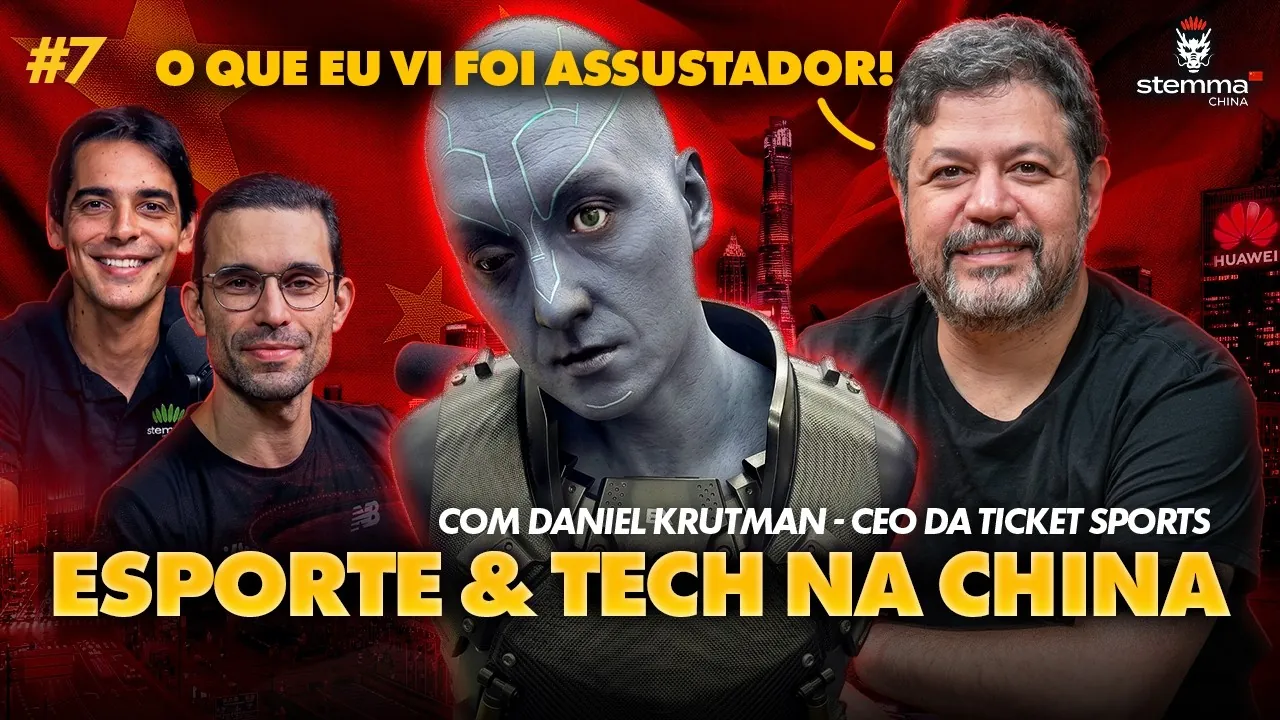
On the Stemma China program, hosts Fábio Bessa and Carlos Gueiros welcomed Daniel Krutman, CEO of Ticket Sports, Latin America's largest sports event ticketing company. Daniel shared his experiences and discoveries from a recent business trip to China, focused on innovation and technology applied to sports. The mission, organized in partnership with Arena Hub, aimed to bring lessons and new perspectives to the Brazilian sports sector, especially in endurance.
PUBLICIDADE (GAM) — 1250x250
Chinese Innovation: Hardware, Not Software
One of Daniel's most striking observations was the difference in Chinese innovation philosophy: the focus is on hardware, not software. Solutions like Hyper Wi-Fi, a device capable of providing ultra-high-speed internet to hundreds of thousands of people within a kilometer radius, solve connectivity issues in crowded arenas. Automated cameras with artificial intelligence (AI), capable of filming sporting events in 8K and tracking the action without an operator, also exemplify this approach. Chinese culture tends to sell the product as a complete solution, without reliance on subscriptions or continuous maintenance, a significant difference from the Western Software-as-a-Service (SaaS) model.
The Future of Registrations: Facial Recognition and Robot Pacers
In the ticketing sector, Daniel assessed that Ticket Sports' technology is comparable to or superior to Chinese platforms, which often lack in UX (user experience) and usability. However, China is rapidly advancing with the use of facial recognition as the future of event registrations. This technology could replace bib numbers, eliminating fraud like the famous "pipoca" (unregistered runners) and the secondary sales market.
Furthermore, the use of robots in sports is a reality. Robot pacers, which could organize queues and even run half marathons (there were reports of 21K in 50 minutes), are seen as a powerful propaganda tool for Chinese technology. Drones and humanoid robots could even act in medical emergencies during races, performing defibrillations and offering a faster response to athletes. The complexity of emulating human movement with robots is a challenge that China embraces as a definitive test for its AI.
Culture and Sport: Individualism and the Government's Hand
Chinese culture has a direct impact on sports. Strong individualism and the pursuit of personal success explain the country's prominence in individual disciplines such as badminton, table tennis, swimming, and diving, in contrast to its performance in team sports. This mindset is reinforced by a competitive educational system, where a single national university entrance exam defines the future of millions of young people.
The Chinese government plays a crucial role in promoting sports, including it in its five-year plans as a national priority. This directive encourages large companies, such as tech giant Huawei, to invest in sports divisions, aiming not only to improve products (like wearables) but also to enhance public health and reduce healthcare costs. In the sports equipment market, brands like Anta and Li-Ning stand out for their quality, competitive pricing, and for being part of the local lifestyle, with running shoes being used daily.
Data, Health, and the Privacy Challenge
The centralization of data by the Chinese government paves the way for innovative initiatives in sports and health. The possibility of using wearable data to monitor athletes' health, predict risks, and even offer benefits for race registrations was discussed. This approach, however, contrasts with data protection sensitivity in countries like Brazil and Europe, where the LGPD (General Data Protection Law) imposes significant barriers. Daniel Krutman emphasized the importance of educating athletes about health, rather than creating rules that hinder access to sports participation, such as mandatory medical certificates that can make it difficult for many to participate.
At the end of the episode, Daniel emphasizes that China is a "nation of engineers with money and without having to prioritize anything," which allows for an abundance of innovation. Daniel Krutman's trip offered a fascinating insight into the future of sports and technology, with valuable reflections on culture, innovation, and the potential to transform the landscape of endurance and triathlon events worldwide. Don't miss out on other episodes of Stemma China and participate in the promotion by commenting with #BondeDaChina for a chance to win R$1,000 in Ticket Sports registrations!
PUBLICIDADE (GAM) — 1250x250