
 Sports
Catarina Winkler: Swimming, Ultramarathons, and Pregnancy
From the pool to 57-km ultramarathons and four paddleboard titles, the athlete details her journey and current routine.
Catarina Winkler shares behind-the-scenes insights into her transition from pool swimming to open-water ultramarathons and paddleboarding. The athlete also discusses her work at Swim Channel and her experience competing while pregnant.
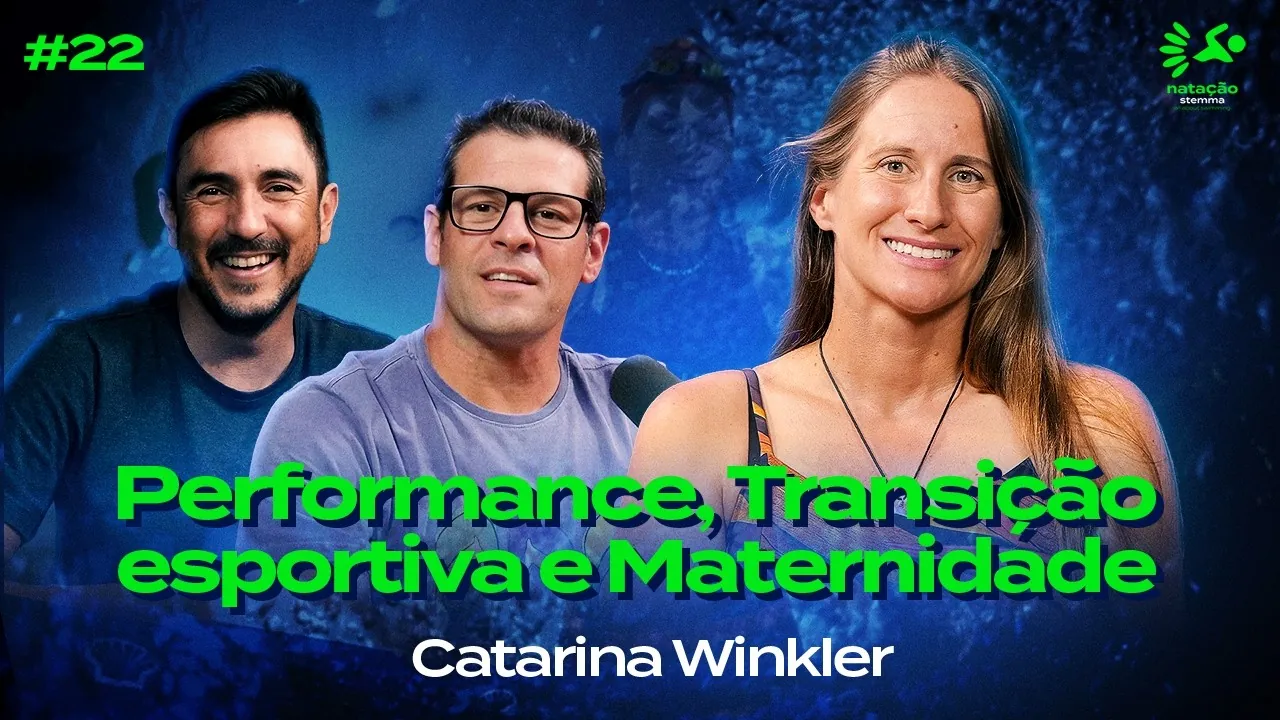
With a career forged in the water, Catarina Winkler has successfully navigated the transition from pool lanes to some of the planet's toughest open-water ultramarathons and the national paddleboard circuit. In a conversation on Natação Stemma with Samir Barel and Wanderley Santos, the athlete looked back on defining career moments, from her grassroots days in Campinas to her current routine balancing high-performance sports, management at Swim Channel, and her first pregnancy.
PUBLICIDADE (GAM) — 1250x250
From Campinas pools to medley redemption
Her swimming journey began following a scare: at age three, Catarina nearly drowned during a lesson and developed a deep fear of the water. Her father patiently guided her through the recovery process until, at age six, she enrolled at Academia Nado Livre and, shortly after, at Círculo Militar de Campinas. Her technical and physical progress was rapid, but the heavy training volume imposed at such a young age soon took a heavy toll.
By age twelve, Catarina was swimming sets exceeding 9,000 meters in the Petiz 2 division. The following year, in Infantil 1, she suffered severe overtraining, experiencing sharp declines in her times and constant frustration. The turnaround began when she started training for open-water marathons in Limeira under coach Rossano Zanquetti at Gran São João. Step by step, she regained her competitive joy and found her calling in the 400m individual medley—an event that culminated in a bronze medal at the 2012 Brazilian Open Championship.
Extreme challenges in international open water
In open-water marathons, Catarina built an impressive résumé. She represented the Brazilian National Team at the 2009 South American Beach Games in Punta del Este, tackling 14°C (57°F) waters without a wetsuit, and won the 25 km event at the 2018 CBDA Brazilian Championship.
Among the most memorable races of her career was the storied Santa Fe-Coronda (57 km) in Argentina in 2017. Added to the start list at the last minute as an alternate, she traveled on short notice with support from friends and completed the crossing. That same year, she competed in the Capri-Napoli, a FINA World Series race that was shortened to 20 km due to adverse tide conditions. In 2020, she won the Madeira Island Ultra Open Water Marathon (30 km), taking the overall title after a fierce battle to the finish line against competitors in the men's pack.
Transition to paddleboarding and sports media
Beyond her swimming achievements, Catarina established a formidable presence in paddleboarding—a traditional prone arm-paddling discipline overseen by CBSurf. A four-time Brazilian national champion in the sport, she leveraged her strong open-water aerobic base to establish herself as the country's premier athlete in the discipline.
Out of the water, her career expanded into media: she served as an open-water swimming commentator for SporTV during the Rio 2016 Olympic Games and took on commercial management at Swim Channel alongside her husband, Patrick Winkler. For Catarina, diversifying athletic disciplines throughout one's sports career is the key secret to athletic longevity and motivation.
Mindful athletic practice during pregnancy
Now pregnant with her first child, Catarina remains active and continues to compete in ocean events, including stops on the Circuito Mares and Rei e Rainha do Mar. She emphasizes that the first trimester required caution and mental adjustments, carefully monitoring intensity to ensure the complete safety of her baby.
With proper medical supervision, the athlete stresses that staying physically active during pregnancy is essential for the health of both mother and child. According to Catarina, the body naturally sets its own boundaries: the focus shifts from chasing extreme marks to prioritizing well-being and maintaining a healthy lifestyle in connection with the sea.
PUBLICIDADE (GAM) — 1250x250




