 Sports
Bike Fit: Power, Aerodynamics, and Comfort for Triathlon
Discover how to balance aerodynamics and comfort to maximize your triathlon performance with Fernando Rianho.
Learn about the evolution of bike fit, balancing aerodynamics, comfort, and sustainability. Bike fit specialist Fernando Rianho details how to optimize your position on the bike for various races and equipment types, ensuring greater efficiency and preventing discomfort.
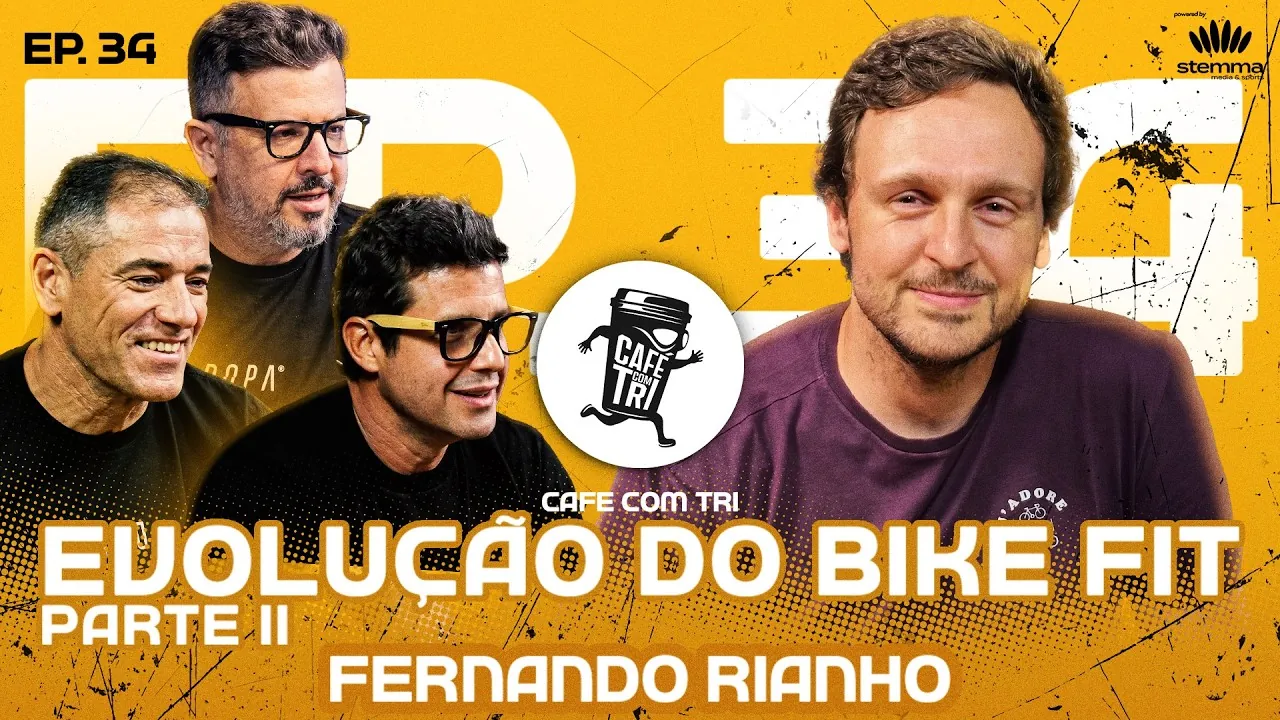
On Café com Tri, hosts Sérgio Magalhães, Beto Nitrini, and Wagner Spadotto welcome back Fernando Rianho, a physical therapist and one of Brazil's leading bike fit specialists. The discussion delves into the evolution of bike fit, debunking the idea that being the most aggressive on the bike equals being the most aerodynamic, and emphasizes the pursuit of the ideal balance between power, aerodynamics, and comfort.
PUBLICIDADE (GAM) — 1250x250
The Sustainability of an Aero Position: Beyond Aesthetics
Fernando Rianho emphasizes that aerodynamics isn't just about an aggressive position. Many athletes aim for a posture that looks "good in a photo," with the front of the bike slammed, but fail to sustain it throughout the race. For an Ironman, where you cycle for 5 to 6 hours, or even a half Ironman (2.5 to 3 hours), the sustainability of the position is crucial. There's no point in being super aero for 5 minutes only to then unclip, increasing drag and muscle fatigue.
Bike Fit for Different Distances
The specialist explains that the bike fit approach must consider the athlete's target race. For short races (sprint, Olympic), where cycling time is 1 to 1.5 hours, a more aggressive position can be sought, as discomfort won't have time to fully manifest. For long races, however, the focus is on the durability of the position, ensuring the athlete remains comfortable and efficient for hours on end. Ideally, the position for long races should also be comfortable for shorter ones.
Crucial Components and Their Impact on Bike Fit
The balance between comfort and performance involves several bike elements:
- Aerobars: The evolution of aerobars, with larger pads and better pressure distribution, increases comfort and makes it easier to maintain an aero position. This, in turn, contributes to a real aerodynamic advantage, as the athlete can hold the posture for longer.
- Tires: A frequently overlooked factor. High-performance tires can yield gains of up to 15 watts compared to common tires, offering excellent cost-benefit for those seeking optimization.
- Saddle: A well-adjusted saddle is fundamental. Small variations (0.4 to 0.5 degrees in inclination) can cause great discomfort and impact performance. Saddle adjustment is the basis for hip support, which directly connects to the athlete's position on the aerobars.
- Crank Arms: The trend of using shorter crank arms aims to optimize knee and hip flexion at the top of the pedal stroke. This can decrease energy expenditure and facilitate hip stability, allowing the athlete to sustain the aero position with less effort, especially for individuals with lower mobility or shorter stature.
Bike Fit Specifics and Indoor Training
Gender Differences
Women generally exhibit greater flexibility, which can allow for more aggressive positions. However, it's crucial to consider pelvic rotation and weight distribution to avoid excessive pressure in the pubic region. In some cases, hyperflexibility can be detrimental to stability, requiring strengthening exercises.
Indoor vs. Outdoor
Training on a trainer presents unique challenges. The lack of wind, lateral bike movement, and stabilizing muscle activation makes an aero position harder to sustain. It's recommended to properly inflate tires and, if possible, slightly raise the front wheel (half a centimeter helps) to better simulate road incline and activate proprioception, encouraging a more active posture.
Ego vs. Efficiency: The Champions' Lesson
Fernando Rianho uses the example of Kristian Blummenfelt to illustrate the importance of individuality. Even a world champion tried an ultra-aggressive position to gain watts but couldn't sustain it, resulting in discomfort and performance loss. The pursuit of an aerodynamic position must always consider the athlete's biomechanics and physical limitations. It is crucial to leverage each individual's strong musculature instead of inhibiting it with a position the body cannot maintain.
In summary, a professional and individualized bike fit, like Fernando Rianho's, is an essential investment for any triathlete. It ensures that the bicycle acts as an efficient extension of the body, optimizing not only power and aerodynamics but also the comfort and sustainability of the position—key elements for crossing the finish line with the best possible performance and without unwanted pain.
PUBLICIDADE (GAM) — 1250x250