Sports
Pilates and Performance: The Definitive Guide for Endurance Athletes
Discover how Pilates goes beyond stretching and becomes your fundamental ally for high athletic performance.
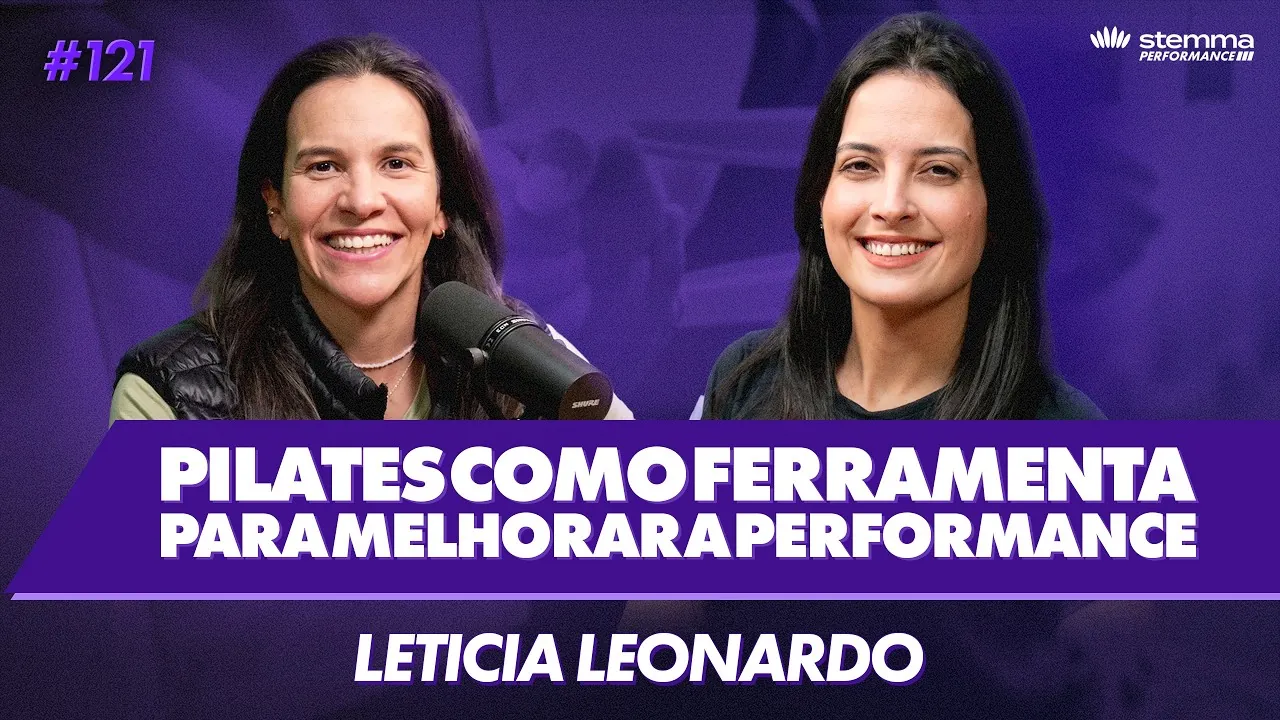
In this episode of Stemma Performance, Bruna Mahn and physiotherapist Letícia Leonardo unravel the mysteries of Pilates. They explain how the method, focused on deep muscles and body control, is essential for endurance athletes. Understand its benefits for stability, mobility, and injury prevention.
On the Stemma Performance podcast, host Bruna Mahn welcomed physiotherapist and Pilates instructor Letícia Leonardo for a revealing conversation about how Pilates can be a game-changer in sports performance, especially for endurance athletes.
Letícia, who works at Move Esportes and We Físio, shared her passion for the method, demystifying the idea that Pilates is just stretching or an activity for the elderly. For her, Pilates is a complete physical conditioning method that complements and elevates the training of amateur and high-performance athletes.
PUBLICIDADE (GAM) — 1250x250
Pilates: More Than Stretching, A Complete Conditioning Method
Contrary to common perception, Pilates is a robust physical conditioning methodology that aims to improve stability, mobility, body control, strength, and injury prevention. Unlike traditional strength training, which focuses on hypertrophy and more superficial muscles, Pilates works the body's deep musculature.
For athletes, this combination is the “ideal world.” While weight training develops strength and power, Pilates works on core stabilization, improves joint mobility, and refines motor control. The synergy between the two methods results in a more balanced, resilient, and efficient body in disciplines such as Ironman, Triathlon, and Marathon.
Pilates Training and Types: Classical vs. Contemporary
Letícia clarified that Pilates is a separate training discipline, restricted to physiotherapists and physical educators, ensuring the instructors' qualifications. There are different “schools” within Pilates: Classical, which faithfully follows Joseph Pilates' original exercises and equipment, and Contemporary, which is more widespread and adapted. Letícia, trained by the renowned Polestar Pilates, adopts a contemporary approach that remains close to classical principles, focusing on the student's progression and gradual development.
The method can be practiced in two main forms:
- Mat Pilates: Uses only body weight, with 34 original exercises. It is fundamental for developing body awareness and intrinsic strength, preparing the body for work with equipment.
- Apparatus Pilates: Includes equipment such as Reformer, Chair, Cadillac, and Ladder Barrel, each with specific objectives (conditioning, support, spinal mobility). Classes are planned so that the student works on different apparatuses, according to their needs.
A crucial point is that Pilates requires few students per class (ideally 1 to 3), due to the need for attentive supervision and individualized instruction. The quality of execution takes precedence over the number of repetitions, with a focus on precision, control, and breathing.
Pilates in the Athlete's Routine: Frequency and Results
For athletes with a busy schedule, incorporating Pilates might seem challenging. However, Letícia suggests that one or two sessions per week can already bring excellent benefits. She emphasizes that the body needs time to adapt, and the most significant results usually appear after about 12 weeks (3 months) of consistent practice.
Reports from athletes who incorporate Pilates are diverse: improved performance in strength exercises (like the leg press), greater fluidity in running and cycling, and increased concentration. Pilates is particularly beneficial for lower limb mobility and thoracic spine — common weak points in cyclists due to prolonged flexed posture. Additionally, it strengthens the deep foot muscles (foot core), essential for runners and for preventing ankle sprains.
The method is also a powerful ally for body awareness and mental health. By demanding full attention to movement and breathing, Pilates provides a “disconnection” from external problems, promoting a state of presence and focus that directly reflects on sports performance and overall well-being.
How to Choose a Good Studio and Demystify the Method
Choosing a good Pilates studio is fundamental to ensuring the method's effectiveness and safety. Letícia warns about the existence of “pseudo-Pilates” and offers tips for identifying a quality establishment:
- Equipment: Ensure the studio has safe and high-quality equipment.
- Number of Students: Environments with few students per instructor are preferable, allowing for individualized attention.
- Instructor Training: Look for professionals with serious and extensive training. International schools like Polestar Pilates can be a good indicator of quality. On the Polestar website, for example, you can find a list of certified studios.
- Demystifying the “Pilates Ball”: An important curiosity: the famous large ball (Swiss ball or therapy ball) was not created by Joseph Pilates. It was developed by Bobath for neurological rehabilitation. If a studio focuses excessively on it as the basis of Pilates, it might be a sign that it doesn't follow the original method.
Joseph Pilates' original method, named Contrology, is rich and vast, with a repertoire of exercises that challenge the body intelligently and progressively. Progression in Pilates is not measured by load, but by mastery and control of movement, by challenging weak points, and by the ability to integrate the entire body into the exercise.
In summary, Pilates is a democratic method, accessible to all audiences, men and women, and integrates perfectly into any athlete's training routine. With dedication and correct instruction, it becomes an indispensable tool for achieving new levels of performance, health, and well-being. It's not a luxury; it's a necessity.
PUBLICIDADE (GAM) — 1250x250