Sports
Open Water Ultra Marathons: Challenges, Training & Mental Strength
Dive deep into the secrets and behind-the-scenes of open water ultra marathons, where the mind is the greatest muscle.
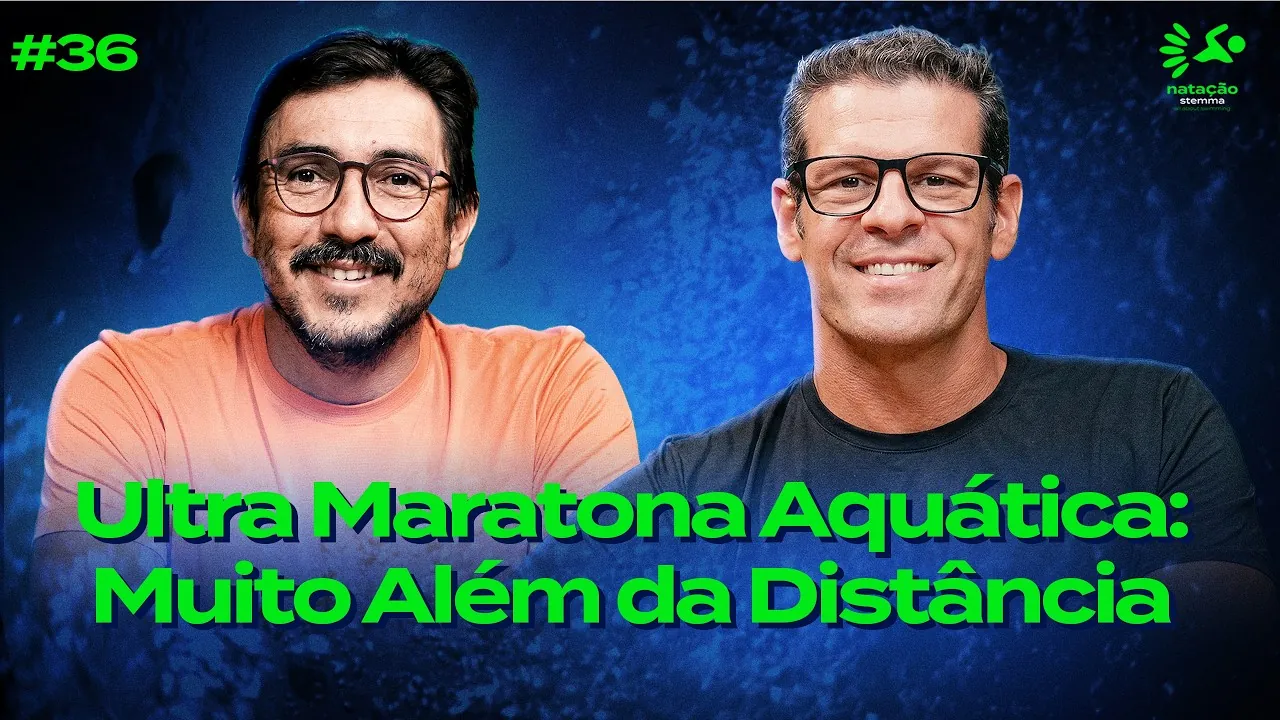
Swimming for hours in open water demands more than just physical strength. In this episode of Natação Stemma, coaches Samir Barel and Wanderley Santos reveal the behind-the-scenes of open water ultra marathons. Discover the preparation, mental challenges, and strategies to conquer extreme distances.
In the Natação Stemma podcast, experienced coaches Samir Barel and Wanderley Santos delve into the world of open water ultra marathons, a topic that goes far beyond physical endurance. Addressing audience suggestions, they uncover the behind-the-scenes, challenges, and preparation required to tackle events that test the limits of the body and, especially, the mind.
PUBLICIDADE (GAM) — 1250x250
What Defines an Ultra and the Importance of Mental Strength
The open water ultra marathon is a discipline that has been gaining more and more followers. Although the rule generally defines an ultra as swims over 15 km, Samir Barel suggests that, physiologically, any activity lasting more than two and a half to three hours can already be considered an ultra, due to the extra demand placed on the body and mind.
The main challenge in this discipline lies not only in the physical aspect, which is highly trainable, but in mental strength. It's a battle of "you against yourself" for hours on end. Wanderley Santos emphasizes that long weekend training sessions, for example, serve not only the body but also to exercise the mind, preparing the athlete for the solitude and fatigue that will come during the race. For Samir, even before thinking about physical and mental preparation, the passion for swimming is fundamental: "Do you like to swim? Do you like being in that environment? Because you'll be alone there, with yourself, thinking about the pain, the fatigue, thinking about why you're even there."
Ultra Race Routes and Challenges in Brazil and Worldwide
For those looking to explore open water ultra marathons, there's a wide range of options, from competitions to solo challenges. In Brazil, notable events include:
- 14 Bis Circuit: Includes races like the Ultra do Rio Itapanhaú (15 km), Mega (21 km), and the traditional 14 Bis Crossing (24 km, from Bertioga to Santos), with a 10-hour limit.
- Solo Challenges: With boat support, offers varied courses in locations such as LDU (Ubatuba, up to 35 km), BISA (Ilha Grande, up to 76 km for the full loop), LPA (Leme ao Pontal, up to 72 km round trip), Manaus (Rio Negro, up to 30 km), Ilha do Mel (up to 23 km), Ultra dos Canyons (Capitólio, up to 25 km), among others.
- Multi-day Events: Such as the LDU Tridés (Ubatuba), which totals up to 21 km in four swims over 48 hours.
Internationally, Samir Barel mentions the Ultra Swim 33.3 in Croatia, a four-day event that simulates the distance of the English Channel, serving as preparation for even greater crossings.
The Essential Role of Boat Support
Boat support is a crucial factor for success in ultra races. More than just logistics, the support person needs to be an extension of the athlete. Key points include:
- Athlete Knowledge: The support person must know the swimmer deeply, both physically and mentally, understanding whether they prefer constant motivation or moments of tranquility.
- First Aid: Basic first aid knowledge is vital, given the unpredictability of the aquatic environment and the time it may take for professional help to arrive.
- Trust and Seriousness: The support person must be a trustworthy individual who takes the challenge seriously, as an uncommitted companion can jeopardize the entire race. Samir himself revealed that he initially experienced seasickness on the boat, but today uses a "cocktail" of Dramin B6 to avoid the problem, emphasizing the importance of preparing the support team as well.
- Nutrition and Hydration: The support person is responsible for executing the athlete's nutrition and hydration plan, usually developed by a nutritionist. Food can vary drastically among athletes, from gels and isotonic drinks to mini rolls, canned peaches, and even bread with meat, as mentioned by Samir. Keeping the support team well-nourished and hydrated is also important, and products like those from Mania de Castanha are ideal for their practicality and healthiness.
Wetsuit or Swimsuit: Which is the Best Choice?
The choice between a wetsuit (neoprene rubber) and a swimsuit is common among swimmers. The decision depends on multiple factors:
- Race Regulations: This is the primary criterion; some races allow its use, others do not.
- Efficiency and Buoyancy: A wetsuit offers greater buoyancy and can increase swimming efficiency, especially in colder waters or for athletes who need help with body position. However, one must learn to swim with it to get the most benefit.
- Comfort and Freedom: A swimsuit can offer more freedom of movement and comfort for some, while a poorly fitted wetsuit can cause discomfort, chafing, or restrict the stroke. The quality of the garment is crucial, and Samir Barel recommends testing it beforehand, mentioning the Blue Seventy Helix as an example of a high-performance wetsuit.
Facing the Adversaries: Samir Barel's Experiences
Samir Barel, one of the few Brazilians to achieve the Triple Crown of Open Water Swimming (English Channel, Catalina Channel, and Manhattan Island Marathon Swim), shares his experiences regarding the true adversaries in these crossings:
- English Channel: The cold (15.5°C) was his biggest challenge, triggering hypothermia, spasms, and cramps. The battle was mental, fueled by the high cost and the support of 315 people who contributed to his crowdfunding.
- Manhattan Island Marathon Swim: The competition with other athletes and the unexpected cold (17°C) were the highlights, showing how ego can be a factor.
- Catalina Channel: A night swim in the Pacific Ocean, with luminescent plankton, led to a terrifying encounter with a glowing great white shark. The fear was immense, but the responsibility to his crowdfunding efforts propelled him to continue, demonstrating the power of support and determination.
There isn't a single "greatest adversary," but rather a complex interaction of cold, hunger, fatigue, weather conditions, competition, and, above all, the mind. It's essential to be prepared for the worst-case scenario, as "never go into a race thinking about the best. Always think about the worst." This mindset builds the necessary "toughness" for success in open water.
Even with his vast experience, Wanderley Santos reveals his desire to tackle the Leme ao Pontal and, in the future, the English Channel, but acknowledges the need for planning and training dedication that he is still trying to balance with his commitments. Samir, today, finds his greatest satisfaction in coaching and seeing his athletes achieve their goals, remaining open to new challenges if they fit into his schedule.
This episode of Natação Stemma reinforces that open water ultra marathon swimming is a journey of self-discovery and overcoming, where each stroke is a testament to human resilience. If you resonate with these challenges, remember: preparation and passion are key to conquering the most extreme waters. Share your experiences and questions, and continue following Stemma Sports for more inspiration!
PUBLICIDADE (GAM) — 1250x250