
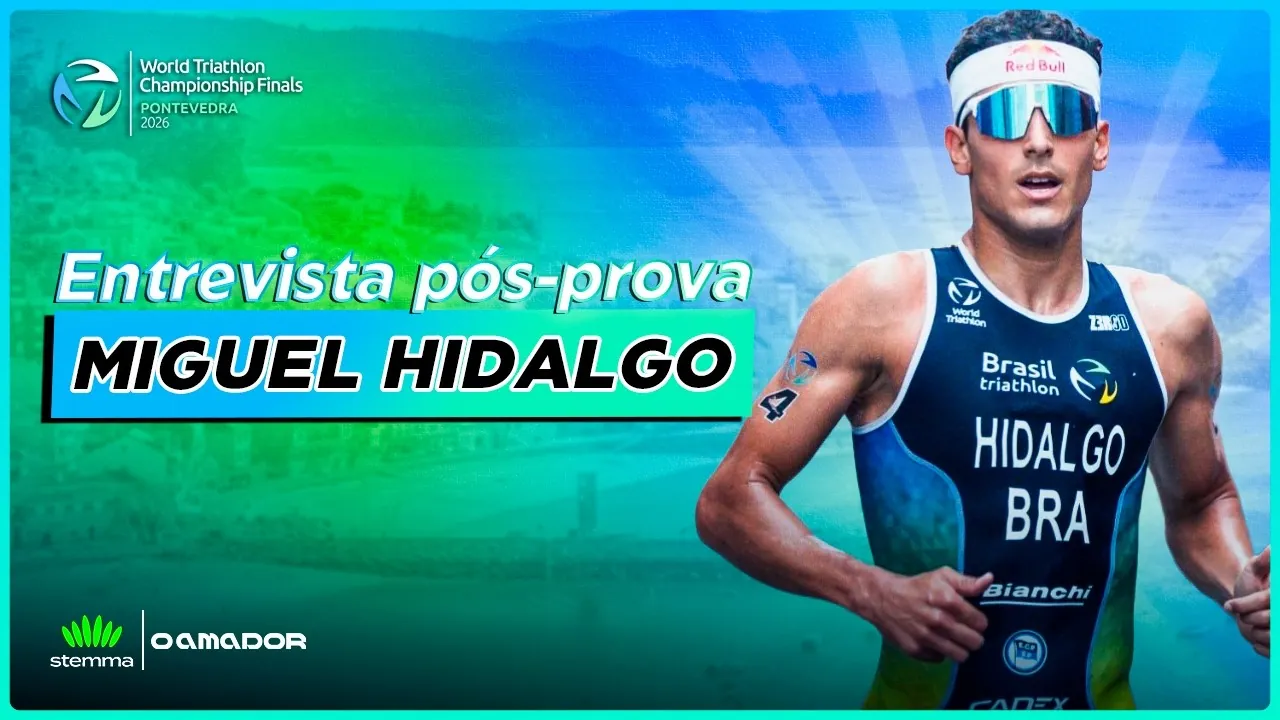
Miguel Hidalgo Reflects on Season and Fatigue's Impact
Following a tough four months and post-illness slump, the triathlete reflects on his fifth-place finish in the world rankings.
In a candid conversation, Brazilian triathlete Miguel Hidalgo reflected on the challenges he faced in the second half of the season. He explained how recovery issues and a loss of training consistency affected his performance in the decisive stages of the world circuit.
Consistency is the fundamental pillar in endurance sports, and any physical fluctuation can prove costly at the highest level of world triathlon. In a candid account of the circuit's final stretch, Miguel Hidalgo reflected on the difficulties faced throughout the season, marked by recovery issues that limited his performance in the year's marquee competitions.
The Brazilian had been building a solid training foundation through May, a period in which he earned impressive results—including two podiums and a fifth-place finish between May and early June. However, a bout of illness before the WTCS London stage disrupted his routine and compromised his physiological capacity to recover.
A four-month battle against fatigue
According to Miguel, the period that followed was the most challenging of his career. While he typically feels good on more than 90% of training days, the scenario reversed: over the last four months, he felt poor roughly 90% of the time, demanding constant mental effort to stay optimistic during daily sessions.
Accumulated fatigue and a lack of physical responsiveness led the athlete to consider cutting his season short to reset his preparation. Ultimately, though, the decision was made to extend the calendar by another month. The points cushion built during the early months of the year ensured he finished the championship in fifth place overall, after being runner-up the previous season.
The link between training, physiology, and confidence
For Miguel Hidalgo, confidence on the start line is a direct reflection of the work put in during training. In elite triathlon, physiology dictates nearly the entire performance, leaving little room for purely psychological compensations when training volume and intensity are compromised.
With the loss of crucial preparation weeks, competing against the world's best became an even tougher task. Despite facing additional race-day adversity—such as a mechanical issue where his bike chain dropped and jammed in the frame—Miguel emphasized that he gave everything he could given the physical limitations accumulated in the second half of the year.