
 Sports
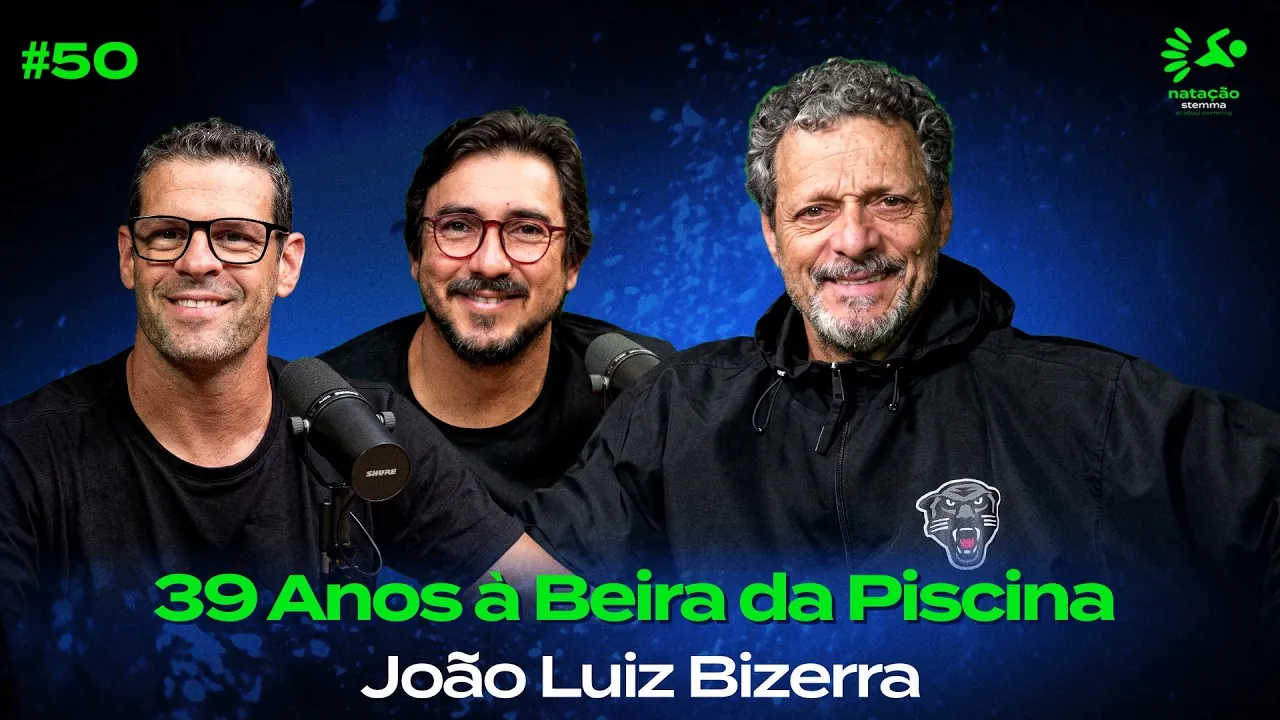
João Luiz Bizerra and His 39-Year Legacy in Swimming
Historic head coach of Círculo Militar reflects on poolside behind-the-scenes, open-water marathons, and Olympic officiating.
With four decades dedicated to the pool deck, João Luiz Bizerra looks back at his coaching career at Corinthians and Círculo Militar. The coach recounts adventures on the world open water circuit and shares his perspective on the future of Brazilian swimming.
With nearly four decades dedicated to athlete development and elite performance, João Luiz Bizerra has built one of the most iconic careers in Brazilian sports. A historic head coach at Círculo Militar de São Paulo, national team coach, and international official, he gathered stories, behind-the-scenes moments, and practical lessons accumulated over his long career spanning swimming pool lanes and ocean currents.
PUBLICIDADE (GAM) — 1250x250
Early coaching career and the move to Círculo Militar
Before making his name at Círculo Militar, Bizerra took his first coaching steps in the early 1980s. Discovered by professor Rogério Ventura after his gym swimmers stood out at local meets, he took charge of youth categories at Corinthians in 1981, leading the children's team to runner-up in the 1987 São Paulo State Championship. Following Vicente Matheus's election to the club's board, the coaching staff left and temporarily kept the team training at Clube Atlético Parque da Mooca before Bizerra assumed head coaching duties at Círculo Militar on March 8, 1988, inspired by his father's work ethic and mentorship under masters like José Paulo Scatena and William Urizzi de Lima.
Venturing into open water and developing swimmers
The transition into the world of open-water marathons happened organically, introducing club athletes to coastal ocean swims and the pioneering work of Igor de Souza. Bizerra argues that pool swimming and open-water marathons complement each other technically, with the pool developing pace and rhythm while the ocean builds endurance and psychological resilience. This philosophy produced prominent national and international competitors, such as Alex Takeda and Camila Bernardi Lancette, who broke paradigms by winning overall open-water races while still in youth divisions and earning call-ups to pool world championships.
World circuit, officiating, and international adventures
During the 1990s, Bizerra broadened his horizons by traveling with Alex Takeda across stages of the Open Water Ultramarathon Grand Prix circuit in Canada and the United States, collecting memorable stories such as a promotional sprint race in Magog. His international experience also included coaching through a severe storm during the 25-kilometer race at the Pan Pacific Championships and the 1994 World Aquatics Championships in Rome alongside Australia's Shelley Taylor-Smith. Later, his dedication to the rulebook led him to international officiating, working at FINA World Cup stages, the Pan American Games, and the Rio 2016 Olympic Games.
Perspective on the state and restructuring of Brazilian swimming
When evaluating the current landscape of aquatic sports in the country, the veteran coach emphasizes the urgent need for structural alignment between the Brazilian Confederation of Aquatic Sports (CBDA), state federations, and grassroots clubs. Bizerra stresses that Brazil's continental scale and distinct regional strengths must be integrated, better harnessing potential not only in pool and open-water swimming, but also in disciplines like water polo and diving through sustainable grassroots programs and effective communication.
Quick-fire reflections and parting wisdom
In a quick-fire Q&A round, the coach cited demanding technical standards as his greatest strength and excessive empathy as his vulnerability, naming home as his favorite place and Rome's Pan Pacific Championships as the most memorable competition of his career. Currently leading training programs at Colégio Benjamin Constant, João Luiz Bizerra encapsulated the mindset forged over nearly 40 years on the pool deck with a direct message for aspiring athletes and coaches: believe in your own work, because growth ultimately depends on personal dedication.
PUBLICIDADE (GAM) — 1250x250



