Sports
How Short Races Unlock Your Triathlon Breakthrough
Thelma D’Amelio and Bruna Mahn explain why sharpening your internal gauge and racing shorter distances boosts long-course performance.
Many triathletes focus solely on long-course events and end up trapped by watch metrics. Discover how competing in shorter races and honing perceived exertion are vital to breaking through endurance performance plateaus.
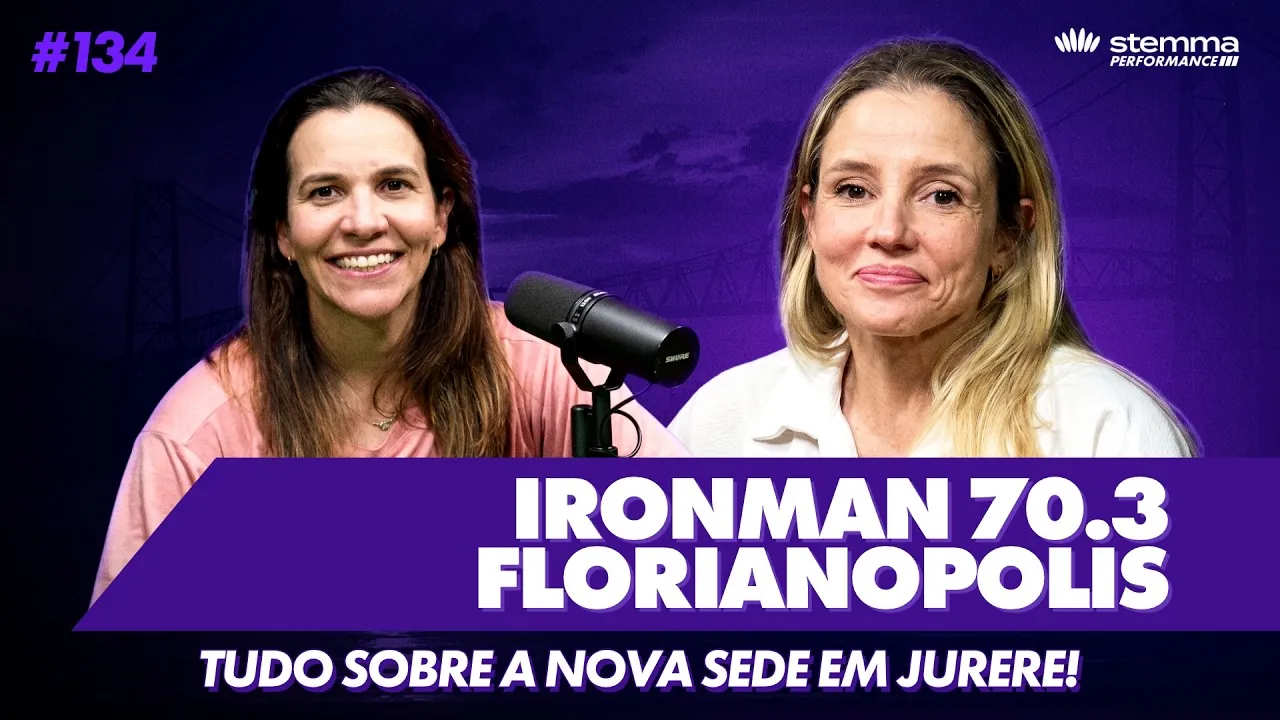
In the endurance world, there is a common temptation to value only the longest distances. Saying you completed an Ironman often carries greater social cachet than talking about an Olympic or Sprint distance race. However, focusing exclusively on long-course events can lead to performance plateaus, as coach Thelma D’Amelio pointed out in a conversation with Bruna Mahn on Stemma Performance.
D’Amelio herself shared that she spent years dedicated solely to long-distance races until realizing her progress had stalled. Returning to short-course racing became the turning point that elevated her long-course marks, proving that the speed and intensity of shorter distances are essential for competitive longevity.
PUBLICIDADE (GAM) — 1250x250
Zero room for error in shorter distances
While a long event allows athletes to manage their pacing and even overcome minor slip-ups over hours of racing, short-course competition is full throttle from start to finish. Any tiny mistake costs positions and compromises the outcome.
This razor-thin margin teaches athletes to gauge their absolute limits with precision, sharpening high-stress decision-making and developing technical discipline that pays dividends when stepping back up to the half or full Ironman.
Less reliance on watches, more perceived exertion
Another critical point raised in the episode is the over-reliance on metrics and electronic gadgets. While power, heart rate, and pace data serve as useful baselines, elite athletes must know how to race according to race dynamics and perceived exertion.
Bruna Mahn cited the example of Jennifer winning IRONMAN 70.3 Brasília. Her power meter malfunctioned, and leading the race without competitors ahead to serve as visual benchmarks, she had to execute the entire bike leg purely on feel, sustaining her target intensity through bodily self-awareness alone.
Knowing exactly how long your body can sustain a given intensity is an irreplaceable skill if your GPS fails or your battery dies. As D’Amelio summarized, gear is merely a supporting tool: at the end of the day, it is the athlete who must race and feel the pace.
PUBLICIDADE (GAM) — 1250x250