 Sports
Guga Chacra: From Global Journalism to New York's Icy Waters
International correspondent Guga Chacra takes a deep dive into his passion for open water swimming and Ice Swimming.
Guga Chacra, renowned for his international journalism, reveals a lesser-known side: that of an open water swimmer and Ice Swimming enthusiast. On the Natação Stemma podcast, he shares his journey from water polo to extreme challenges in New York, including the Manhattan Island Marathon Swim. An inspiring conversation about discipline, adaptation, and pushing limits.
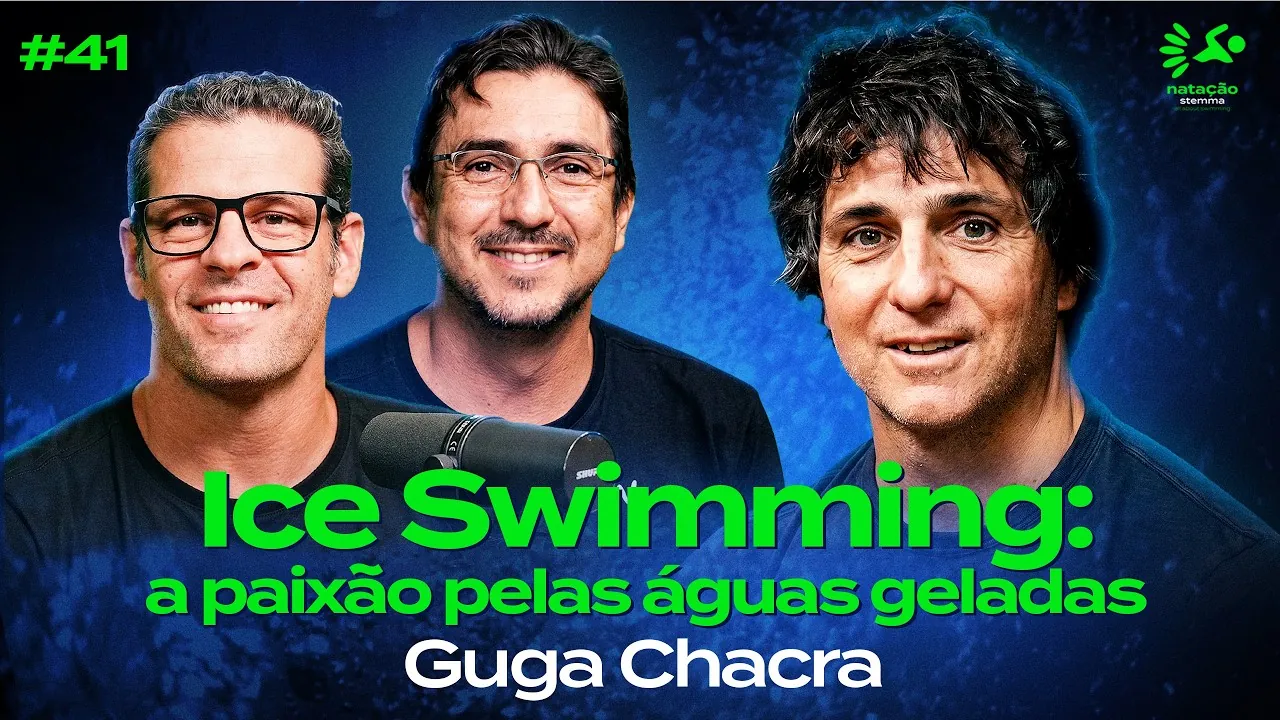
In episode #41 of Natação Stemma, hosts Samir Barel and Wanderley Santos welcome a prominent guest: Guga Chacra. A renowned journalist and international correspondent for Globo News, Guga reveals another passion that drives him: open water swimming, especially Ice Swimming in the frigid waters of New York. The conversation explores Guga's transition from water polo to extreme challenges, the ritual of swimming in extremely low temperatures, and how he balances this routine with his demanding career.
PUBLICIDADE (GAM) — 1250x250
From Water Polo to the Discovery of Open Water Swimming
Guga Chacra began his sports journey in water polo with Clube Paulistano, after a childhood spent swimming. He describes water polo as a playful and collective sport, unlike individual swimming. At 10-11 years old, it was common for less competitive club swimmers to transition to water polo. “When a guy is just mediocre, you send him to water polo,” Guga jokes, explaining that this phase was fundamental in developing his relationship with water.
Over time and with the demands of adult life, Guga moved to Paulistano's master swimming team, but his true passion blossomed in open water. He recalls adolescent adventures in Juquehy, swimming long stretches like Juquehy-Barra do Sai or Juquehy-Ilha, without any structure or safety. “Ignorance is bliss, isn't it?” he comments, realizing today the risk of those ventures. This freedom and direct contact with the sea prepared him, even unknowingly, for future challenges. Guga emphasizes that the experience of water polo, with its strength and explosiveness, and his familiarity with the butterfly stroke—his favorite style—were crucial for his open water performance.
The Fascinating Ritual of Ice Swimming in New York
Guga's entry into Ice Swimming was almost by chance, during the COVID-19 pandemic. With pools closed in New York, he sought an alternative. During a visit to Brighton Beach, he saw people swimming in March/April (spring in the Northern Hemisphere), with the water at about 10-11°C. Curious, he decided to try it and never stopped.
Ice Swimming takes place in waters below 5°C and requires a meticulous ritual, especially in winter: “In winter, if I go to the beach, then I don't take my kids to school.”
Preparation and Adaptation
- Gradual Acclimatization: Guga adapts to decreasing temperatures throughout the year, starting in summer and following the water temperature drop. This prevents the body's “panic.”
- Clothing and Post-Swim: He lays his towel on the ground and prepares his clothes in order for dressing, prioritizing thermal layers, such as a Uniqlo Heat Tech shirt, a beanie, and a Canada Goose parka. His swimming trunks and cap are the last to be removed.
- The Entry Ritual: Although he feels like “Superman” upon exiting the water, Guga explains that the body becomes numb, and his feet and hands lose sensation. Exiting the water and changing clothes are quick and efficient.
- The 'After Drop': After exiting the icy water, core body temperature plummets, causing uncontrollable shivering. This is the moment to bundle up, drink hot beverages, and move around. “After about 5 minutes, it goes back to normal,” he states.
Guga emphasizes that “Spring Swim” (swimming in spring, with water at 10-15°C and mild weather) is, paradoxically, more dangerous than Ice Swimming. The false sense of comfort leads swimmers to stay in the water longer, without noticing the gradual drop in body temperature. “You don't perceive your body temperature dropping as much,” he warns, whereas in winter, the aggression of the cold makes you exit quickly.
Epic Challenges: The Manhattan Island Marathon Swim and the Talentos do Capão Project
Among Guga's accomplishments is a 16 km race from the Verrazano Bridge to Sandy Hook, New Jersey. He also participated in a 27 km relay with the Talentos do Capão project, an initiative that takes young swimmers to aquatic challenges. Guga was impressed by the teenagers' discipline and strength. “I was quite shocked by these kids; they swim really well…” He also had the opportunity to swim part of the Manhattan Island Marathon Swim route, passing under iconic bridges like the Williamsburg, Manhattan, and Brooklyn Bridge, describing the experience as “an absurd sensation.”
His next major challenge is the Manhattan Island Marathon Swim, a 30.5 km course, which he will undertake in September. Guga comments on the complexity of the currents in the Hudson, East, and Harlem rivers, and concerns about water quality, although authorities rigorously monitor it. He emphasizes the importance of having a support team and a coach, like Samir Barel, who will accompany him in a kayak. Other events like the Statue of Liberty Swim and the Brooklyn Bridge Swim are examples of accessible challenges for those visiting New York.
Routine and Resilience: Swimming as a Mental Tool
Despite his tight schedule as an international correspondent, Guga maintains a routine that integrates family, work, and swimming. He wakes up early to read, takes his children to school, and dedicates his mornings to swimming, either in the pool or the ocean. “They're at school, my wife is working from home, so I have time to swim.” Swimming is not just a sport, but a tool for processing information and maintaining a clear mind. “If it's a long set, 200 and up, it's wonderful. It's like Samir puts in a few hours there, you're doing sprints, suddenly that 50-meter set…” Time in the water is precious, used for reflection and organizing ideas, especially before writing a column or facing a “breaking news” event.
For Guga, cold water swimming is not just physical, but deeply mental. He believes it's necessary to “learn to deal with the cold” and “enjoy the cold water.” The feeling of accomplishment and the release of endorphins create a healthy addiction. “You won't die in cold water… and you have to embrace and enjoy the cold water.” This mindset prepares him for challenges both in the water and in his demanding profession, demonstrating how high-performance sports shape not only the body but also the mind.
Guga Chacra's journey is a testament to the human capacity to overcome limits and find balance in passions that, at first glance, might seem distant. Swimming, in its most extreme forms, becomes a refuge and a source of strength for the journalist navigating the global stage, inspiring everyone to seek their “best versions”—both in and out of the water.
PUBLICIDADE (GAM) — 1250x250