Sports
From Pavement to XTERRA: Rodrigo Altafini on Cross Triathlon
With a 35-year career and off-road Hall of Fame honors, the veteran athlete details his transition from Ironman to technical trails.
Brazilian triathlon veteran Rodrigo Altafini reflects on his journey from the Pão de Açúcar team and the Kona Ironman to the pinnacle of global XTERRA racing. In an in-depth conversation on the Café com Tri podcast, he breaks down the technical demands of cross triathlon and how he stays competitive at 52.
With more than three decades dedicated to high-performance sports, Rodrigo Altafini has built one of the most solid and respected careers in Brazilian triathlon. A member of the historic Pão de Açúcar team in the late 1990s and a seven-time Ironman finisher—including a top Brazilian amateur finish in Kona in 2005 with a time of 9:29—Altafini found in cross triathlon the perfect arena to combine his childhood mountain biking background with a passion for multi-sport racing.
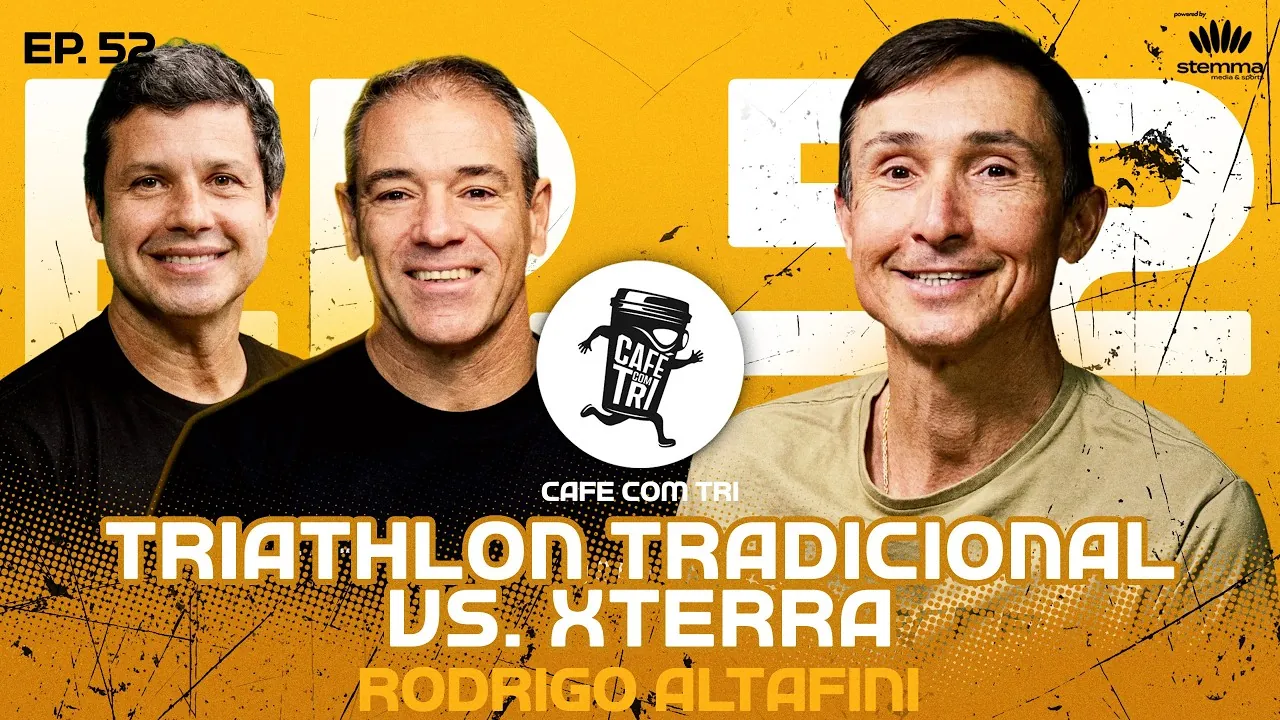
During an interview on the Café com Tri podcast, hosted by Beto Nitrini and Sérgio Magalhães, the XTERRA Brazil Hall of Fame inductee shared behind-the-scenes insights into his switch from road to dirt, analyzed the technical gulf between both disciplines, and explained how he maintains a competitive training routine at age 52.
PUBLICIDADE (GAM) — 1250x250
From Sprint Races to the Kona Ironman
Altafini's story began in the São Paulo countryside town of Itapira, competing in mountain biking and track-and-field events before transitioning to triathlon in 1990. Throughout the 1990s, he stood out in sprint triathlons and the competitive Troféu Brasil circuit, posting blistering 15-to-16-minute splits in the 5,000-meter run. Under the guidance of coach Marcos Paulo Reis, he joined the elite Pão de Açúcar squad, balancing grueling training sessions at USP with his day job as an optical technician.
A natural progression took Altafini from sprint to Olympic distance, through half-Ironman, until making his full-distance debut in 2002. Three years later, at the peak of his road triathlon career, he crossed the finish line at the Ironman World Championship in Maui and Hawaii. That international experience marked a major turning point: after hitting the ceiling of what he could achieve while working a full-time job, he decided to channel all his energy into the emerging cross triathlon circuit.
The Brutal Dynamics of XTERRA
Transitioning to XTERRA required reviving motor skills forged during childhood cycling. According to Altafini, the dynamics of off-road racing are entirely different from conventional road triathlon: there is no linear pacing or strict wattage monitoring on a watch. The courses demand brutal power spikes on steep climbs, followed by intensely technical descents where athletes must catch their breath while keeping sharp visual focus on the trail.
Iconic courses like Ilhabela vividly showcase this extreme demand. Featuring waterfall crossings, thick mud, volcanic rock, and roots, athletes frequently have to dismount and carry their bikes on their shoulders. This unpredictability makes bike handling the ultimate differentiator, preventing athletes who excel only on flat pavement from automatically translating their power to the trail.
Technology, Safety, and Sustainability on the Trails
Equipment evolution has fundamentally reshaped performance in cross triathlon over the decades. According to Altafini, modern advancements like electronic active suspension (Flight Attendant), wireless shifting, and 29-inch wheels save crucial muscular energy over the course of a race. In trail running shoes, even as newer models incorporate carbon plates, outsole traction and foot stability across uneven terrain remain the top priorities.
Environmental stewardship is another cornerstone of the sport. Off-road races enforce strict self-sufficiency guidelines and zero-litter policies. Gel wrappers and bottles must always return with the athlete, reinforcing a culture of trail conservation and camaraderie among competitors in remote backcountry settings.
Routine and Longevity at 52
To continue contending for top age-group finishes—including a top-4 result at the 2024 World Cross Triathlon Championships in Italy—Rodrigo has maintained the same core training structure for thirty years: three swim workouts, three bike rides, four runs, and two strength training sessions each week. The main adjustments with age involve active recovery management and targeted nutritional support, including specific supplementation for sleep quality, joint health, and protein synthesis.
For road triathletes looking to make their off-road debut, the veteran's advice is to approach the technical side with patience and humility. He recommends starting with standalone mountain bike races and trail runs, then picking less extreme XTERRA venues—such as Mangaratiba—before taking on brutal tests like Ilhabela.
PUBLICIDADE (GAM) — 1250x250