Sports
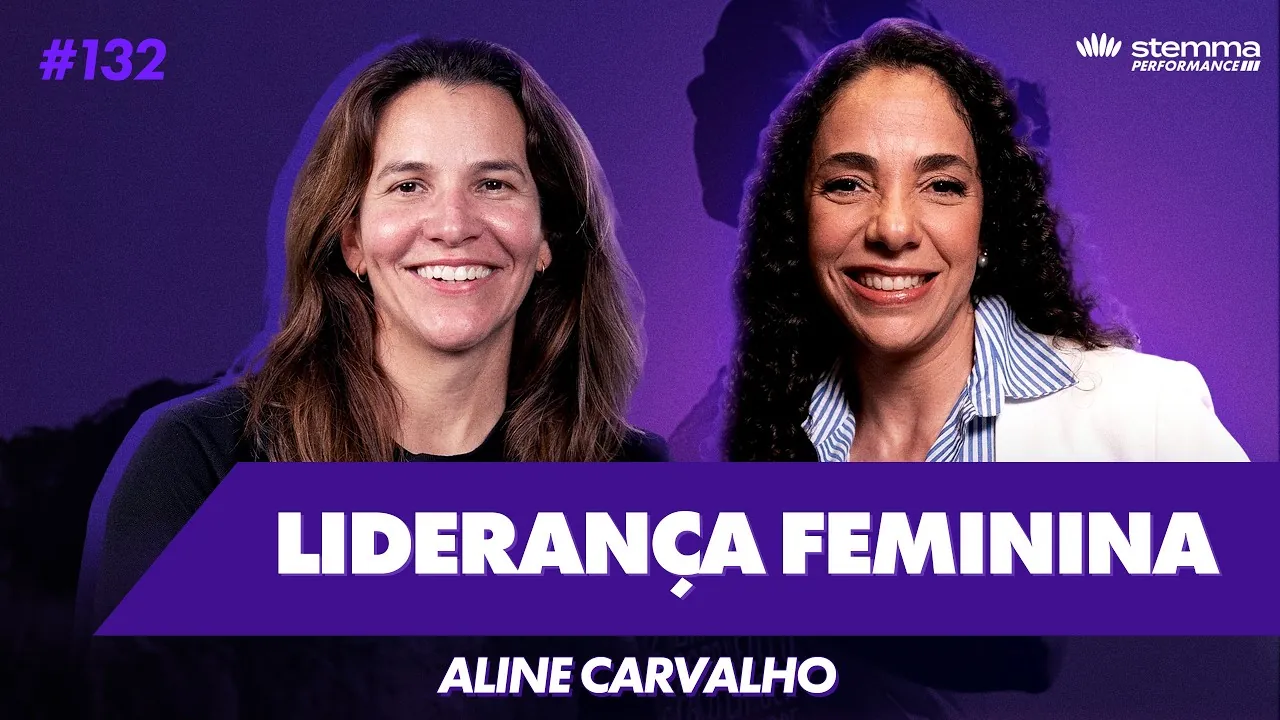
Female Leadership in Sports and Business with Aline Carvalho
Executive and triathlete discusses unconscious bias, corporate barriers, and women's solidarity.
On the Stemma Performance podcast, Aline Carvalho and Bruna Mahn explore the challenges of female leadership in business and endurance sports. Their discussion covers unconscious bias, the golden cage trap, and building equitable spaces.
In this episode of Stemma Performance, host Bruna Mahn welcomes executive and amateur endurance athlete Aline Carvalho for an in-depth conversation on female leadership, endurance sports, and social change. Connecting executive life with long-distance training, the discussion dissects corporate structures, ingrained behaviors, and the essential role of female autonomy.
PUBLICIDADE (GAM) — 1250x250
Aline Carvalho’s background and career
Holding a degree in production engineering as well as master’s degrees in engineering and business administration, Aline Carvalho serves as Chief People, Management, and Fleet Officer at Norsul while pursuing an Executive MBA at IMD in Switzerland. Alongside her corporate career and ongoing studies in philosophy and analytical psychology, Aline has built an impressive amateur athletic track record, completing 18 marathons, 5 ultramarathons, and 4 full Ironman races.
Gender stereotypes and unconscious bias
Aline distinguishes between stereotypes—the brain’s automatic mechanisms for categorizing the world—and unconscious biases, which systematically assign communal traits (nurturing, submissiveness) to women and agentic traits (action, competitiveness) to men. This dynamic plays out in corporate settings, where assertive women face pushback, as well as in everyday sporting scenarios where women’s autonomy in cycling and bike mechanics is constantly questioned.
Female leadership and corporate structures
The conversation highlights that the self-doubt experienced by many women climbing the corporate ladder stems from a system that continuously undermines their competence, rather than any individual deficiency. Overcoming this requires corporate education on bias, psychological safety, and meaningful representation of women in decision-making roles, all while avoiding tokenism—where female presence serves merely as institutional window dressing.
Female solidarity, the ‘golden cage,’ and sports
Aline and Bruna address the power of female collaboration and the ‘golden cage’ dynamic, where women receive praise primarily for caregiving and support tasks, resulting in invisible mental loads. In cycling and triathlon, grassroots communities like Juntas Pela Bike show how solidarity empowers female athletes, underscoring that bike shops and the wider sports market must cater to women with technical expertise and respect for their identity as cyclists.
The role of men, gender dialogue, and education
Achieving gender equity requires active male allyship and the realization that traditional patriarchal norms negatively affect men as well. By advocating for open dialogue across genders and examining how childhood conditioning shapes interests and skills in boys and girls, the episode emphasizes mutual cooperation to build healthier environments in the workplace and out on the road.
PUBLICIDADE (GAM) — 1250x250