
 Sports
Fellipe Santos Targets 70.3 São Paulo and Kona Worlds
Back after a seven-month hiatus, the triathlete details injury management, age-group rivalries, and his focus on Hawaii.
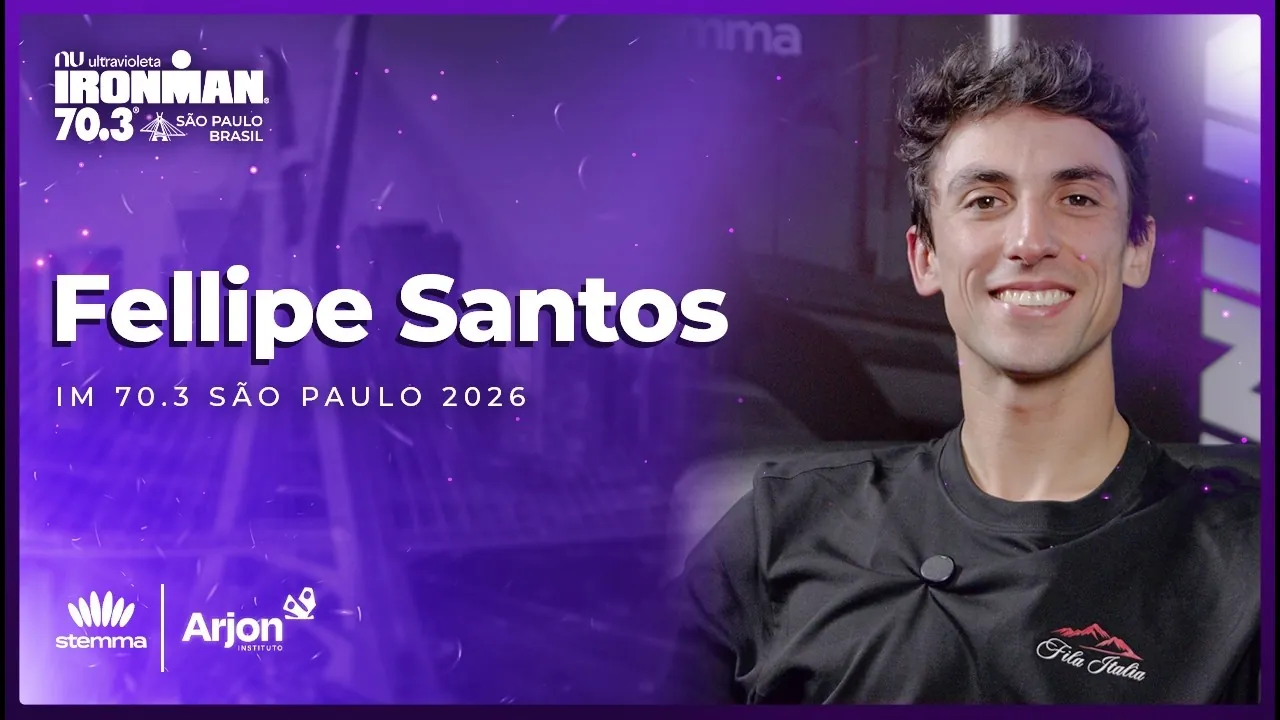
In a behind-the-scenes interview at Ironman 70.3 São Paulo, Fellipe Santos discusses returning to racing after a seven-month break and his final preparations for Kona. The coach and content creator breaks down his approach to bone density management, the competitive age-group field, and his upcoming season plans.
Following a seven-month break from racing in Brazil—dating back to the Curitiba events and Ironman South Africa—Fellipe Santos returned to competition at the Nubank Ultravioleta Ironman 70.3 São Paulo. Even with the understanding that the São Paulo race demanded caution within his training block for the Ironman World Championship in Kona, his desire to reconnect with the community and race alongside his FS coaching squad swayed his decision to line up.
PUBLICIDADE (GAM) — 1250x250
Injury management and physiological adaptation
Fellipe's training routine is shaped by a physical condition discovered about two years ago: lower-than-average bone density for his age group. This genetic trait increases his susceptibility to stress fractures from the impact of running, requiring a complete strategic overhaul of his weekly training loads.
To navigate this mechanical vulnerability without sacrificing cardiovascular fitness, the solution was shifting most of his aerobic volume to swimming and cycling. By dialing back running mileage and prioritizing treadmill work and mobility drills whenever discomfort arises, Fellipe maintains peak conditioning without overloading his bone structure heading into long-course races.
Fierce competition and age-group rivalries
Ironman 70.3 São Paulo drew an elite-level amateur field. Among the top contenders highlighted by Fellipe were Denis, a former coach on his team currently hitting top form on the bike, Diego Arantes, who holds the fastest amateur marathon at Ironman Brazil with a 2:37 split, and Vini Belo.
Fellipe emphasized that healthy rivalries and competitive storylines provide great psychological fuel at the start line, but stressed the necessity of fair racing. Strict adherence to drafting rules within the lead age-group pack remains crucial for ensuring the final results genuinely reflect each athlete's merit on the course.
Content creation and connecting with age groupers
Beyond his personal athletic performance, Fellipe has built one of the largest digital footprints in Brazilian endurance sports. For him, the turning point as a content creator came when he took full accountability for his results and embraced genuine storytelling, leaving any sense of victimization behind.
As the head coach of a major endurance team, working closely with everyday athletes transformed his perspective on triathlon. Watching ordinary people overcome obstacles to finish an Ironman became the true heart and soul of the sport, resonating far beyond the exclusive focus on elite professional racing.
The final stretch for Kona and future plans
Over the twelve weeks leading up to the race, Fellipe logged an average of 13.5 training hours per week on TrainingPeaks, balancing his routine around family commitments and travel. His primary goal in Hawaii is to deliver the strongest possible age-group performance while acknowledging the current technical gap separating amateur athletes from the world's elite professionals.
Looking ahead at his schedule, competing at Ironman Brazil in Florianópolis next year was ruled out due to a personal family milestone: his sister's wedding in Mallorca. Instead, the athlete plans to focus on a full slate of 70.3 events during the first half of the year, including races in Panama, Punta del Este, Curitiba, and Brasília.
PUBLICIDADE (GAM) — 1250x250




