
 Sports
BQ Quest, Routine, and Mental Health: Che Fanti's Build
Between chasing a sub-3:24 and navigating a career transition, running became an emotional refuge and an anchor of discipline.
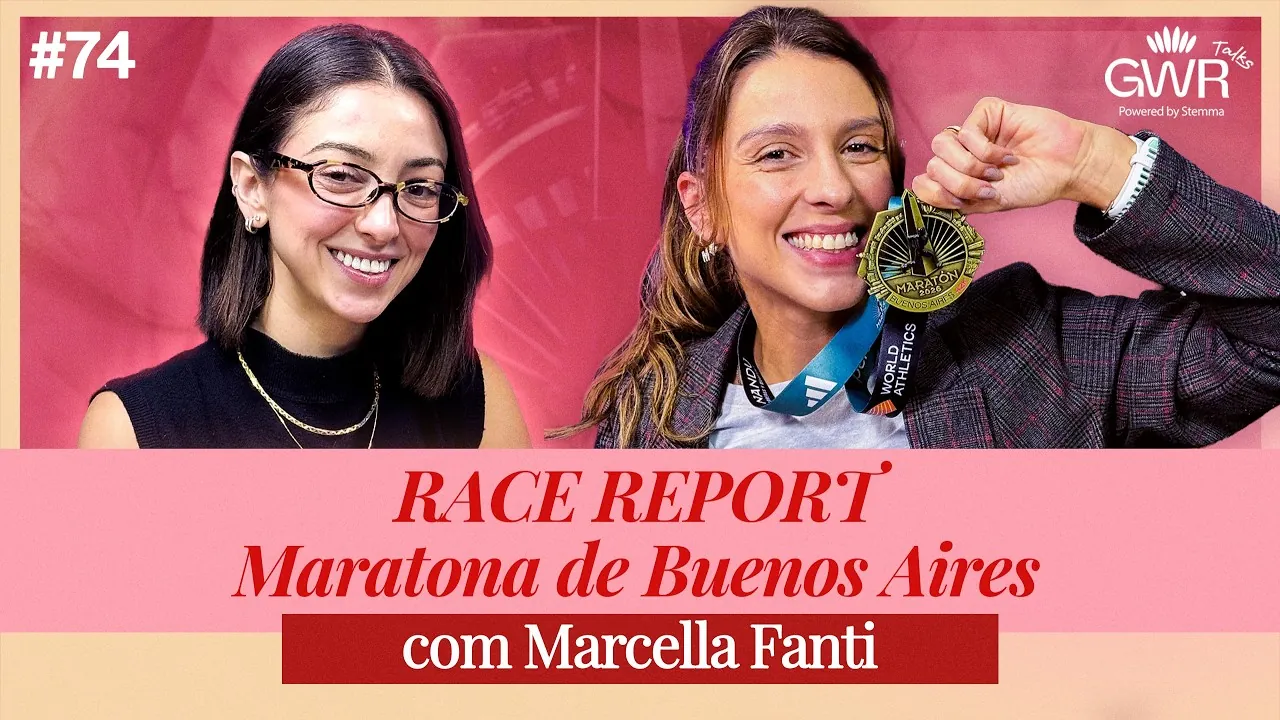
In a conversation on Girls Who Run, Marcella Fanti details her preparation for the Buenos Aires Marathon in pursuit of a Boston Qualifier. She explains how logging up to 80 km per week served as an anchor for mental stability during a period of professional uncertainty.
The decision to chase a Boston Marathon qualifying time came right after a standout performance at the Rio Half Marathon, where Marcella Fanti clocked 1:36 at a 4:36/km pace. Carrying a personal best of 3:30:12 from the New York City Marathon, the official qualifying standard for her age group was 3:30, but the anticipated cutoff buffer demanded targeting around 3:24 (roughly a 4:52/km pace). After consulting with her coach, Nelson, the Buenos Aires Marathon emerged as the ideal stage for the attempt.
PUBLICIDADE (GAM) — 1250x250
Training plan as a refuge amid career instability
The start of training coincided with a layoff and deep career uncertainty at age 34. Amid bouts of anxiety, fluctuating self-esteem, and the search for new professional directions, the marathon training block took on an unusual role: it became the only predictable daily routine. Despite the physical fatigue, waking up early to complete the prescribed workout served as mental relief and structure at a time when everything else felt chaotic.
Although running kept her discipline high, having her mind divided between financial and career concerns meant that her emotional connection to the Boston goal took a back seat for much of the preparation. She executed her training commitment with rigor, yet without the obsessive focus typical of peak performance cycles.
Peak 80 km volume and overcoming muscle pain
In terms of mileage, this was the runner's highest-volume training block, peaking at 80 km per week spread across six days of training. However, the increased load brought physical challenges: sharp adductor and hamstring pain, coupled with gluteal tendinopathy stemming from a lack of strength training earlier in the year.
To manage the issue without interrupting her buildup, the pace on long runs was temporarily dialed back and physical therapy was intensified. This strategy allowed her to complete key confidence-building workouts, including a 30 km run through Ibirapuera Park and a 32 km session in heavy rain and strong wind, both without lingering pain.
Pre-race prep, nutrition, and social media
Due to cutting expenses after losing her job, consultations with a sports nutritionist were delayed until the final stretch of the buildup. Accumulated anxiety took a toll on her diet, leading to weight gain in the month before the race, although her in-race strategy of carb gels and hydration every 3 km remained consistent with past marathons.
Across social media and in brand partnerships with sponsors like Under Armour, external pressure was virtually nonexistent. By viewing the sport as a personal outlet rather than content fodder, Che chose to train away from overexposure, treating the process purely as a personal commitment to her health and athletic progress.
PUBLICIDADE (GAM) — 1250x250




