Sports
Alic Viana: Challenges and Female Strength in Trail Running
The coach and amateur athlete discusses safety, competitiveness, and the growing female presence on Brazilian trails.
Alic Viana, a leading female figure in Brazilian trail running, shares her inspiring journey from triathlon to the mountains. She discusses the unique challenges women face in training and competitions, the extraordinary mental strength of women in endurance sports, and her training philosophy. This is an essential conversation about inclusion and resilience in sports.
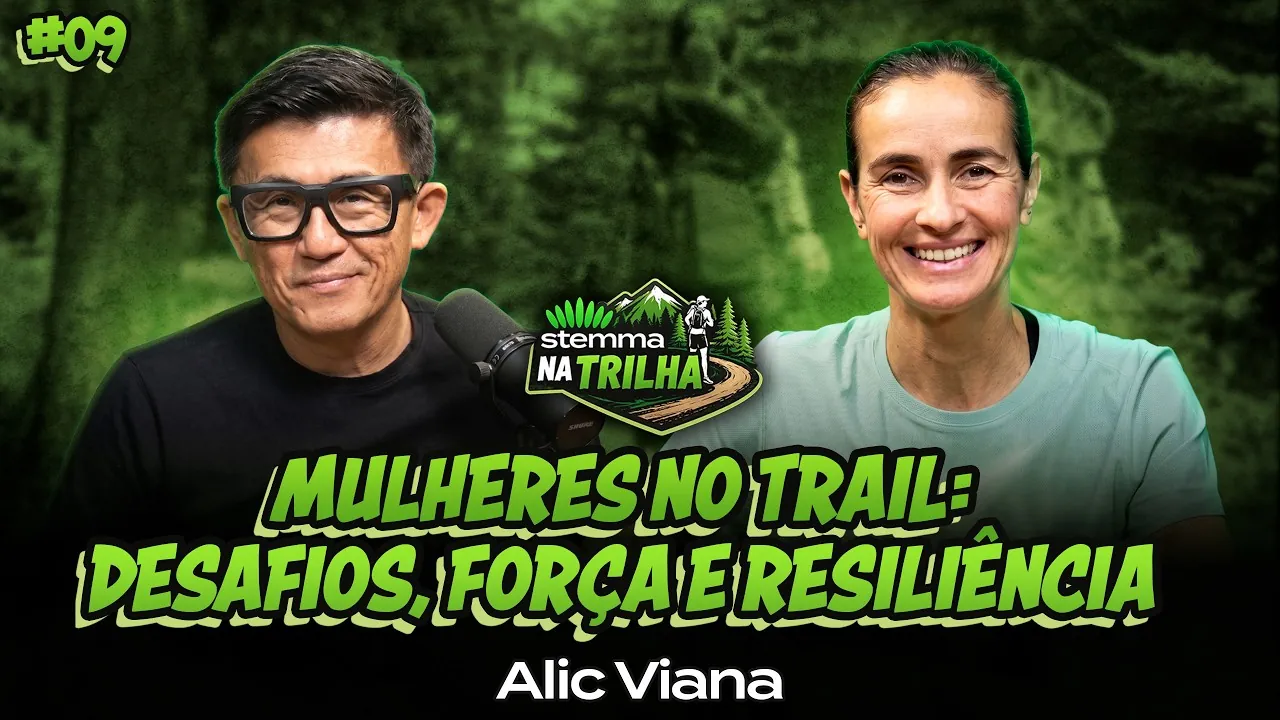
In the ninth episode of Stemma na Trilha, host Sidney Togumi welcomes coach and athlete Alic Viana. Known for her vast experience in ultra endurance races and as one of the main female figures in Brazilian trail running, Alic shares her unique journey, the challenges women face in the sport, and her insights into the modality's evolution and future.
PUBLICIDADE (GAM) — 1250x250
Alic Viana's Journey: From Triathlon to the Trails
Alic Viana reveals a fascinating story of how she came to trail running. Before dedicating herself 100% to the mountains, she was a triathlete. With a mindset focused on continuous improvement, she decided to refine each discipline individually: she spent a year focused on swimming (competing in open water and pools), and another on cycling (even being federated by Osasco and participating in Nove de Julho). Her weak point, running, led her to seek something new. That's when her brother introduced her to trail running around 2013/2014.
The impact was immediate and profound. Her passion for mountain running was so great that she abandoned triathlon to dedicate herself entirely to the new discipline, specializing in races of approximately 100 km. Her professional transition is also remarkable: from a bank employee to a bachelor's degree in Physical Education, motivated by the desire to deepen her knowledge for her own sport, and later, to help others. This experience led her to become a coach and technical coordinator for Trail Run at Floow Assessoria Esportiva.
Challenges for Women in Trail Running
One of the crucial points of the conversation with Sidney Togumi was the discussion about the obstacles women face in the sport. Alic highlights that despite the growth in female participation (with some races approaching 50/50), women still encounter significant challenges, especially related to safety and prejudice. She shares her own experience of not feeling 100% comfortable training alone, especially in the early morning hours, thinking about situations like robberies or harassment, fears that rarely affect men.
During races, male competitiveness also manifests. Alic recounts situations where men do not yield passage, even when women are in different categories. This attitude, which she considers "nonsense," ignores women's capabilities in endurance. The coach also highlights the scarcity of female trail coaches, attributing this to women's lesser historical involvement in the sport and the lack of confidence some female students might initially show.
Training Strategies and Ultra Mindset
Alic Viana is a competitive athlete, but with a rare maturity in her approach to the sport. She emphasizes the importance of good planning and rest, considering it as vital as the training itself. Alic, who self-coaches and is now 46 with 20 years of running experience, has adapted her methodology:
- Focus on Hours, Not Kilometers: Instead of counting kilometers, she monitors total hours of activity, including strength training, which allows for a more realistic view of the body's stress volume, essential for preventing injuries.
- Technology to Her Advantage: She uses tools like HRV (Heart Rate Variability) from watches like Coros to monitor her recovery and ensure her body is ready for extreme loads.
- Competitive Maturity: She shared her experience in the “Maldição do Corpo Seco” (Curse of the Dry Body) race, where, despite being in first place, she decided to stop after completing the 10 laps that qualified her as a finisher. Her decision was based on periodization and the goal of preserving her body for a more important target race, showing exemplary discipline and a well-managed ego. For her, not every race is for high-level competition; some are for training or exploring new places.
- Multidisciplinary Support: She recognizes that, over time, the body demands more, and seeking professional support in areas like nutrition has become fundamental for longevity in sports.
The Cut-off Times Debate and the Future of Women's Trail Running
The discussion about whether cut-off times in races should be different for men and women was a highlight. Alic ponders the case of athlete Rosália, who was cut from a race in Peru. Although she doesn't have a definitive answer, she believes that in endurance, especially over longer distances, women are equal to men, supporting the idea of maintaining equal cut-off times. However, she recognizes that the environment (such as altitude in international races) and logistical conditions can influence, suggesting that specific race organizers might reconsider this issue.
Alic and Sidney agree that women's mental strength is often superior to men's in long-duration races, leading to lower dropout rates. They approach challenges more prepared and with unwavering commitment. The landscape of women's trail running in Brazil is viewed with optimism: the number of dedicated women and high-level athletes has grown exponentially, raising the standard of the sport. Camaraderie among athletes, even in competitions, is a unique characteristic of trail running.
The challenge, however, lies in attracting and developing new generations of athletes. Alic suggests that the initiative could come from parents and race organizers, creating opportunities for young talents to discover and train themselves, ensuring the renewal and future of the sport.
The journey of Alic Viana is a testament to the passion, dedication, and resilience needed to thrive in the world of high-performance sports, especially in trail running. Her reflections offer valuable lessons on how to balance competitiveness with self-awareness and the importance of a supportive ecosystem, inspiring not only women but everyone seeking their best version on the trails.
PUBLICIDADE (GAM) — 1250x250