
How NR-1 and Human-Centric Culture Transform Management
Paulo Ruivo details psychosocial risk management and the shared-wealth model adopted at Instituto Homem.
The regulation of psychosocial risks under NR-1 places mental health at the heart of corporate strategy. Paulo Ruivo discusses the application of anthroposophy in leadership and how shared equity reduces turnover to zero.
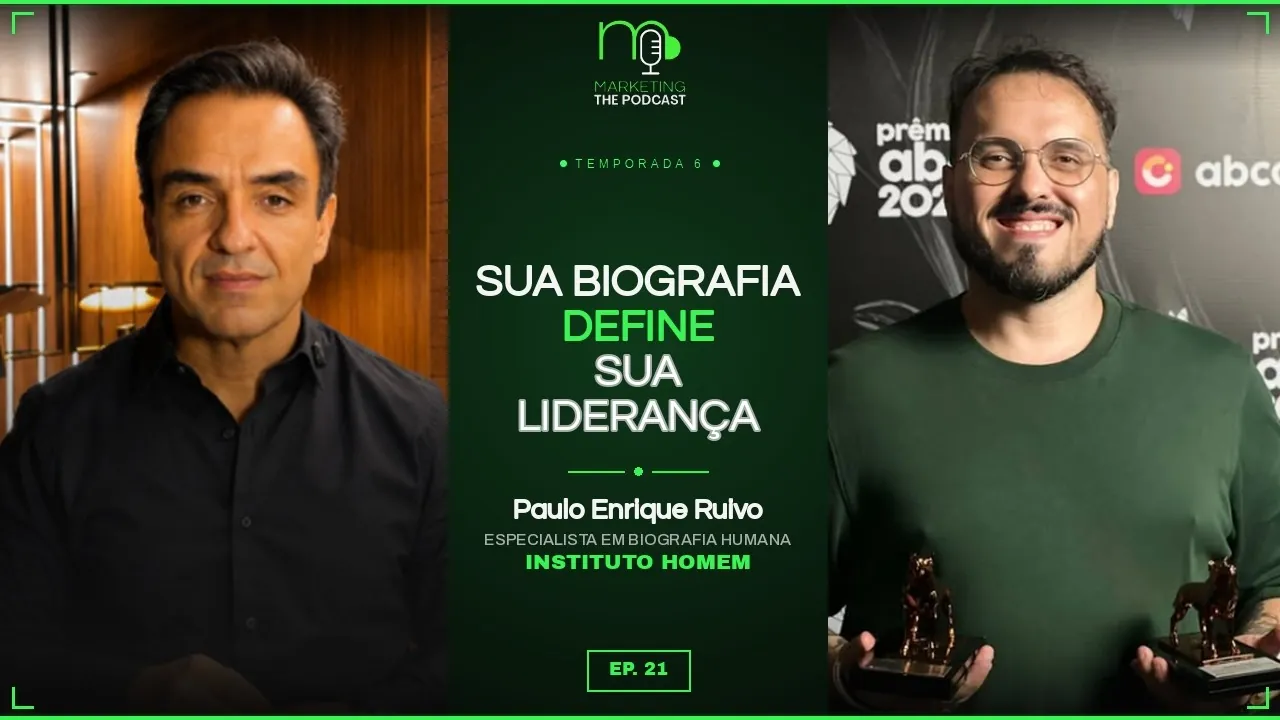
Paulo Ruivo, partner and chief humanization officer at Instituto Homem, discussed the impacts of the updated NR-1 standard on organizations during a conversation with Bruno Gimenes on Marketing - The Podcast, highlighting the need to structure corporate cultures centered on mental health and human development.
In the video above, Ruivo breaks down the practical application of anthroposophical concepts in corporate governance and shares the partnership model implemented across the medical clinic network where he operates.
The NR-1 requirement and psychosocial risks
The revision of Regulatory Standard No. 1 (NR-1) established that companies with employees under the Brazilian CLT labor regime must identify, assess, and manage psychosocial risks within their Risk Management Program (PGR), putting these factors on par with physical and ergonomic hazards. The discussion gains urgency amid a surge in medical leaves due to mental disorders, which rose 67% between 2023 and 2024, accounting for 440,000 workers on leave in 2024.
For Ruivo, the standard formalizes practices that the anthroposophical approach was already implementing in internal governance. "Thankfully, humanity is evolving and finding ways to give deeper meaning to the workforce," he states. He points out that traditional corporate environments have historically overlooked symptoms of burnout and panic, treating clinical conditions with prejudice.
Leadership alignment and team vitality
When shaping the culture at Instituto Homem, Ruivo began by working directly with founders and executives, examining personal life aspects, power dynamics, and finances. Ruivo explains that employee vitality is the cornerstone of execution and delivery capabilities, requiring a perspective that extends beyond transactional hiring.
"I need to sense my team member and understand them in a realm that goes slightly beyond sensory perception, above ordinary common sense between human beings," he says. Once leadership undergoes this internal refinement, the organization can reduce operational friction and sustain growth without compromising team well-being.
The threefold social order and shared wealth
The methodology applied by Ruivo is grounded in the principles of cultural freedom, legal equality, and economic fraternity. In practice, the organizational framework eliminates rigid vertical hierarchies and adopts a partnership model accessible across all operational tiers of the network.
"Shared wealth is that driving force linked to anthroposophy—we often talk about the French Revolution and its rallying cry: liberty, equality, fraternity," he emphasizes. At Instituto Homem, team members have the opportunity to acquire 1% to 5% equity stakes in newly opened clinics, such as the unit launched in Goiânia, where 50% of the capital belongs to the institute and the other 50% is made available to internal investors.
Ruivo highlights that pairing this compensation strategy with equity ownership drove the turnover rate down to zero. "Today, we have receptionists earning outstanding salaries and enjoying a high quality of life," he reports, reinforcing that a true sense of belonging stems from genuine co-ownership.
The educational role of corporations
Citing lectures by Rudolf Steiner, Ruivo argues that workplaces are increasingly taking on the formative educational role that traditional universities have ceased to fully fulfill. Established companies in the market have been redesigning their workflows to train professionals across technical, emotional, and financial competencies.
The executive emphasizes that providing individualized support to employees during moments of vulnerability is essential to preventing physical and psychological breakdowns caused by corporate pressure. "It is not about having, everyone; it is about being. Who am I? And the moment we start looking at the human being, we thrive," Ruivo concludes.