
Creativity Needs Reference and Downtime, Felix Grivot Says
FCamara's head of marketing discusses digital consumption limits, the impact of remote work, and the value of varied references.
Felix Grivot explores how building a creative repertoire relies on human curiosity and stepping outside digital echo chambers. The executive also addresses remote work challenges for early-career professionals and why unplugging is vital for processing insights.
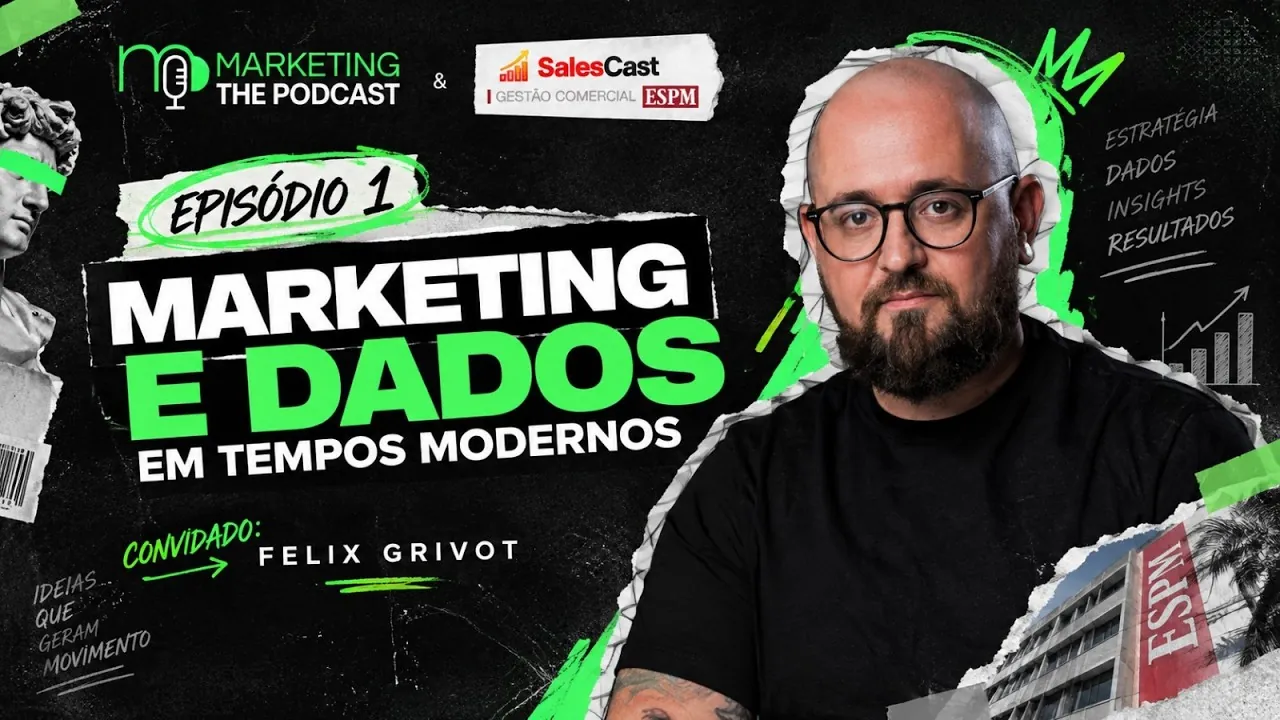
Felix Grivot, Head of B2B Marketing at FCamara, spoke with Bruno Gimenes on Marketing - The Podcast about how cultivating a broad repertoire and taking time to unplug are essential for staying creative in an environment dominated by screens and automation.
In the video above, the conversation explores how marketing professionals can strike a balance between tech tools and real-world experiences, drawing inspiration from observation outside the workplace.
Relying on references for the creative process
When discussing how ideas take shape, Grivot recalled a takeaway from his time working at RBS, a Globo affiliate in Rio Grande do Sul, inspired by Marcos Piangers. For Grivot, creativity does not happen in a vacuum; it emerges from blending diverse stimuli to which professionals intentionally expose themselves.
"Creativity comes from references, and that really stuck with me. There is no way to be creative without seeking references, without branching out from our favorite shows, our favorite types of movies. It's impossible," Grivot explains.
In-person experience and the limits of remote work
Grivot noted that unlimited digital access, such as exploring cities via Google Maps, cannot replace the impact of physical presence. He highlighted walking through downtown São Paulo and taking in historic architecture and urban visual culture as low-cost ways to sharpen one's perspective.
This reflection extends to the growth of newcomers who joined the workforce during or after the pandemic in fully remote setups. "How does someone learn as an intern strictly from home? A professional might wonder, 'Can I go to the office one day? Sure, I landed a fully remote job, but do I have the chance to go into the office for a day to sit next to someone more experienced and learn from them?'" Grivot asks.
Breaking away from passive social media consumption
For Grivot, endlessly scrolling short-form algorithmic video on platforms like TikTok and Instagram drains time without adding technical or cultural value. He recommends using digital channels purposefully for structured study, in-depth interviews, and exploring topics outside everyday routines.
"Get off the infinite feed on TikTok and Instagram—everyone falls into it, and I do too. Sometimes you spend 40 minutes there and realize you learned nothing, just watching AI fruit videos cursing at you. Use that time productively; use YouTube to find references," Grivot points out, also encouraging a return to venues like movie theaters and art exhibitions.
The role of downtime in processing insights
Beyond absorbing new material, Grivot advocates for deliberately carving out screen-free breaks. In his view, the ability to form novel connections depends on giving the brain time to digest the influx of information gathered throughout the day.
"Why do we get ideas? Why do we have those classic shower thoughts? Because that's when we have nothing going on, right? We're not staring at any screen," Grivot emphasizes. He maintains that filtering media intake and protecting mental rest are essential to sustaining long-term analytical and creative performance.